

You might want to start casual conversations in Spanish but feel unsure about the right words to use.
If you’ve ever searched for how to say what you doing in spanish, you’re in the right place.
Learning everyday phrases like this can feel a bit tricky at first, especially when you’re trying to sound natural and friendly.
But don’t worry; this guide will help you use it confidently in real-life chats with ease.
The Basic Way to Say “What Are You Doing?” in Spanish
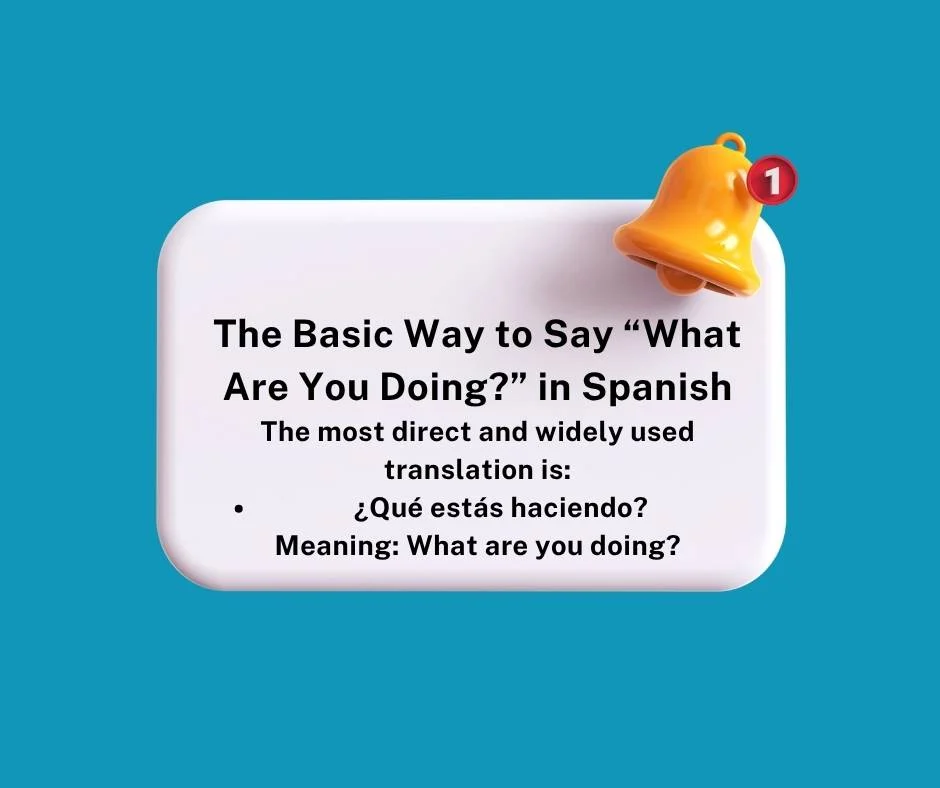
¿Qué estás haciendo? – The Most Common Phrase
The most direct and widely used translation is:
- ¿Qué estás haciendo?
Meaning: What are you doing?
This phrase is used in everyday conversations and is easy to remember.
Example:
- ¿Qué estás haciendo ahora?
(What are you doing right now?) - Hola, ¿qué estás haciendo?
(Hi, what are you doing?)
This is the best starting point when learning how to say what you doing in Spanish.
Understanding the Structure
This phrase may look long, but it’s simple when broken down:
- Qué = What
- Estás = You are
- Haciendo = Doing
Together, it forms a natural present continuous sentence.
How to say what you doing in spanish to a girl
If you want to ask a girl “What are you doing?” in Spanish, the most natural sentence is ¿Qué estás haciendo? This phrase works in friendly conversations and sounds polite in most situations. If you know the girl well, you can use the informal tú form. If you are speaking to someone older or in a formal setting, use ¿Qué está haciendo? instead.
Here are common ways to say it:
- ¿Qué estás haciendo? – What are you doing? (informal)
- ¿Qué haces? – What are you doing? (casual)
- ¿Qué está haciendo? – What are you doing? (formal)
- Use ¿Qué haces? when chatting with a friend.
- Use ¿Qué estás haciendo? when asking what she is doing right now.
- Add her name to make it sound more personal.
- Speak with a friendly tone for natural conversation.
- This phrase is common in texting and daily speech.
- Native speakers use it in many Spanish-speaking countries.
- It is a simple and respectful way to start a conversation.
What are you doing in spanish google translate
Many people search for this phrase to find the correct Spanish translation. Google Translate usually translates “What are you doing?” as ¿Qué estás haciendo? This translation is accurate for asking what someone is doing at the moment.
Helpful points:
- ¿Qué estás haciendo? is the standard translation.
- It means “What are you doing right now?”
- It is easy to understand across Spanish-speaking countries.
- Google Translate uses this phrase because it is widely accepted.
- You can use it in text messages.
- It also works in casual conversations.
- Pronounce it slowly if you are learning Spanish.
- Practice saying it aloud for better confidence.
- Learn the meaning of each word to remember it.
- Always check the context before translating longer sentences.
What are you doing in Spanish informal
In informal Spanish, you usually speak with friends, family members, classmates, or people your age. The most common informal question is ¿Qué estás haciendo? You may also hear ¿Qué haces?, which is even shorter and very common in everyday speech.
Key facts:
- ¿Qué estás haciendo? is the most common informal version.
- ¿Qué haces? is a casual alternative.
- Use tú when speaking informally.
- It is perfect for friends and close family.
- It sounds natural in daily conversations.
- Native speakers use it often.
- It is common in text messages.
- It is easy for beginners to learn.
- The meaning stays the same.
- Choose the phrase that fits the situation naturally.
What are you doing in Spanish duolingo
If you are learning Spanish with Duolingo, you will often see ¿Qué estás haciendo? because it teaches common real-life expressions. This sentence helps learners practice the present continuous tense and everyday conversations.
Important points:
- Duolingo teaches ¿Qué estás haciendo?
- It means “What are you doing?”
- It helps you practice daily vocabulary.
- The lesson focuses on real conversations.
- Beginners learn this phrase early.
- It improves speaking skills.
- It also builds listening confidence.
- Repeat the sentence several times.
- Try using it in practice conversations.
- Learning common phrases makes Spanish easier.
What are you doing in Spanish formal
Formal Spanish is used when speaking to teachers, older people, customers, or someone you do not know well. Instead of using tú, you use usted. The correct formal question is ¿Qué está haciendo?
Remember these tips:
- ¿Qué está haciendo? is the formal version.
- It shows respect.
- Use it with strangers.
- It is common in professional settings.
- It uses the usted form.
- Speak politely when using it.
- It works in business conversations.
- Native speakers understand it easily.
- It sounds courteous and professional.
- Choose the formal version when respect is important.
How do you say what are you doing today in Spanish
To ask someone what they are doing today, the natural Spanish sentence is ¿Qué estás haciendo hoy? This phrase adds hoy, which means today, to the common question.
Helpful examples:
- ¿Qué estás haciendo hoy? means “What are you doing today?”
- Hoy means “today.”
- It is common in daily conversations.
- You can use it with friends.
- It sounds friendly and natural.
- It is useful for making plans.
- Native speakers use it often.
- It is easy for beginners.
- Practice saying it with correct pronunciation.
- Use the formal version if needed: ¿Qué está haciendo hoy?
How do you say How are you?” in Spanish
There are several ways to say “How are you?” in Spanish. The most common expression is ¿Cómo estás? It is friendly, natural, and widely used in everyday conversations.
Common options:
- ¿Cómo estás? – Informal
- ¿Cómo está? – Formal
- ¿Qué tal? – Casual greeting
- ¿Cómo te va? – How’s it going?
- Use ¿Cómo estás? with friends.
- Use ¿Cómo está? in formal situations.
- Smile when greeting someone.
- These phrases are common in Spanish-speaking countries.
- Practice both formal and informal versions.
- They help start conversations politely.
How do you say nothing in spanish

The Spanish word for “nothing” is nada. It is one of the first vocabulary words many learners study because it appears in everyday conversations.
Useful facts:
- Nada means “nothing.”
- It is short and easy to remember.
- People use it in daily speech.
- Example: No pasó nada. (Nothing happened.)
- Example: Nada importante. (Nothing important.)
- It works in casual conversations.
- It is common in text messages.
- Native speakers use it frequently.
- Learn it with simple examples.
- Practice using nada in complete sentences.
Informal vs Formal Versions
Spanish changes based on who you’re speaking to.
Informal Version (Tú Form)
Use this with friends, family, or people your age:
- ¿Qué estás haciendo?
Example:
- Amigo: Hola
- You: ¿Qué estás haciendo?
Formal Version (Usted Form)
Use this in respectful or professional situations:
- ¿Qué está haciendo?
Example:
- ¿Qué está haciendo, señor?
(What are you doing, sir?)
Choosing the right form shows respect and cultural awareness.
Other Natural Ways to Ask the Same Question
Native speakers often use variations instead of repeating the same phrase.
¿Qué haces? – Short and Casual
This is a simpler version.
- Meaning: What do you do? / What are you doing?
- Usage: Casual conversations
Example:
- ¿Qué haces?
(What are you doing?)
¿Qué andas haciendo? – Friendly Tone
This sounds more relaxed and conversational.
- Meaning: What are you up to?
- Usage: Informal chats
Example:
- ¿Qué andas haciendo hoy?
¿En qué estás? – Very Casual
This is common in some regions.
- Meaning: What are you working on? / What are you up to?
Example:
- Oye, ¿en qué estás?
These variations help you sound more natural and less repetitive.
Using the Phrase in Real Conversations
Learning how to say what you doing in Spanish becomes easier with real-life examples.
Texting a Friend
- Hola, ¿qué estás haciendo?
- (Hi, what are you doing?)
Starting a Conversation
- Hey! ¿Qué haces?
Checking on Someone
- ¿Qué estás haciendo ahora mismo?
(What are you doing right now?)
Casual Hangout
- ¿Qué andas haciendo esta tarde?
(What are you up to this afternoon?)
These examples show how flexible the phrase can be.
Grammar Behind the Phrase
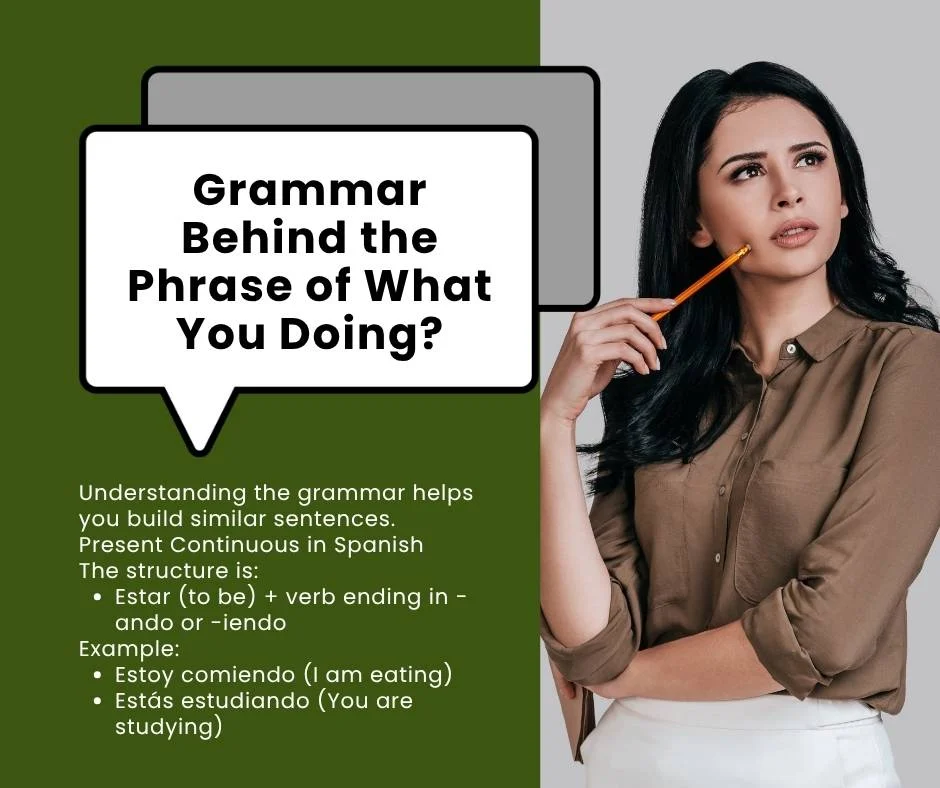
Understanding the grammar helps you build similar sentences.
Present Continuous in Spanish
The structure is:
- Estar (to be) + verb ending in -ando or -iendo
Example:
- Estoy comiendo (I am eating)
- Estás estudiando (You are studying)
So:
- Estás + haciendo = You are doing
Forming Questions
Spanish uses question marks and word order:
- ¿Qué estás haciendo?
No extra words like “do” are needed.
This makes Spanish questions simpler once you learn the pattern.
Expanding the Phrase for Better Communication
You can add extra words to make your question more specific.
Adding Time
- ¿Qué estás haciendo ahora? (now)
- ¿Qué estás haciendo hoy? (today)
Adding Place
- ¿Qué estás haciendo en casa? (at home)
Adding Purpose
- ¿Qué estás haciendo para el trabajo?
These small additions make your conversations more meaningful.
Common Mistakes to Avoid
When learning how to say what you doing in Spanish, beginners often make these mistakes.
Using Wrong Word Order
Avoid translating directly from English.
- Incorrect: ¿Qué tú estás haciendo?
- Correct: ¿Qué estás haciendo?
Forgetting Accent Marks
- Qué needs an accent when asking a question
Mixing Formal and Informal
Don’t combine “tú” with “usted” forms.
- Stick to one style
Overusing One Phrase
Using only one version can sound repetitive.
- Try different variations
Avoiding these mistakes will help you sound more natural.
Tips to Sound Like a Native Speaker
Improving your Spanish takes practice and awareness.
Listen and Copy
Watch Spanish shows or videos.
- Notice how people ask questions
- Pay attention to tone
Practice Daily
Ask simple questions regularly.
- Use the phrase with friends
- Practice in front of a mirror
Use the Right Tone
Tone can change meaning.
- Friendly tone for casual chats
- Respectful tone for formal situations
Combine with Other Phrases
Make your conversation flow better.
- Hola, ¿qué estás haciendo?
- Oye, ¿qué haces?
These tips will help you sound confident and natural.
Real-Life Dialogue Examples
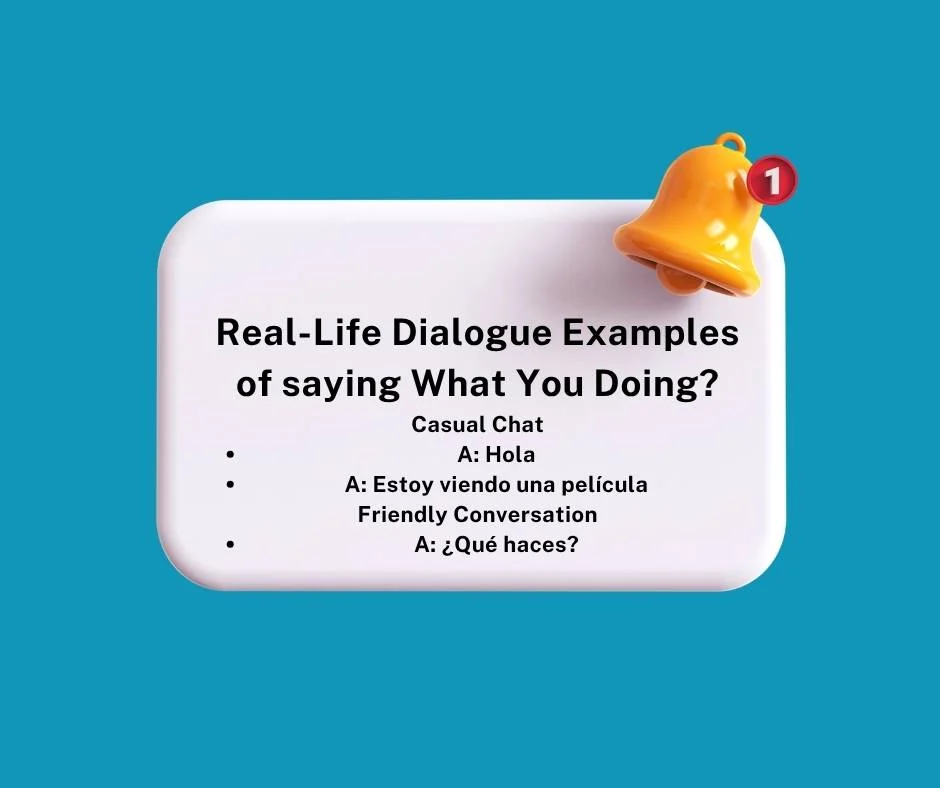
Practicing dialogues makes learning easier.
Casual Chat
- A: Hola
- B: Hola, ¿qué estás haciendo?
- A: Estoy viendo una película
Friendly Conversation
- A: ¿Qué haces?
- B: Nada, solo descansando
Formal Situation
- A: Buenas tardes
- B: Buenas tardes, ¿qué está haciendo?
Planning Together
- A: ¿Qué andas haciendo hoy?
- B: Estoy libre, ¿quieres salir?
These examples show how the phrase fits into real conversations.
Frequently Asked Questions (FAQs)
What is the correct way for how to say what you doing in Spanish?
The correct phrase is “¿Qué estás haciendo?” which means “What are you doing?”
Can I say “¿Qué haces?” instead?
Yes, it is a shorter and more casual way to ask the same question.
What is the formal version of how to say what you doing in Spanish?
The formal version is “¿Qué está haciendo?” used with respect.
Is it okay to use this phrase in texting?
Yes, it is very common in texting and casual conversations.
Why is “¿Qué estás haciendo?” so commonly used?
Because it is simple, clear, and works in many everyday situations.
What is the Spanish slang for what you doing?
A common Spanish slang way to say “what you doing?” is “¿Qué haces?” It is widely used in everyday conversations across many Spanish-speaking countries. Friends may also say “¿Qué andas haciendo?” in a more casual tone, especially in Mexico and parts of Latin America.
How do you say wyd in Spanish?
The English texting abbreviation “wyd” (what are you doing?) is usually translated as “¿Qué haces?” in Spanish. While Spanish does not have an exact abbreviation for “wyd,” native speakers commonly type the full phrase in text messages and chats.
What is the meaning of “qué haces”?
“Qué haces” means “What are you doing?” in English. It is a common question used to ask someone what they are doing right now or how they are spending their time. It is appropriate for both spoken conversations and text messages.
How do Mexicans say what are you doing?
In Mexico, people often say “¿Qué haces?” for “What are you doing?” In casual conversations, you may also hear “¿Qué andas haciendo?”, which sounds more relaxed and natural among friends and family.
Can I say “yo soy”?
Yes, you can say “yo soy,” but it means “I am,” not “I am doing.” Spanish speakers usually omit “yo” unless they want to emphasize the subject. For example, “Yo soy estudiante” means “I am a student.”
How do you say “hi, what you doing?” in Spanish?
You can say “Hola, ¿qué haces?” This is the most natural and widely used way to say “Hi, what are you doing?” in Spanish. It is friendly, simple, and appropriate for everyday conversations and text messages.
Conclusion
Learning how to say what you doing in Spanish is an essential step for everyday communication.
Whether you use “¿Qué estás haciendo?” or its variations, this simple question helps you start conversations and connect with others.
Practice regularly, explore different forms, and soon you’ll be speaking naturally and confidently.
Also Check These Posts:
How to Say Uranus the Easy Way with Clear Sound Breakdown
How To Say Your Welcome in German Explained Clearly With Practical Examples
How to Say Cute in Japanese Perfectly for Travel, Anime and Daily Talk

Ethan Moore
Ethan Moore is a passionate storyteller and language enthusiast who believes that words have the power to bridge cultures. Ever since he was young, Ethan has been fascinated by how languages shape our thoughts and connect people from different corners of the world. Through his writing, he explores the beauty of communication and the subtle nuances that make each language unique. When he’s not writing, Ethan enjoys traveling, learning new languages, and diving into different cultures. His goal is to inspire readers to embrace diversity and appreciate the richness of global expression.
Books:
-
Whispers Across Tongues
-
The Language of Dreams