
You might be looking for a simple way to express admiration when something feels sweet or adorable.
If you’ve ever searched for how to say cute in japanese, you’re in the right place.
Learning this word can feel exciting because it’s used so often in daily conversations, anime, and friendly moments.
Don’t worry; this guide will help you understand it easily so you can use it naturally and confidently in real-life situations.
The Most Common Way to Say Cute in Japanese
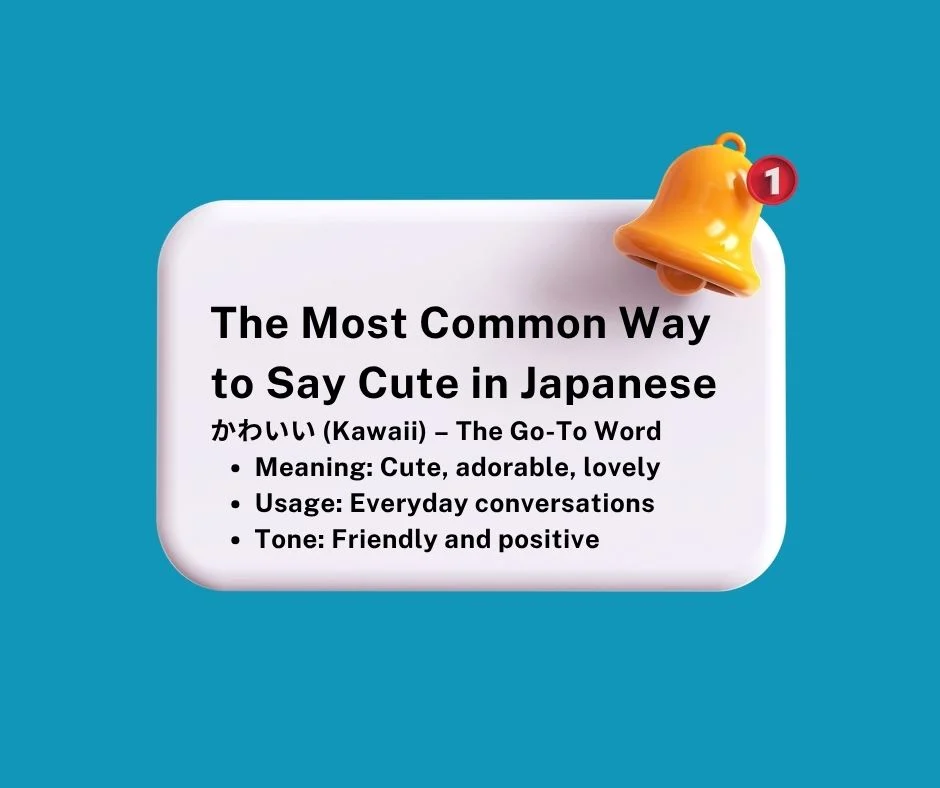
かわいい (Kawaii) – The Go-To Word
The most popular and widely used word for “cute” in Japanese is かわいい (kawaii).
- Meaning: Cute, adorable, lovely
- Usage: Everyday conversations
- Tone: Friendly and positive
Example:
- この猫はかわいい!
(This cat is cute!) - あなたのバッグ、かわいいですね。
(Your bag is cute.)
“Kawaii” is everywhere in Japanese culture. You’ll hear it in anime, social media, and daily life.
Why “Kawaii” Is So Popular
“Kawaii” is more than just a word. It reflects a big part of Japanese culture.
- Used for people, animals, and objects
- Expresses affection and admiration
- Often associated with innocence and charm
You can safely use this word in most situations.
How to say cute in japanese to a girl
If you want to tell a girl she is cute in Japanese, the most common word is kawaii (かわいい). It is a kind and friendly compliment that people use every day. You can say “Anata wa kawaii desu” if you want to sound polite, or simply “Kawaii!” when reacting naturally. Japanese people often use this word for someone’s appearance, smile, personality, or even the way they act.
- Kawaii means cute or adorable.
- It is a friendly and respectful compliment.
- You can use it with friends or someone you like.
- It sounds natural in daily conversations.
- Many girls appreciate this kind compliment.
- It also describes sweet personalities.
- The word is common in Japan.
- Speak with a gentle tone.
- Smile when giving the compliment.
- Keep the situation respectful and sincere.
How to say cute in japanese pronunciation
The Japanese word for cute is kawaii (かわいい). Its pronunciation sounds like kah-wah-ee-ee. Each syllable stays clear and soft, making the word easy to pronounce after a little practice. Listening to native speakers also helps you sound more natural.
- Pronounce it as kah-wah-ee-ee.
- Say each syllable clearly.
- Keep your voice relaxed.
- Avoid rushing the pronunciation.
- Practice slowly at first.
- Listen to native Japanese speakers.
- Repeat the word several times.
- Focus on natural rhythm.
- Use a friendly tone.
- Confidence improves pronunciation.
How to say cute in japanese anime

Anime characters often say kawaii when they think someone or something looks adorable. You will hear this word in many romantic, comedy, and slice-of-life anime because it expresses admiration in a warm and cheerful way. The meaning stays the same as in everyday Japanese.
- Anime characters often say kawaii.
- It means cute or adorable.
- The word shows positive feelings.
- It fits happy moments.
- Friends use it naturally.
- It appears in many anime genres.
- It can describe people or objects.
- Voice tone adds emotion.
- It sounds cheerful and friendly.
- Fans quickly recognize the word.
How to say kawaii in japanese
The Japanese word kawaii is written as かわいい in Hiragana. It already means cute, adorable, or lovely, so you simply say kawaii when complimenting someone or something. It is one of the most popular Japanese words around the world.
- Write it as かわいい.
- Read it as kawaii.
- It means cute or adorable.
- Japanese people use it every day.
- It works for people and objects.
- The word sounds warm.
- It expresses appreciation.
- It is easy to remember.
- Many learners know this word first.
- It reflects Japanese culture.
Very cute in japanese word
If you want to say very cute in Japanese, you can say Totemo kawaii (とてもかわいい) or Sugoku kawaii (すごくかわいい). Both expressions make your compliment stronger while still sounding natural in conversation.
- Totemo kawaii means very cute.
- Sugoku kawaii also means very cute.
- Both expressions are common.
- They sound friendly.
- Use them for sincere compliments.
- They fit casual conversations.
- They describe people or things.
- Speak naturally.
- Smile when saying them.
- Avoid overusing strong compliments.
You’re cute” in Japanese informal

In casual conversations, you can say Kawaii ne or Kimi kawaii ne to tell someone they are cute. These expressions sound relaxed and friendly, making them suitable for close friends or someone you know well. Use them only when the relationship feels comfortable.
- Kawaii ne sounds casual.
- Kimi kawaii ne is also informal.
- Use them with friends.
- They show friendly admiration.
- Speak naturally.
- Avoid using them with strangers.
- Keep your tone respectful.
- Smile when saying them.
- They suit everyday conversations.
- Context makes the compliment meaningful.
How to say you’re cute” in Japanese
A polite way to say you’re cute in Japanese is Anata wa kawaii desu (あなたはかわいいです). In casual situations, many people simply say Kawaii! because the meaning is easy to understand from the conversation.
- Anata wa kawaii desu is polite.
- Kawaii! is casual.
- Both express the same compliment.
- Choose based on the situation.
- Use a friendly voice.
- Keep the compliment sincere.
- Respect personal boundaries.
- Japanese often omit unnecessary words.
- Short expressions sound natural.
- Practice both versions.
How to say Hey cutie in japanese
Japanese does not have a direct everyday translation for “Hey cutie.” A natural way is to greet the person first, then say Kawaii ne! if you want to compliment them. This feels more natural and matches how native speakers usually communicate.
- Start with a friendly greeting.
- Say Kawaii ne! afterward.
- Keep the tone playful.
- Use it with someone you know.
- Avoid forcing a direct translation.
- Natural expressions sound better.
- Smile during the conversation.
- Respect the other person’s comfort.
- Keep the compliment light.
- Friendly words create a warm impression.
Other Ways to Say Cute in Japanese
While “kawaii” is common, Japanese has many other words to express “cute” in different ways.
きれい (Kirei) – Beautiful and Cute
This word means “beautiful,” but sometimes it can imply a refined kind of cuteness.
- Meaning: Beautiful, pretty, clean
- Usage: Formal or elegant compliments
Example:
- きれいなドレスですね。
(That dress is beautiful.)
Use this when something feels more elegant than playful.
愛らしい (Aira shii) – Adorably Cute
This word sounds softer and more emotional.
- Meaning: Adorable, lovable
- Usage: Formal or written language
Example:
- 愛らしい笑顔ですね。
(That smile is adorable.)
It’s less common in daily speech but great for deeper expression.
小さい (Chiisai) – Small and Cute
Sometimes “small” can imply cuteness in Japanese.
- Meaning: Small
- Usage: When size adds to charm
Example:
- 小さい犬がかわいい。
(The small dog is cute.)
This works well when describing tiny, lovable things.
Casual vs Formal Usage
Understanding when to use certain words helps you sound natural.
Casual Situations
Use these with friends or in relaxed settings:
- かわいい
- めっちゃかわいい (Very cute!)
- 超かわいい (Super cute!)
Example:
- この服、めっちゃかわいい!
Formal Situations
Use these in polite conversations:
- かわいいですね
- きれいですね
- 素敵ですね (Lovely)
Example:
- 素敵ですね、そのデザイン。
Politeness is important in Japanese, so adding “ですね” makes your compliment softer.
How to Use “Cute” in Sentences
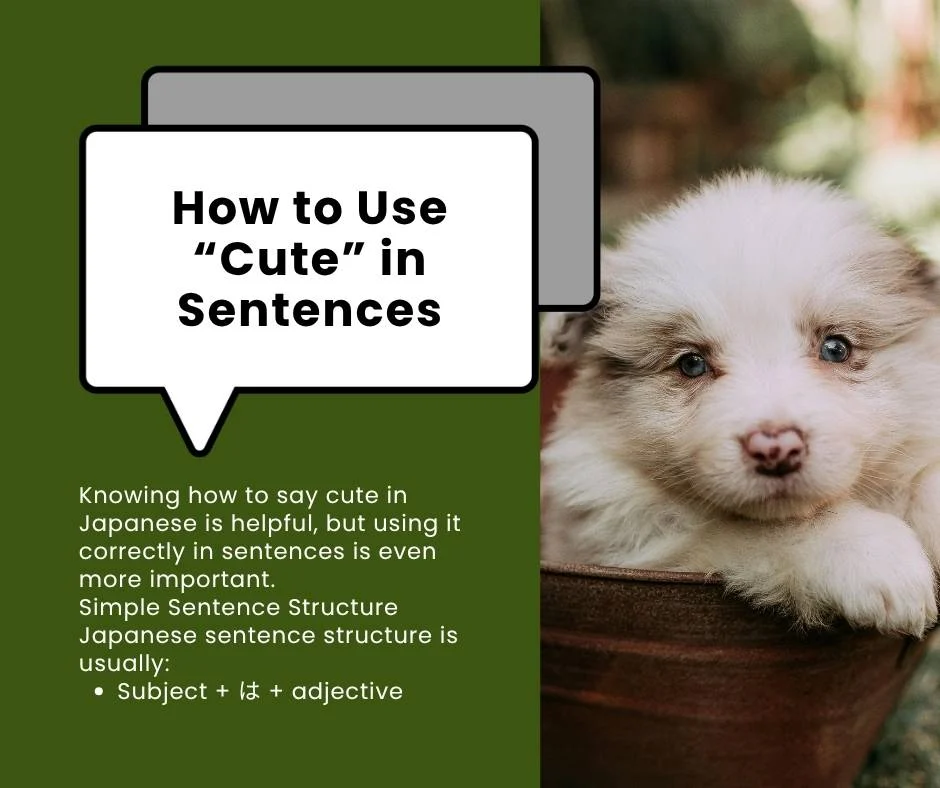
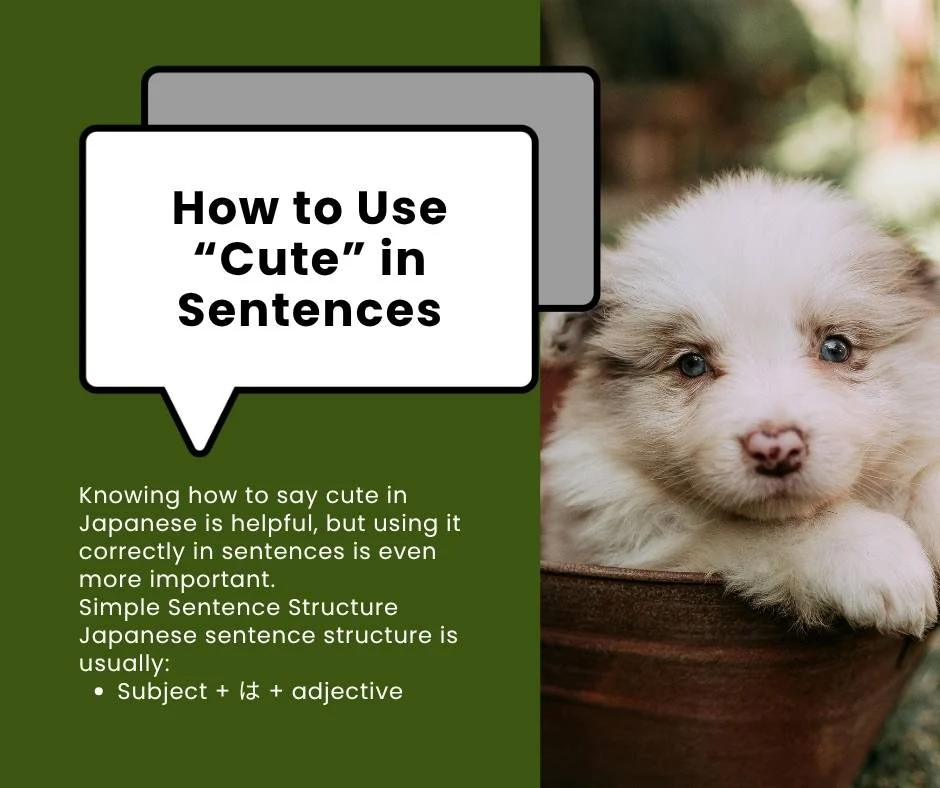
Knowing how to say cute in Japanese is helpful, but using it correctly in sentences is even more important.
Simple Sentence Structure
Japanese sentence structure is usually:
- Subject + は + adjective
Example:
- 猫はかわいい。
(The cat is cute.)
Adding Politeness
To sound polite, add “です”:
- 猫はかわいいです。
Asking Questions
To ask if something is cute:
- これ、かわいいですか?
(Is this cute?)
These simple patterns will help you build confidence quickly.
Real-Life Situations and Examples
Let’s explore how to use these expressions in daily life.
Complimenting a Friend
- その服、かわいい!
(Your outfit is cute!)
Talking About Animals
- この子犬、かわいいですね。
(This puppy is cute.)
Social Media Comments
- かわいい写真!
(Cute photo!)
Shopping
- このバッグ、かわいいです。
(This bag is cute.)
These examples show how flexible and useful the word “kawaii” can be.
Cultural Meaning of “Cute” in Japan
Understanding culture helps you use words more naturally.
The Concept of “Kawaii Culture”
In Japan, “cute” is a major cultural idea.
- Seen in fashion, design, and advertising
- Popular in characters and mascots
- Associated with youth and positivity
Not Just for Children
In many cultures, “cute” is mainly for kids. In Japan, it’s different.
- Adults use “kawaii” freely
- It applies to fashion, food, and behavior
- Even serious brands use cute designs
This makes “kawaii” a powerful and versatile word.
Advanced Expressions for “Cute”
If you want to sound more fluent, try these advanced options.
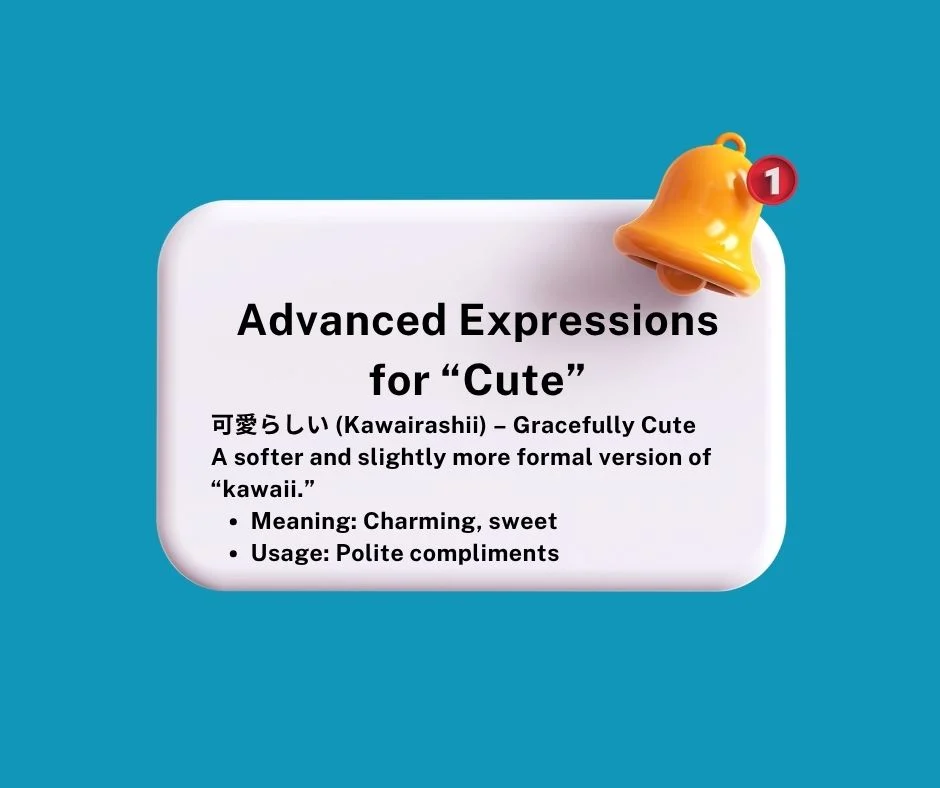
可愛らしい (Kawairashii) – Gracefully Cute
A softer and slightly more formal version of “kawaii.”
- Meaning: Charming, sweet
- Usage: Polite compliments
Example:
- 可愛らしいスタイルですね。
萌え (Moe) – Cute in Anime Culture
This word is popular among anime fans.
- Meaning: Deep affection for a character
- Usage: Informal and niche
Example:
- このキャラ、萌え!
キュート (Kyūto) – Borrowed Word
This is a loanword from English.
- Meaning: Cute
- Usage: Modern and stylish contexts
Example:
- キュートなデザインですね。
Using these words can make your Japanese sound more natural and expressive.
Common Mistakes to Avoid
When learning how to say cute in Japanese, beginners often make these mistakes.
Using “Kawaii” in Very Formal Settings
While common, it may feel too casual in professional environments.
- Use “きれい” or “素敵” instead
Overusing One Word
Repeating “kawaii” too often can sound unnatural.
- Try mixing other expressions
Misjudging Context
Not everything should be called “cute.”
- Be mindful of tone and situation
Wrong Pronunciation
Pronouncing it incorrectly can change meaning.
- Correct: ka-wa-ii (three clear sounds)
Avoiding these mistakes will improve your communication quickly.
Tips to Sound More Natural
Improving your Japanese takes practice and awareness.
Listen and Imitate
Watch Japanese shows or videos.
- Notice how people say “kawaii”
- Pay attention to tone and timing
Practice Daily
Use simple phrases every day.
- Describe objects around you
- Practice speaking out loud
Use Body Language
A smile or excited tone makes your compliment feel genuine.
Learn from Real Situations
Observe how native speakers react.
- Copy natural expressions
- Adjust based on context
Small daily efforts will make a big difference.
Frequently Asked Questions (FAQs)
What is the most common way for how to say cute in Japanese?
The most common word is “かわいい (kawaii),” which means cute or adorable.
Can I use “kawaii” for people?
Yes, you can use “kawaii” for friends, children, and even adults in casual situations.
Is “kawaii” formal or informal?
It is mostly casual, but adding “です” makes it more polite.
Are there other words for how to say cute in Japanese?
Yes, words like “きれい,” “愛らしい,” and “可愛らしい” can also express cuteness.
Can “cute” have different meanings in Japanese?
Yes, it can mean adorable, pretty, charming, or even stylish depending on context.
What is a Japanese word for cute?
The most common Japanese word for “cute” is kawaii (かわいい). It is used to describe people, animals, objects, clothing, and anything that looks charming, adorable, or lovable. It is one of the most widely used Japanese words around the world.
What is the Japanese word for so cute?
A natural way to say “so cute” in Japanese is totemo kawaii (とてもかわいい) or chō kawaii (超かわいい). Totemo means “very,” while chō is a casual word meaning “super” or “really,” making the compliment sound even stronger.
What does “I suki you” mean?
“I suki you” is not a correct Japanese phrase, but people often use it to mean “I like you.” The correct Japanese expression is suki desu (好きです), which means “I like you.” In romantic situations, it can also express affection similar to “I love you.”
Is it kawaii or kawaii?
The correct spelling is kawaii. Both words in the question are spelled the same, so there is no difference. Kawaii (かわいい) is the standard Japanese word meaning “cute” or “adorable.”
Can you call a girl kawaii?
Yes, calling a girl kawaii is common in Japanese and is usually considered a kind compliment. It can describe her appearance, personality, style, or anything that seems sweet, adorable, or charming, depending on the situation.
Why do Japanese say “oi oi oi”?
Japanese people may say “oi, oi, oi” (おい、おい、おい) to express surprise, disbelief, concern, or to get someone’s attention. The meaning depends on the tone and context, and it is often heard in casual conversations, anime, and comedy scenes.
Conclusion
Learning how to say cute in Japanese opens the door to more natural and expressive communication.
From the simple “kawaii” to more advanced expressions, each word helps you connect with people and culture.
Practice regularly, explore different phrases, and soon you’ll be using these compliments with confidence and ease.
Also Check These Posts:
How to Say Uranus the Easy Way with Clear Sound Breakdown
How to Say Goodbye to a Friend in a Simple and Emotional Way
How to Say Coffee in Spanish the Right Way

Ethan Moore
Ethan Moore is a passionate storyteller and language enthusiast who believes that words have the power to bridge cultures. Ever since he was young, Ethan has been fascinated by how languages shape our thoughts and connect people from different corners of the world. Through his writing, he explores the beauty of communication and the subtle nuances that make each language unique. When he’s not writing, Ethan enjoys traveling, learning new languages, and diving into different cultures. His goal is to inspire readers to embrace diversity and appreciate the richness of global expression.
Books:
-
Whispers Across Tongues
-
The Language of Dreams