
How to say how are you doing in Spanish is one of the first things many language learners want to know.
If you are traveling, making Spanish-speaking friends, or learning the language for school, knowing how to ask someone how they are doing helps you start conversations naturally.
This simple phrase is used every day and can make your Spanish sound more friendly and confident.
How to Say How Are You Doing in Spanish
The most common way to say “how are you doing” in Spanish is:
¿Cómo estás?
This phrase directly translates to “How are you?” and is widely used in everyday conversations.
You can use it with friends, classmates, coworkers, and people you know well.
Examples:
- ¿Cómo estás? — How are you?
- Estoy bien. — I am fine.
- ¿Y tú? — And you?
This is the easiest and most popular phrase for beginners to learn.
Other Common Ways to Ask How Are You Doing in Spanish
Spanish speakers use several different expressions depending on the country, situation, and level of formality.
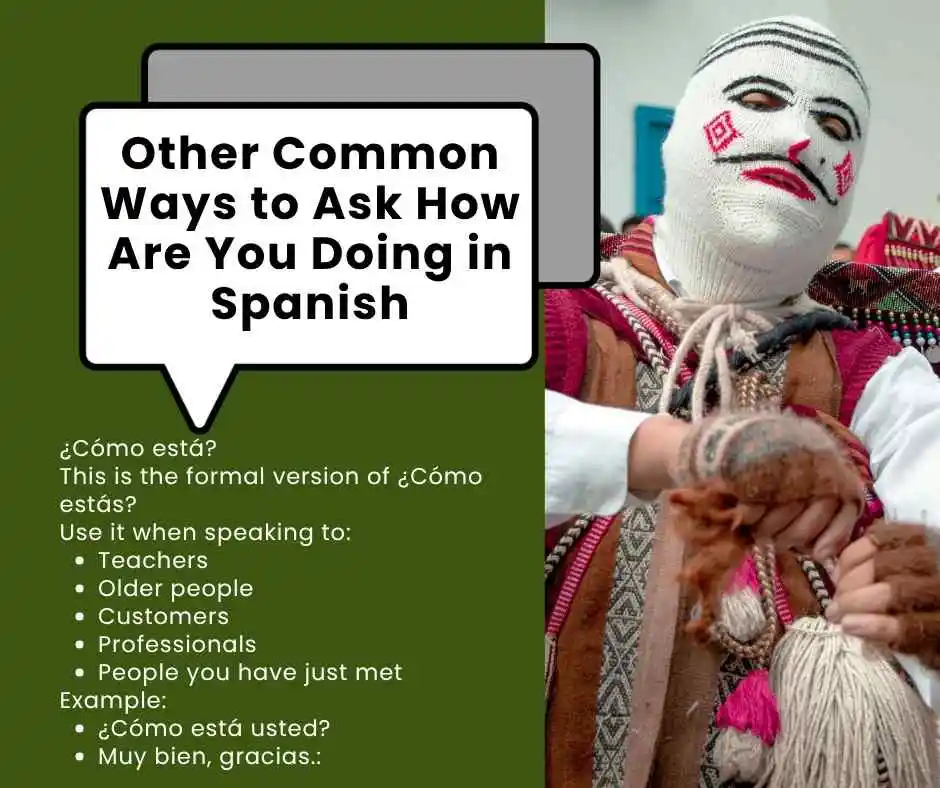
¿Cómo está?
This is the formal version of ¿Cómo estás?
Use it when speaking to:
- Teachers
- Older people
- Customers
- Professionals
- People you have just met
Example:
- ¿Cómo está usted?
- Muy bien, gracias.
¿Qué tal?
This phrase means something similar to:
- How’s it going?
- How are things?
- What’s up?
It is very common in casual conversations.
Example:
- ¡Hola! ¿Qué tal?
- Todo bien.
¿Cómo te va?
This phrase means:
- How’s it going for you?
- How are things going?
Example:
- ¿Cómo te va en el trabajo?
- Muy bien.
¿Cómo andas?
In many Spanish-speaking countries, people use this phrase to ask how someone is doing.
Example:
- Hola, ¿cómo andas?
- Bastante bien.
Understanding Formal and Informal Spanish Greetings
One important part of Spanish is knowing when to use formal and informal language.
Informal Situations
Use:
- ¿Cómo estás?
- ¿Qué tal?
- ¿Cómo andas?
- ¿Cómo te va?
These are suitable for:
- Friends
- Family members
- Classmates
- Close coworkers
Formal Situations
Use:
- ¿Cómo está?
- ¿Cómo está usted?
These are appropriate for:
- Business settings
- Professional meetings
- Older adults
- People you respect
Using the correct level of formality helps you sound polite and culturally aware.
Regional Variations Across Spanish-Speaking Countries
Spanish is spoken in many countries, so greetings can vary.
Spain
People often say:
- ¿Qué tal?
- ¿Cómo estás?
These expressions are very common in everyday interactions.
Mexico
You may hear:
- ¿Cómo estás?
- ¿Qué onda?
- ¿Cómo te va?
The phrase ¿Qué onda? is very casual and mostly used among friends.
Argentina
Many people say:
- ¿Cómo andás?
- ¿Todo bien?
These greetings are friendly and widely used.
Colombia
Common greetings include:
- ¿Cómo estás?
- ¿Cómo vas?
Both phrases are used frequently in daily conversation.
Chile
You might hear:
- ¿Cómo estás?
- ¿Qué tal?
The meaning remains similar, even if local pronunciation differs.
Pronunciation Guide for Beginners
Learning pronunciation helps you sound more natural.
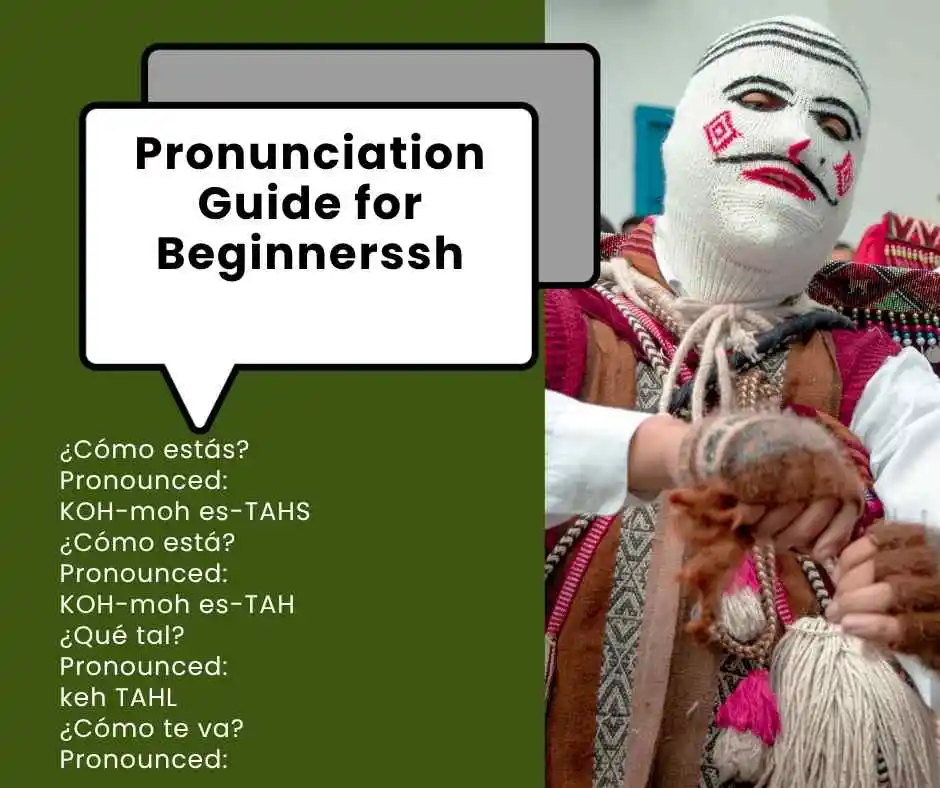
¿Cómo estás?
Pronounced:
KOH-moh es-TAHS
¿Cómo está?
Pronounced:
KOH-moh es-TAH
¿Qué tal?
Pronounced:
keh TAHL
¿Cómo te va?
Pronounced:
KOH-moh teh VAH
Practice saying each phrase slowly before increasing your speed.
How Native Speakers Use These Expressions
Native Spanish speakers use greetings every day in schools, workplaces, shops, and social gatherings.
For example:
Person A: Hola, ¿cómo estás?
Person B: Muy bien, gracias. ¿Y tú?
Person A: También estoy bien.
This simple exchange is one of the most common conversations in Spanish.
Useful Responses to How Are You Doing in Spanish
Knowing how to ask the question is important, but knowing how to answer it is equally valuable.
Estoy bien
Meaning:
I am fine.
Muy bien
Meaning:
Very well.
Excelente
Meaning:
Excellent.
Más o menos
Meaning:
So-so.
No muy bien
Meaning:
Not very well.
Estoy cansado
Meaning:
I am tired.
Estoy feliz
Meaning:
I am happy.
Todo bien
Meaning:
Everything is good.
These responses can help you continue a conversation naturally.
Everyday Conversation Examples
Talking to a Friend
Friend: Hola, ¿cómo estás?
You: Muy bien, gracias.
Friend: Me alegro.
Talking to a Teacher
Teacher: Buenos días.
You: Buenos días. ¿Cómo está?
Teacher: Muy bien, gracias.
Talking to a Coworker
Coworker: ¿Qué tal?
You: Todo bien. ¿Y tú?
Coworker: Muy bien.
These examples show how greetings fit naturally into daily conversations.
Common Mistakes Beginners Make
Many learners make small mistakes when learning Spanish greetings.
Using Formal Language With Close Friends
While not incorrect, it can sound overly formal.
Instead of:
- ¿Cómo está?
Use:
- ¿Cómo estás?
When talking to friends.
Forgetting the Accent Marks
Spanish accent marks can change pronunciation and meaning.
Correct:
- ¿Cómo estás?
Incorrect:
- Como estas
Translating Word for Word
English and Spanish do not always follow the same structure.
It is better to learn complete phrases rather than translating each individual word.
Ignoring Context
Different situations require different greetings.
Choose formal or informal expressions depending on who you are speaking with.
Why Learning Greetings Is Important
Greetings are often the first thing people learn in a new language.
They help you:
- Start conversations
- Build confidence
- Make friends
- Show politeness
- Improve communication skills
A simple greeting can create a positive first impression and encourage further conversation.
Tips for Remembering Spanish Greetings
Learning new phrases becomes easier with regular practice.
Practice Daily
Repeat common greetings every day.
Watch Spanish Videos
Listen to how native speakers greet one another.
Use Flashcards
Write the Spanish phrase on one side and the English meaning on the other.
Speak With Native Speakers
Real conversations improve memory and pronunciation.
Learn Phrases in Context
Instead of memorizing single words, practice complete sentences.
This method helps you communicate more naturally.
Frequently Asked Questions
What is the most common way to say how are you doing in Spanish?
The most common phrase is ¿Cómo estás?, which means “How are you?” in everyday conversation.
Is ¿Cómo está? formal or informal?
¿Cómo está? is the formal version and is used when speaking respectfully to someone.
Can I use ¿Qué tal? instead of how are you doing in Spanish?
Yes, ¿Qué tal? is a common casual greeting that means “How’s it going?” or “How are things?”
How do native speakers respond to how are you doing in Spanish?
Common responses include Estoy bien, Muy bien, Todo bien, and Excelente.
Which Spanish greeting should beginners learn first?
Beginners should start with ¿Cómo estás? because it is simple, useful, and understood throughout the Spanish-speaking world.
Conclusion
Learning how to say how are you doing in Spanish is an essential step for anyone studying the language. The phrase ¿Cómo estás? is the most common option, but expressions like ¿Qué tal?, ¿Cómo te va?, and ¿Cómo está? are also useful in different situations. By practicing these greetings regularly, you can communicate more naturally, build confidence, and enjoy better conversations with Spanish speakers around the world.
Also Check These Posts:
How to Say Happy Thanksgiving with Heart in 2026
How to Say 17 in Spanish Without Mistakes
Learn How to Say You’re Welcome in Italian and Impress Everyone

Blake Kinslee
Hi! I’m Blake, a passionate writer who loves exploring the beauty of different languages and cultures through storytelling. Ever since I was young, I’ve been fascinated by how words can connect people across the world. Writing, for me, is not just a hobby—it’s a way to share ideas, emotions, and dreams with readers everywhere. When I’m not crafting stories, you’ll usually find me reading, traveling, or discovering new words in languages I’ve never spoken before. Every book I write is a journey, and I hope my readers feel that magic too.
Books:
-
Whispers Across Borders
-
The Language of Dreams