
Learning how to say hi in Philippines can make your travel experience, conversations, and friendships much warmer and more meaningful.
When you greet people in their local style, you show respect and friendliness. In the Philippines, greetings are an important part of daily life, and even a simple “hi” can open many doors and smiles everywhere you go.
Understanding Greeting Culture in the Philippines
In the Philippines, greetings are more than just words. They reflect respect, kindness, and hospitality. People are naturally warm and welcoming, and they often greet even strangers politely.
Greetings are used:
- When meeting someone new
- When entering shops or homes
- When starting conversations
- When showing respect to elders
Filipino culture values friendliness, so saying hello properly helps you connect faster.
Basic Ways to Say Hi in the Philippines
The most common way to understand how to say hi in Philippines is through simple and widely used greetings.
Hello and Hi in English
English is an official language in the Philippines, so “Hello” and “Hi” are very common.
Examples:
- “Hi! How are you?”
- “Hello, nice to meet you!”
- “Hi there!”
These are used in cities, schools, offices, and casual conversations.
Kumusta – The Filipino Way of Saying Hi
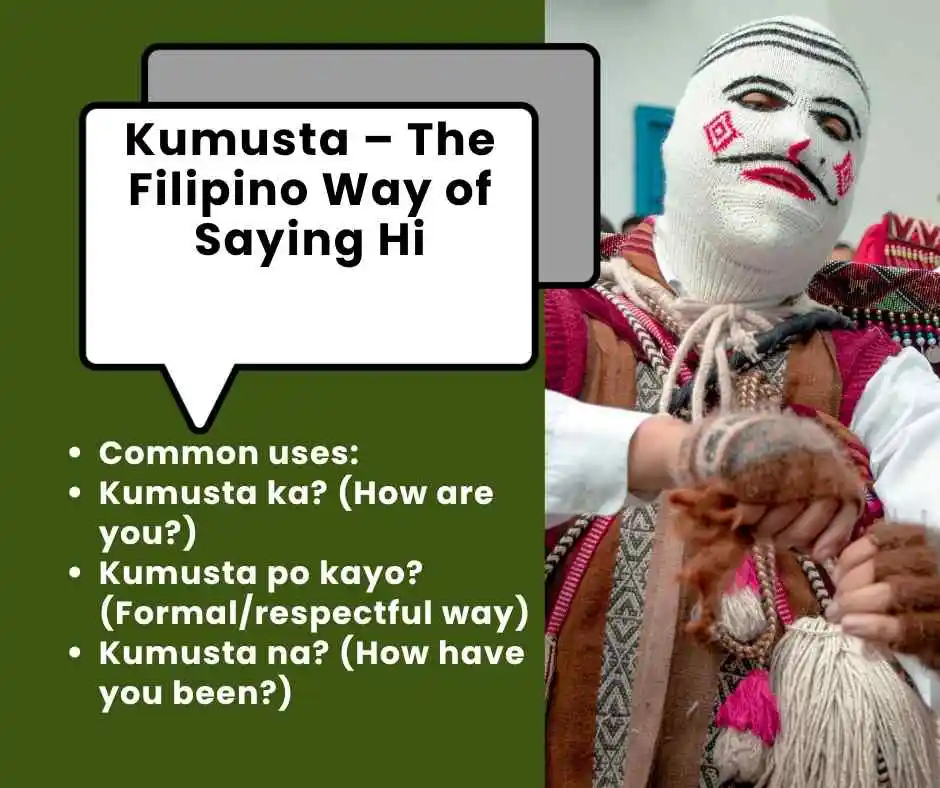
One of the most important local greetings is “Kumusta” (also spelled “Kamusta”).
It comes from the Spanish phrase “¿Cómo está?” meaning “How are you?”
Common uses:
- Kumusta ka? (How are you?)
- Kumusta po kayo? (Formal/respectful way)
- Kumusta na? (How have you been?)
This is one of the most natural ways to greet someone in the Philippines.
Casual Greetings Among Friends
Among young people and friends, greetings are often relaxed and fun.
Examples include:
- “Hey!”
- “Yo!”
- “What’s up?”
- “Hiya!”
These are mostly used in informal settings and social media chats.
Formal Greetings and Respectful Expressions
Filipinos are very respectful, especially toward elders and authority figures. If you want to understand how to say hi in Philippines in a polite way, these expressions are important.
Using “Po” and “Opo”
These words show respect:
- “Kumusta po kayo?”
- “Magandang araw po” (Good day)
Adding “po” makes your greeting more respectful.
Time-Based Greetings
Filipinos also greet depending on the time of day:
- Magandang umaga (Good morning)
- Magandang hapon (Good afternoon)
- Magandang gabi (Good evening)
These greetings are commonly used in schools, workplaces, and formal conversations.
Regional Greetings Across the Philippines
The Philippines has many languages and dialects. This makes greetings even more interesting.
Cebuano / Bisaya Greetings
In Visayas and Mindanao regions:
- “Kumusta” (same as Tagalog)
- “Maayong buntag” (Good morning)
- “Maayong hapon” (Good afternoon)
Ilocano Greetings
In Northern Luzon:
- “Kumusta kayo?”
- “Naimbag a bigat” (Good morning)
Each region adds its own cultural flavor to greetings.
Body Language and Social Etiquette
Understanding how to say hi in Philippines is not only about words. Body language plays a big role.
Friendly Gestures
Common greeting gestures include:
- Smiling warmly
- Light handshake
- Small nod of the head
- Slight bow for respect (rare but polite)
Respect for Elders
When greeting older people:
- Use polite language
- Slightly lower your head
- Add “po” in sentences
- Avoid overly casual tone
Filipinos value respect deeply, so body language matters a lot.
Real-Life Conversation Examples
To help you understand better, here are simple daily conversations.
Example 1: Meeting a Friend
A: Hi! Kumusta?
B: I’m good, thanks! How about you?
Example 2: Meeting an Elder
A: Magandang umaga po! Kumusta po kayo?
B: Mabuti naman, salamat.
Example 3: At a Store
Customer: Hello!
Seller: Hi! How can I help you?
These examples show how flexible greetings are in everyday life.
Common Mistakes to Avoid
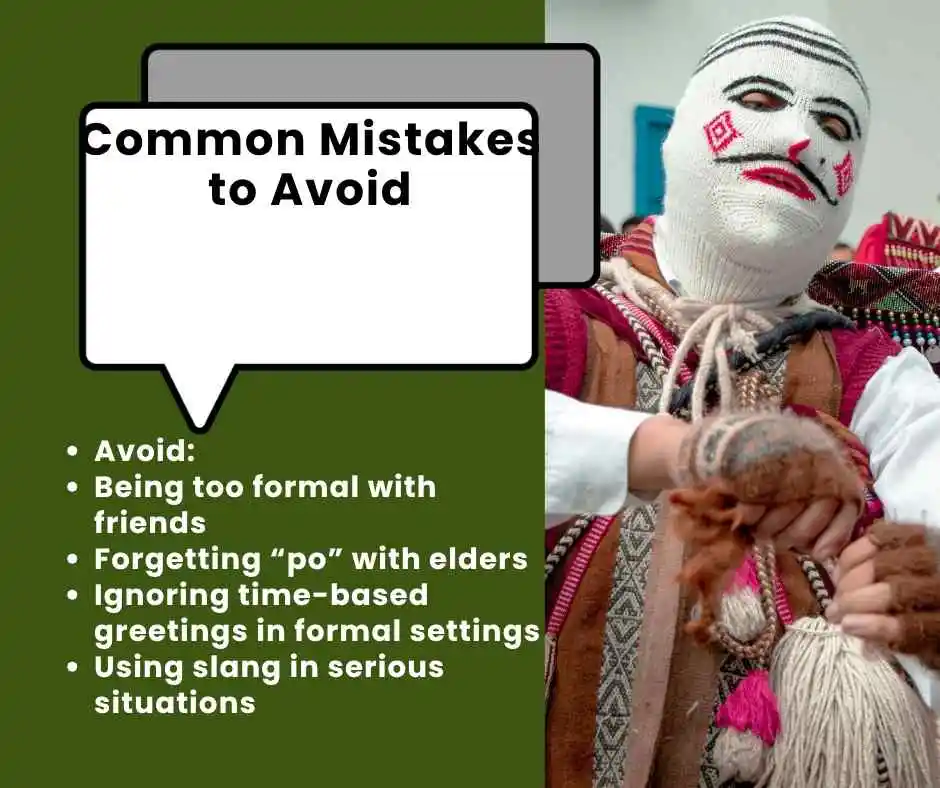
When learning how to say hi in Philippines, beginners often make small mistakes.
Avoid:
- Being too formal with friends
- Forgetting “po” with elders
- Ignoring time-based greetings in formal settings
- Using slang in serious situations
Keeping greetings simple and respectful works best.
Modern and Digital Greetings
In today’s world, many greetings happen online or through text messages.
Common Chat Greetings
- “Hi 😊”
- “Hello!”
- “Kumusta?”
- “Hey, what’s up?”
Social Media Style
Filipinos often use:
- Emojis
- Short greetings
- Friendly tone
Even online, politeness is still important.
Why Learning Greetings Matters
Knowing how to say hi in Philippines helps you:
- Build friendships faster
- Show cultural respect
- Travel more comfortably
- Connect with locals easily
A simple greeting can create strong first impressions.
Tips for Sounding Natural in the Philippines
If you want to sound more natural, follow these tips:
- Practice “Kumusta” regularly
- Smile while greeting
- Match the tone of the person you are talking to
- Don’t overthink mistakes
- Be friendly and relaxed
Filipinos appreciate effort more than perfection.
FAQs
What is the most common way to say hi in Philippines?
The most common ways include “Hi,” “Hello,” and “Kumusta.” English greetings are widely used, but “Kumusta” is the most natural Filipino way to say hi in everyday conversations.
Is Kumusta formal or informal when saying hi in Philippines?
“Kumusta” can be both formal and informal depending on usage. Adding “po” makes it formal and respectful, especially when speaking to elders or people in authority.
Can I use English to say hi in Philippines?
Yes, English is widely spoken in the Philippines. Saying “Hi” or “Hello” is completely normal and understood everywhere, especially in cities and professional environments.
What is a respectful way to say hi in Philippines to elders?
A respectful greeting includes phrases like “Magandang araw po” or “Kumusta po kayo.” Adding “po” shows politeness and respect toward elders.
Are there different ways to say hi in Philippines in different regions?
Yes, different regions have their own languages. For example, Cebuano uses “Maayong buntag,” while Ilocano uses “Naimbag a bigat,” but “Kumusta” is widely understood everywhere.
Conclusion
Learning how to say hi in Philippines is a simple but powerful way to connect with people and understand their culture. Whether you use “Hi,” “Hello,” or “Kumusta,” each greeting carries warmth and friendliness. By practicing these expressions, you can communicate more confidently and build better relationships in the Philippines. Small greetings can create big connections in everyday life.
Also Check These Posts:
How to Say Hi in Swedish Correctly Every Time
How to Say Goodnight to Your Crush with Simple and Sweet Messages
How to Say Happy Birthday in Hawaiian | Fun and Easy Guide in 2026

Daniel Carter
Hi, I’m Daniel Carter, a passionate storyteller and lifelong explorer of languages and cultures. Writing has always been my way of connecting with the world, sharing stories that inspire, educate, and entertain. I love diving into the nuances of communication and finding beauty in the words we use every day. Over the years, I’ve dedicated myself to crafting stories that resonate across borders and languages. When I’m not writing, you’ll usually find me exploring new places or learning something new about the world around me. My goal is to create stories that make readers think, smile, and sometimes even dream.
Books:
-
Whispers Across Borders
-
The Language of Hearts