

Want to know how to say Happy Valentine’s Day in Spanish and make your Valentine feel extra special?
Saying it the right way shows thoughtfulness and charm, whether in a card, text, or in person.
This guide will teach you the correct pronunciation and variations to make your greeting perfect.
By the end, you’ll confidently spread love in Spanish like a native speaker.
Basic Phrase for Valentine’s Day
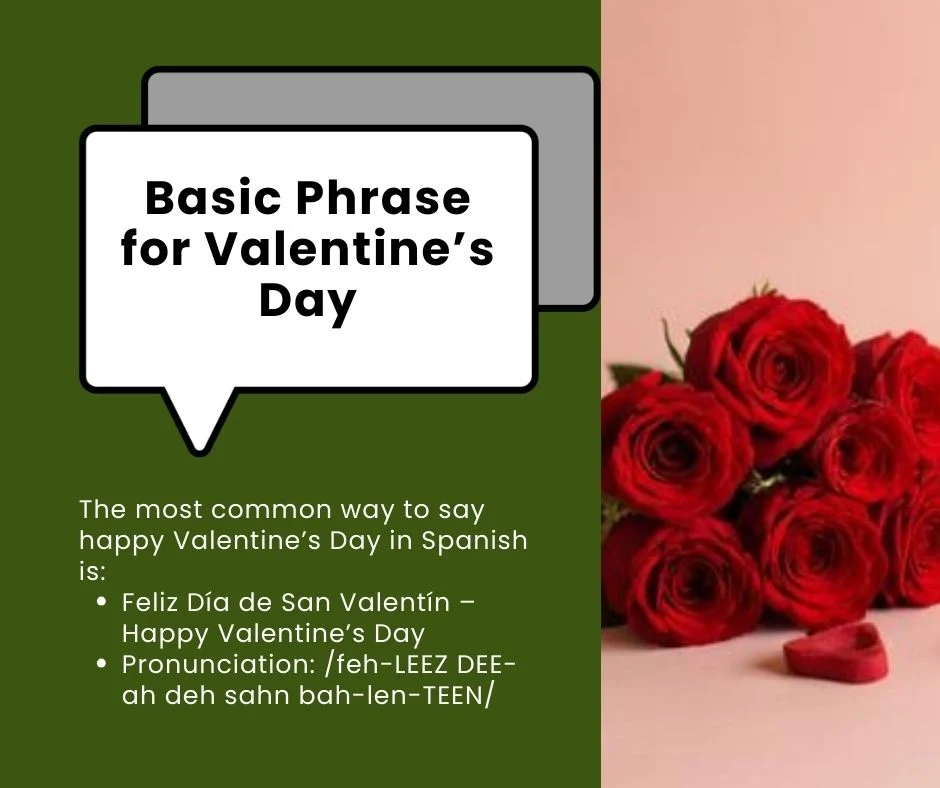
The most common way to say happy Valentine’s Day in Spanish is:
- Feliz Día de San Valentín – Happy Valentine’s Day
- Pronunciation: /feh-LEEZ DEE-ah deh sahn bah-len-TEEN/
This phrase is used widely across Spanish-speaking countries, including Mexico, Spain, and Latin America.
It is polite, heartfelt, and appropriate for both formal and informal situations.
Breaking Down the Phrase
Understanding each part of the phrase makes it easier to remember:
- Feliz – Happy
- Día – Day
- de – of
- San Valentín – Saint Valentine
By knowing the meaning of each word, you can also form related phrases and greetings for cards, messages, or verbal wishes.
Informal Variations
In casual conversations, people sometimes shorten the phrase or add friendly touches:
- Feliz San Valentín – Happy Valentine’s (shorter version)
- ¡Feliz San Valentín, mi amor! – Happy Valentine’s Day, my love!
- ¡Feliz día, cariño! – Happy day, darling!
These variations allow you to personalize your message depending on your relationship with the person.
How to say happy Valentine’s Day in Spanish (Mexico)
If you want to wish someone a happy Valentine’s Day in Mexican Spanish, the most common phrase is “¡Feliz Día de San Valentín!” You can also say “¡Feliz Día del Amor y la Amistad!” because many people in Mexico celebrate both love and friendship on this special day. Use the phrase with a smile, a heartfelt message, or a thoughtful gift to make it feel even more meaningful.
- Like a warm hug on a cool morning — It makes the other person feel loved.
- Like sunshine after the rain — It brings happiness and hope.
- Like a blooming rose in spring — It expresses beauty and affection.
- Like a sweet melody — It sounds caring and sincere.
- Like a glowing candle — It fills the heart with warmth.
- Like a handwritten love letter — It feels personal and genuine.
- Like a favorite song — It creates lasting memories.
- Like a bright rainbow — It spreads joy and positivity.
- Like a gentle breeze — It comforts the heart.
- Like a sparkling star — It reminds someone they are special.
Happy Valentine’s day my love in Spanish
To say “Happy Valentine’s Day, my love” in Spanish, you can say “¡Feliz Día de San Valentín, mi amor!” This phrase sounds romantic, natural, and heartfelt. It works perfectly in a card, text message, or spoken greeting for your partner.
- Like a heartbeat full of love — It shows deep affection.
- Like a soft whisper — It feels intimate and caring.
- Like a glowing sunset — It creates a romantic mood.
- Like a treasured memory — It stays close to the heart.
- Like a gentle kiss — It expresses tenderness.
- Like a beautiful poem — It speaks with emotion.
- Like a warm blanket — It provides comfort and love.
- Like a shining diamond — It highlights someone’s value.
- Like a peaceful garden — It reflects calm and happiness.
- Like a forever promise — It symbolizes lasting love.
How to say Happy Valentine’s Day in French

In French, “Happy Valentine’s Day” is “Joyeuse Saint-Valentin !” It is the standard greeting people use to celebrate Valentine’s Day in France and many French-speaking countries. You can pair it with a loving message for a more personal touch.
- Like a fresh flower bouquet — It shares beauty and kindness.
- Like a golden sunrise — It starts the day with joy.
- Like a heartfelt smile — It brightens someone’s mood.
- Like a peaceful river — It flows with warmth.
- Like a glowing heart — It reflects genuine affection.
- Like a cozy fireplace — It creates comfort.
- Like a handwritten note — It feels thoughtful.
- Like a sweet dessert — It adds happiness.
- Like a lucky charm — It brings positive feelings.
- Like a soft cloud — It feels gentle and comforting.
How to say happy valentine’s day in spanish audio
If you want to learn the correct pronunciation, the phrase is “¡Feliz Día de San Valentín!” Listening to native speakers helps you understand the natural accent and rhythm. Repeating the phrase several times can improve your confidence and pronunciation.
- Like learning a favorite song — Practice makes it natural.
- Like following a friendly guide — It becomes easier with examples.
- Like hearing birds sing — Native pronunciation sounds smooth.
- Like riding a bicycle — Repetition builds confidence.
- Like solving a simple puzzle — Every practice session helps.
- Like planting a seed — Improvement grows over time.
- Like reading aloud — It strengthens speaking skills.
- Like walking a familiar path — It feels easier each time.
- Like polishing a gem — Practice improves clarity.
- Like finding the perfect rhythm — Good pronunciation sounds natural.
How to say happy valentine’s day in japanese
In Japanese, people commonly say “ハッピーバレンタインデー” (Happī Barentain Dē) for “Happy Valentine’s Day.” It is a borrowed English phrase written in Katakana and is widely understood in Japan during the holiday.
- Like a cherry blossom in spring — It represents beauty and care.
- Like a peaceful morning — It feels calm and sincere.
- Like a folded paper crane — It carries thoughtful meaning.
- Like a gentle snowfall — It expresses quiet affection.
- Like a glowing lantern — It brings warmth.
- Like a calm lake — It reflects pure feelings.
- Like a kind gesture — It strengthens relationships.
- Like a sweet chocolate gift — It shows appreciation.
- Like a bright moon — It shines with kindness.
- Like a lasting friendship — It creates meaningful memories.
How to say valentines day in Spanish
The Spanish name for Valentine’s Day is “Día de San Valentín.” In some Spanish-speaking countries, people also call it “Día del Amor y la Amistad,” celebrating both romantic love and friendship.
- Like opening a heartfelt gift — It brings joy.
- Like sharing a warm smile — It creates connection.
- Like a colorful bouquet — It celebrates love.
- Like a friendly handshake — It strengthens relationships.
- Like a cheerful greeting card — It spreads kindness.
- Like a happy reunion — It brings people together.
- Like a glowing heart — It reflects affection.
- Like a peaceful conversation — It builds trust.
- Like a sweet memory — It stays with you.
- Like a shining light — It brightens someone’s day.
How to say Happy Valentine’s Day in Portuguese
In Portuguese, you can say “Feliz Dia dos Namorados!” in Brazil during its romantic celebration, or “Feliz Dia de São Valentim!” in Portugal for Valentine’s Day. The correct phrase depends on the country and local tradition.
- Like a gentle ocean wave — It carries warm feelings.
- Like a bright lighthouse — It guides love.
- Like a blooming garden — It celebrates happiness.
- Like a warm embrace — It feels comforting.
- Like a joyful celebration — It spreads smiles.
- Like a glowing pearl — It reflects something precious.
- Like a peaceful journey — It grows stronger over time.
- Like a kind compliment — It lifts someone’s spirit.
- Like a sparkling smile — It spreads happiness.
- Like a beautiful sunrise — It begins with hope.
Valentine’s day in spanish date
In Spanish, Valentine’s Day is celebrated on 14 de febrero (February 14). You can write the date as 14 de febrero and refer to the occasion as Día de San Valentín. Many Spanish-speaking countries celebrate love, friendship, and appreciation on this date.
- Like a date marked with a heart — It reminds people to celebrate love.
- Like a special anniversary — It holds meaningful memories.
- Like a page in a favorite book — It becomes unforgettable.
- Like a family tradition — It brings people together.
- Like a yearly celebration — It returns with happiness.
- Like a festive holiday — It fills the day with joy.
- Like a cherished calendar reminder — It keeps love in mind.
- Like a joyful milestone — It marks a meaningful occasion.
- Like a treasured keepsake — It holds sentimental value.
- Like a bright celebration — It honors love and friendship.
Using Valentine’s Day in Sentences
It’s important not only to know the phrase but also how to use it naturally in sentences:
- Te deseo un feliz Día de San Valentín. – I wish you a happy Valentine’s Day.
- Espero que tengas un feliz Día de San Valentín. – I hope you have a happy Valentine’s Day.
- ¡Feliz Día de San Valentín a todos mis amigos! – Happy Valentine’s Day to all my friends!
These sentences can be used in cards, messages, or face-to-face conversations.
Romantic Expressions for Valentine’s Day
For a romantic context, you can add affectionate words:
- Mi vida – My life / my love
- Mi amor – My love
- Cariño – Darling or dear
- Corazón – Heart or sweetheart
Example sentences:
- Feliz Día de San Valentín, mi amor. Te quiero mucho. – Happy Valentine’s Day, my love. I love you very much.
- Feliz Día de San Valentín, cariño. Eres mi todo. – Happy Valentine’s Day, darling. You are my everything.
Adding these expressions makes your message more heartfelt and personal.
Expressing Friendship on Valentine’s Day
Valentine’s Day isn’t just about romantic love; it’s also about friendship and appreciation:
- ¡Feliz Día de San Valentín, amigo! – Happy Valentine’s Day, friend!
- Espero que tengas un feliz Día de San Valentín, amigo/a. – I hope you have a happy Valentine’s Day, friend.
- Feliz Día de la amistad y el amor. – Happy day of friendship and love.
This shows that the phrase can be adapted for multiple types of relationships.
Writing Valentine’s Messages
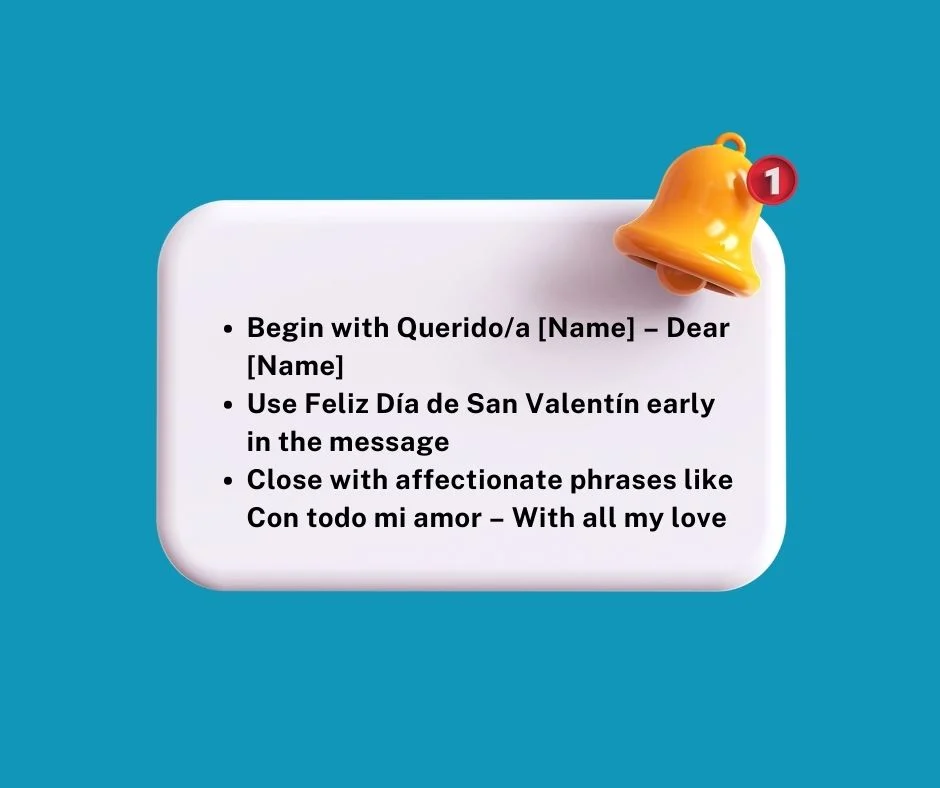
When sending written messages, such as cards, emails, or text messages, the Spanish language has a few conventions:
- Begin with Querido/a [Name] – Dear [Name]
- Use Feliz Día de San Valentín early in the message
- Close with affectionate phrases like Con todo mi amor – With all my love
Example of a full message:
- Querida María, Feliz Día de San Valentín. Espero que tengas un día maravilloso lleno de amor y felicidad. Con todo mi amor, Juan.
- Translation: Dear Maria, Happy Valentine’s Day. I hope you have a wonderful day full of love and happiness. With all my love, Juan.
This structure works well for cards, emails, and social media messages.
Pronunciation Tips
Pronunciation is important to make your message sound natural:
- Feliz – feh-LEEZ
- Día – DEE-ah
- de – deh
- San Valentín – sahn bah-len-TEEN
Emphasizing the correct syllables helps your greeting sound warm and genuine.
Adding Compliments
Valentine’s Day greetings often include compliments or expressions of admiration:
- Eres la persona más especial en mi vida. – You are the most special person in my life.
- Tu sonrisa ilumina mi día. – Your smile brightens my day.
- Te quiero con todo mi corazón. – I love you with all my heart.
Combining these phrases with Feliz Día de San Valentín creates a memorable and heartfelt greeting.
Cultural Notes
In Spanish-speaking countries, Valentine’s Day is celebrated in similar ways to English-speaking countries, but there are some cultural nuances:
- Known as El Día de San Valentín or El Día del Amor y la Amistad (The Day of Love and Friendship)
- People give flowers, chocolates, cards, and small gifts
- Friends, not just romantic partners, are often celebrated
Understanding these cultural aspects allows you to use the greeting appropriately and appreciate its meaning.
Celebrating in Different Countries
- Mexico: Valentine’s Day includes gifts for friends and loved ones.
- Spain: Couples exchange gifts, flowers, and romantic dinners.
- Colombia: Known as Día del Amor y la Amistad, friends are also celebrated with small tokens.
By knowing the customs, you can adapt your greeting to fit different contexts and relationships.
Using Social Media Greetings
Social media is a popular way to send Valentine’s Day wishes. Short and cheerful phrases work well:
- ¡Feliz Día de San Valentín a todos! – Happy Valentine’s Day to everyone!
- Feliz Día de San Valentín, que el amor esté siempre contigo. – Happy Valentine’s Day, may love always be with you.
- Feliz Día de San Valentín, mi mejor amigo/a. – Happy Valentine’s Day, my best friend.
Adding emojis like ❤️, 🌹, or 💌 enhances your message visually.
Creative Ways to Say Happy Valentine’s Day
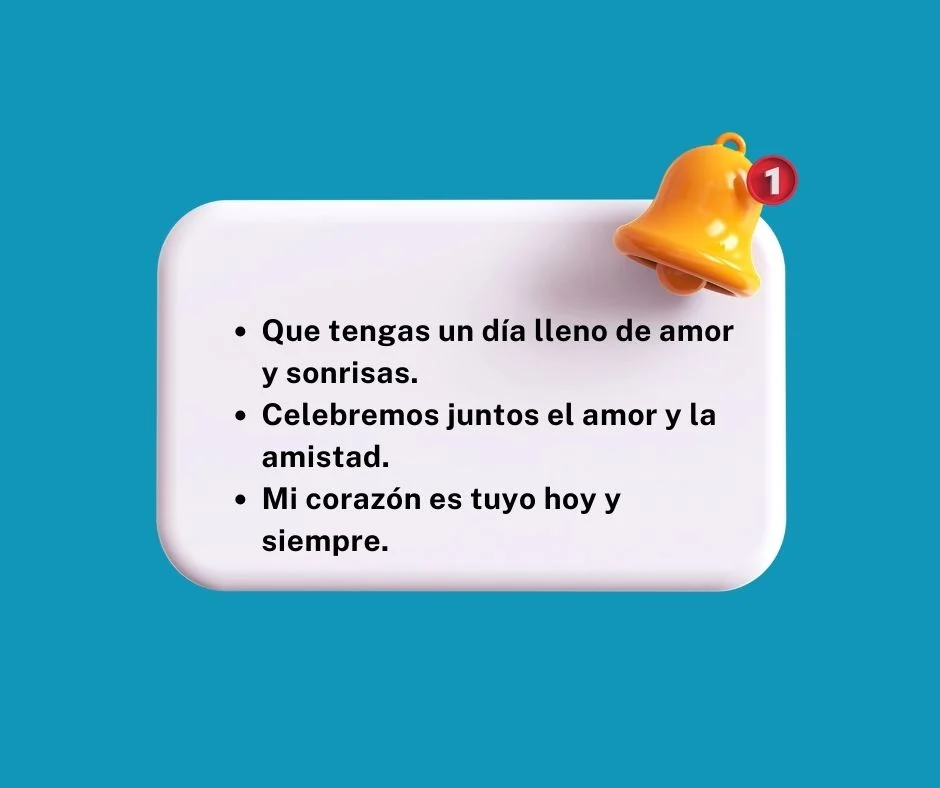
Beyond the standard phrases, you can be more creative:
- Que tengas un día lleno de amor y sonrisas. – May you have a day full of love and smiles.
- Celebremos juntos el amor y la amistad. – Let’s celebrate love and friendship together.
- Mi corazón es tuyo hoy y siempre. – My heart is yours today and always.
These phrases make your greeting unique and memorable.
Frequently Asked Questions (FAQs)
How do you say happy Valentine’s Day in Spanish?
The standard phrase is Feliz Día de San Valentín.
Can I shorten it for casual messages?
Yes, you can say Feliz San Valentín in informal contexts.
How do I make it romantic?
Add terms like mi amor, mi vida, or cariño after the phrase.
Can I send it to friends?
Absolutely! Use phrases like Feliz Día de la amistad y el amor for friends.
Is there a pronunciation tip?
Yes, stress the syllables correctly: feh-LEEZ DEE-ah deh sahn bah-len-TEEN.
How do they say Happy Valentine’s day in Spanish?
The most common way to say Happy Valentine’s Day in Spanish is “¡Feliz Día de San Valentín!” This greeting is widely used in Spain and many Spanish-speaking countries. In some regions, people also say “¡Feliz Día del Amor y la Amistad!” to celebrate both love and friendship.
What do Spanish people call Valentine’s day?
In Spain, Valentine’s Day is called “Día de San Valentín.” It is celebrated every year on February 14 and is a day for expressing love and appreciation through gifts, cards, flowers, and romantic gestures.
How do you say Valentine’s in Spanish?
The word “Valentine’s” in Spanish is commonly translated as “San Valentín.” When referring to the holiday, people usually say “Día de San Valentín,” which means Valentine’s Day in English.
What is Valentine’s day called in Mexico?
In Mexico, Valentine’s Day is called “Día del Amor y la Amistad,” which means Day of Love and Friendship. The celebration honors not only romantic relationships but also friendships, making it a special occasion for many people.
Do Latinos celebrate Valentine’s day?
Yes, many Latinos celebrate Valentine’s Day. Depending on the country, the holiday may focus on romantic love, friendship, or both, with people exchanging gifts, flowers, chocolates, and heartfelt messages.
Which country bans Valentine’s day?
Some countries have restricted or banned public Valentine’s Day celebrations at different times due to cultural or religious reasons. For example, Pakistan has placed restrictions on public Valentine’s Day events in certain years, although private celebrations may still take place.
Conclusion
Learning how to say happy Valentine’s Day in Spanish allows you to express love and appreciation in a warm and heartfelt way.
Whether for friends, family, or a romantic partner, the phrase Feliz Día de San Valentín is versatile and widely understood.
By practicing pronunciation, adding personal touches, and understanding cultural nuances, your greetings will be memorable and meaningful.
Celebrate love, friendship, and affection in Spanish this Valentine’s Day with confidence and joy.
Also Check These Posts:
How to Say Color in Spanish | Quick Guide
How to Say Hi in Mandarin | Tips for Learners in 2026
How to Say Thank You in Hindi | Your Complete Guide
How to Say Bacon in Spanish Like a Local

Ethan Moore
Ethan Moore is a passionate storyteller and language enthusiast who believes that words have the power to bridge cultures. Ever since he was young, Ethan has been fascinated by how languages shape our thoughts and connect people from different corners of the world. Through his writing, he explores the beauty of communication and the subtle nuances that make each language unique. When he’s not writing, Ethan enjoys traveling, learning new languages, and diving into different cultures. His goal is to inspire readers to embrace diversity and appreciate the richness of global expression.
Books:
-
Whispers Across Tongues
-
The Language of Dreams