
Learning how to say excuse me in French can make everyday conversations smoother and more polite.
Whether you are traveling to France, studying French in school, or speaking with native speakers online, knowing the right expressions helps you sound respectful and confident.
French people value politeness in communication, so understanding these phrases is an important step for beginners who want to speak naturally.
The Most Common Way to Say Excuse Me in French
The most common French phrase for “excuse me” is:
Excusez-moi
Pronunciation: ex-kew-zay mwah
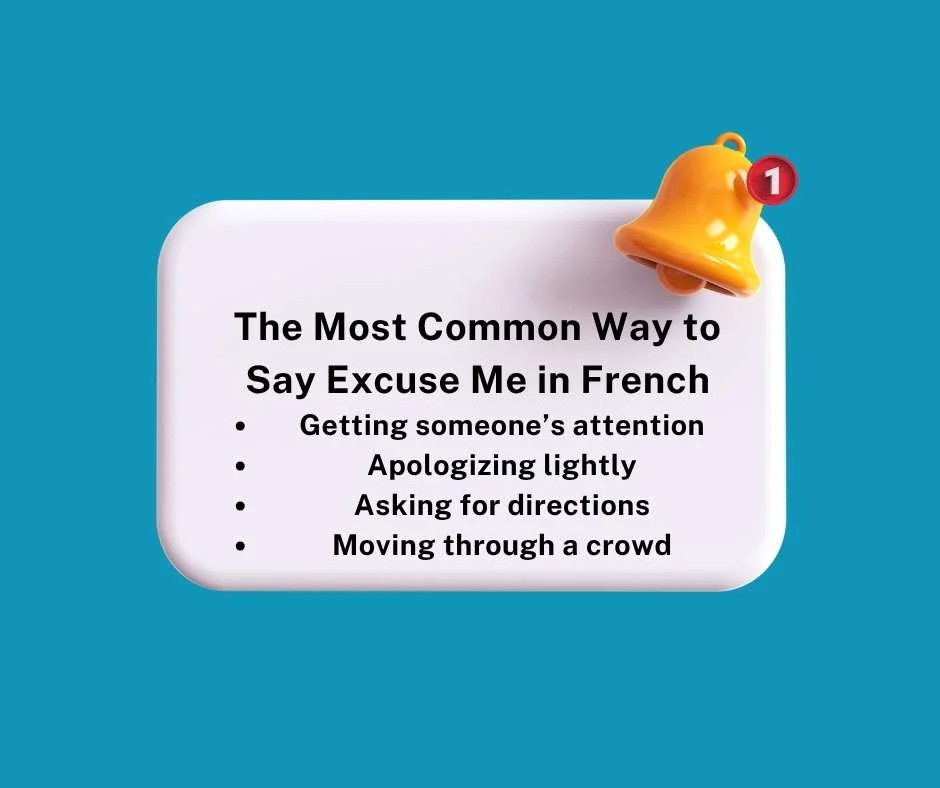
This phrase is polite and works in many situations. You can use it when:
- Getting someone’s attention
- Apologizing lightly
- Asking for directions
- Moving through a crowd
- Interrupting politely
Simple Examples
- Excusez-moi, où est la gare ?
(Excuse me, where is the train station?) - Excusez-moi, je voudrais un café.
(Excuse me, I would like a coffee.)
Because it is versatile and respectful, “Excusez-moi” is the safest option for beginners.
How to say excuse me in french informal
When you speak with friends, family, or people your age, you can use informal ways to say excuse me in French. The most common choice is “Pardon” because it sounds natural and polite in everyday conversations. You may also hear “Excuse-moi”, which people use when talking to someone they know well. These expressions work well when you want to pass by someone, get attention, or politely interrupt a conversation.
- Pardon – A casual and common way to say “excuse me.”
- Excuse-moi – Used with friends or someone you know.
- Great for daily conversations.
- Sounds friendly and respectful.
- Helps you avoid sounding too formal.
- Often used in shops and cafés.
- Suitable when passing through a crowd.
- Easy for beginners to remember.
- Native speakers use it often.
- A useful phrase for everyday French.
How to say excuse me in french pronunciation
Learning the correct pronunciation helps people understand you more easily. “Excusez-moi” sounds close to “ex-kew-zay mwah,” while “Pardon” sounds similar to “par-dohn.” Listening to native speakers and practicing these words aloud will improve your confidence and make your French sound more natural.
- Say Excusez-moi as “ex-kew-zay mwah.”
- Say Pardon as “par-dohn.”
- Speak slowly at first.
- Listen to native pronunciation often.
- Repeat the words every day.
- Focus on clear vowel sounds.
- Practice with short conversations.
- Record your voice and compare it.
- Use pronunciation apps for practice.
- Confidence grows with regular speaking.
Excuse me” in French formal
In formal situations, the best phrase is “Excusez-moi.” You should use it when speaking with strangers, older people, teachers, business professionals, or anyone you want to address respectfully. This expression shows good manners and creates a polite first impression.
- Excusez-moi is the standard formal phrase.
- Use it with strangers.
- Appropriate in business settings.
- Respectful for older adults.
- Common in restaurants and hotels.
- Helpful during travel.
- Sounds professional.
- Creates a polite impression.
- Suitable for customer service situations.
- A must-know formal French expression.
How to say excuse me in french audio
Listening to audio recordings is one of the best ways to learn French pronunciation. Hearing native speakers say “Excusez-moi” and “Pardon” helps you copy the correct sounds, rhythm, and accent. Regular listening also improves your speaking confidence.
- Listen to native French speakers.
- Repeat each phrase aloud.
- Practice with slow audio first.
- Move to natural-speed recordings later.
- Copy the speaker’s rhythm.
- Focus on clear pronunciation.
- Replay difficult words.
- Practice every day.
- Improve your listening skills.
- Audio practice builds speaking confidence.
How to say pardon in French
The French word “Pardon” means “pardon,” “excuse me,” or even “sorry,” depending on the situation. It is one of the most useful and flexible words in French. People use it to politely get someone’s attention, ask someone to repeat something, or apologize for a small mistake.
- Pardon is a common French word.
- It can mean “excuse me.”
- It can also mean “sorry.”
- Use it to get attention politely.
- Say it when asking someone to repeat something.
- Helpful in public places.
- Easy for beginners to learn.
- Works in many everyday situations.
- Sounds polite and natural.
- French speakers use it frequently.
I am very sorry in French
If you want to express a stronger apology, you can say “Je suis vraiment désolé” if you are male or “Je suis vraiment désolée” if you are female. This phrase means “I am very sorry” and shows sincere regret when you have made a mistake or hurt someone’s feelings.
- Je suis vraiment désolé (male).
- Je suis vraiment désolée (female).
- Means “I am very sorry.”
- Shows sincere regret.
- Suitable for serious apologies.
- Sounds heartfelt.
- Use it after making a mistake.
- Helps express genuine feelings.
- More meaningful than a simple “Pardon.”
- Common in both personal and formal situations.
How to say Excuse me in French to get someone’s attention
When you need to get someone’s attention politely, “Excusez-moi” is the best expression. You can use it before asking a question, requesting help, or speaking to a stranger. It sounds respectful and fits almost every situation.
- Say Excusez-moi before asking a question.
- Use it with strangers.
- Helpful when asking for directions.
- Works in stores and restaurants.
- Sounds polite and respectful.
- Gets attention without sounding rude.
- Suitable for formal situations.
- Easy to remember.
- Common throughout French-speaking countries.
- One of the first French phrases to learn.
How to say pardon me in French
The closest French expression for “pardon me” is “Pardon-moi” or simply “Pardon.” Both phrases politely acknowledge a small mistake, ask someone to move, or express a brief apology. Native speakers often prefer the shorter “Pardon” because it sounds more natural in everyday speech.
- Pardon-moi means “pardon me.”
- Pardon is more common in daily life.
- Use it after a small mistake.
- Helpful when moving past someone.
- Suitable for polite interruptions.
- Sounds natural in conversation.
- Easy for beginners to pronounce.
- Common in public places.
- Shows good manners.
- A practical phrase for everyday French.
Different Ways to Say Excuse Me in French
French has several polite expressions depending on the situation and level of formality.
Pardon
Pardon is short, simple, and very common.
People use it when:
- They did not hear something
- They accidentally bump into someone
- They want someone to repeat a sentence
Example
- Pardon ?
(Sorry?) - Pardon, je ne comprends pas.
(Sorry, I don’t understand.)
This expression is natural in daily conversations.
Je suis désolé
This phrase means:
“I am sorry.”
It is stronger and more emotional than “Excusez-moi.”
Use it when:
- You made a mistake
- Someone feels upset
- You want to apologize sincerely
Example
- Je suis désolé pour le retard.
(I am sorry for being late.)
Pardonnez-moi
This phrase sounds more formal and serious.
It means:
“Forgive me.”
You may hear it in formal conversations, literature, or emotional situations.
When to Use “Excusez-moi” in French
Understanding context is important when learning polite expressions.
Getting Someone’s Attention
French speakers often say “Excusez-moi” before asking a question.
Example
- Excusez-moi, pouvez-vous m’aider ?
(Excuse me, can you help me?)
This sounds respectful and polite.
Passing Through a Crowd
If you need space on a train, bus, or street, saying “Excusez-moi” is considered good manners.
In Restaurants and Shops
Customers commonly use polite phrases before speaking to workers.
Example:
- Excusez-moi, l’addition s’il vous plaît.
(Excuse me, the bill please.)
Interrupting a Conversation
French culture values politeness during conversations. If you interrupt someone, adding “Excusez-moi” helps soften the interruption.
Formal and Informal Ways to Say Excuse Me
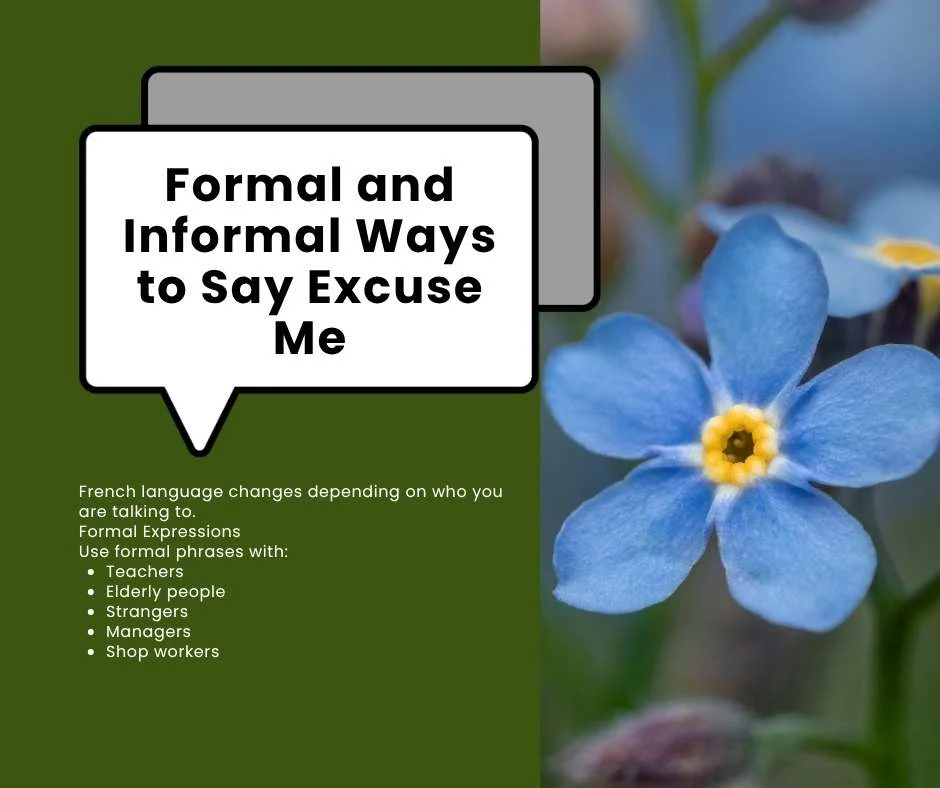
French language changes depending on who you are talking to.
Formal Expressions
Use formal phrases with:
- Teachers
- older people
- Strangers
- Managers
- Shop workers
Examples include:
- Excusez-moi
- Pardonnez-moi
- Je suis désolé
Formal speech shows respect.
Informal Expressions
With close friends or family, people may use shorter or more casual phrases.
Pardon
Simple and natural.
Désolé
A casual version of “sorry.”
Example:
- Désolé, j’ai oublié.
(Sorry, I forgot.)
Informal language feels relaxed and friendly.
Pronunciation Tips for Beginners
French pronunciation may seem difficult at first, but these phrases become easier with practice.
How to Pronounce “Excusez-moi”
Break it into parts:
- Ex
- cu
- sez
- moi
Say it slowly:
ex-kew-zay mwah
Helpful Pronunciation Tips
- French sounds are softer than English sounds
- Avoid stressing words too strongly
- Listen carefully to native speakers
Watching French videos and repeating phrases aloud can improve your pronunciation quickly.
Cultural Importance of Politeness in France
French culture places a strong focus on respectful communication.
Politeness Comes First
In France, people usually greet others politely before asking questions.
For example:
- Bonjour
- Excusez-moi
- Merci
Skipping polite words may sound rude even if your grammar is correct.
Respect in Public Places
French speakers often use polite expressions in:
- Cafés
- Stores
- Trains
- Schools
- Offices
Simple manners create positive interactions.
Tone Matters
The tone of your voice is just as important as the words themselves.
A gentle and respectful tone sounds natural and friendly.
Everyday Situations Where You Can Use These Phrases
Learning practical situations helps beginners remember expressions more easily.
Asking for Directions
Example:
- Excusez-moi, où est le musée ?
(Excuse me, where is the museum?)
Accidentally Bumping Into Someone
Example:
- Pardon !
(Sorry!)
Interrupting Someone
Example:
- Excusez-moi de vous déranger.
(Excuse me for bothering you.)
In a Classroom
Students may say:
- Excusez-moi, je ne comprends pas.
(Excuse me, I do not understand.)
During Phone Calls
People often begin politely with:
- Bonjour, excusez-moi…
This creates a respectful introduction.
French Expressions Related to “Excuse Me”
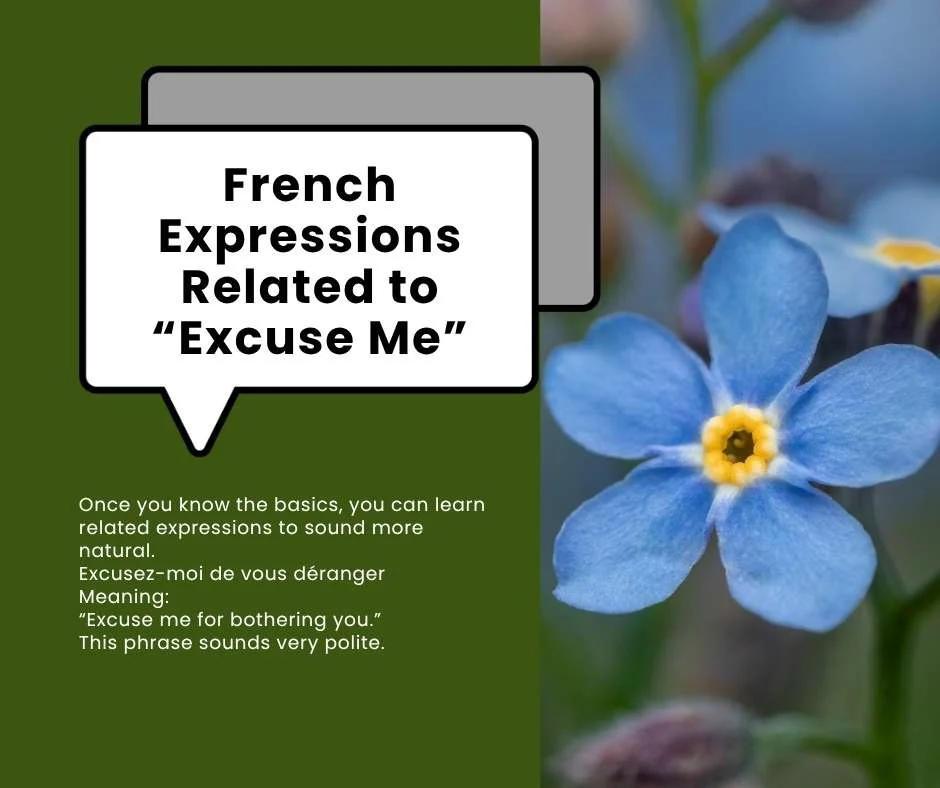
Once you know the basics, you can learn related expressions to sound more natural.
Excusez-moi de vous déranger
Meaning:
“Excuse me for bothering you.”
This phrase sounds very polite.
Veuillez m’excuser
Meaning:
“Please excuse me.”
It is formal and common in professional settings.
Mille excuses
Meaning:
“A thousand apologies.”
This expression sounds dramatic but sincere.
Avec votre permission
Meaning:
“With your permission.”
People may use this before passing by someone or interrupting politely.
Common Mistakes Beginners Make
Avoiding common errors helps your French sound smoother.
Using Informal Speech With Strangers
Saying casual expressions to strangers may seem disrespectful.
Start formally unless you know the person well.
Forgetting Polite Words
In French, politeness matters a lot.
Adding words like:
- Bonjour
- Merci
- S’il vous plaît
makes conversations friendlier.
Mispronouncing Words
French pronunciation can change the meaning or sound unnatural.
Practice slowly and repeat often.
Easy Conversation Examples
At a Café
Customer: Excusez-moi, un café s’il vous plaît.
Waiter: Bien sûr.
Translation:
Customer: Excuse me, a coffee please.
Waiter: Of course.
On the Street
Tourist: Excusez-moi, où est la pharmacie ?
Local: Elle est à gauche.
Translation:
Tourist: Excuse me, where is the pharmacy?
Local: It is on the left.
In Class
Student: Pardon, pouvez-vous répéter ?
Teacher: Oui, bien sûr.
Translation:
Student: Sorry, can you repeat?
Teacher: Yes, of course.
Differences Between English and French Politeness
Understanding cultural differences helps language learners communicate more naturally.
French Uses More Formality
English conversations can sound casual quickly, but French often keeps polite structures longer.
Greetings Are Important
French speakers usually say:
- Bonjour
- Bonsoir
before asking questions.
Respectful Language Is Common
Using formal expressions is normal in France, even in simple situations.
Tips to Remember French Excuse-Me Phrases
Practice Daily
Repeat phrases every day until they feel natural.
Watch French Movies
Movies help you hear pronunciation and real-life conversations.
Use Flashcards
Write French phrases on one side and English meanings on the other.
Speak Out Loud
Pronunciation improves faster when you practice speaking.
Listen to Native Speakers
French podcasts and YouTube videos can improve listening skills.
Why Learning Polite French Expressions Is Helpful
Even a few polite phrases can improve your communication dramatically.
Better Travel Experiences
French locals appreciate visitors who make an effort to speak politely.
More Confidence
Knowing basic expressions reduces nervousness during conversations.
Stronger Communication Skills
Polite language helps create positive interactions in schools, workplaces, and travel situations.
French Body Language and Etiquette
Language is not only about words.
Eye Contact
French speakers usually maintain polite eye contact during conversations.
Personal Space
Respecting personal space is important in public areas.
Friendly Tone
A calm and respectful voice sounds more natural than speaking too loudly.
Advanced Expressions for More Natural French
Once beginners master the basics, they can try longer phrases.
Je vous prie de m’excuser
Meaning:
“Please forgive me.”
This sounds highly formal and respectful.
Excuse-moi
Without the “z,” this phrase becomes informal.
Use it with:
- Friends
- Siblings
- Close classmates
Tu peux m’excuser ?
Meaning:
“Can you excuse me?”
This is casual and conversational.
How French Children Learn Politeness
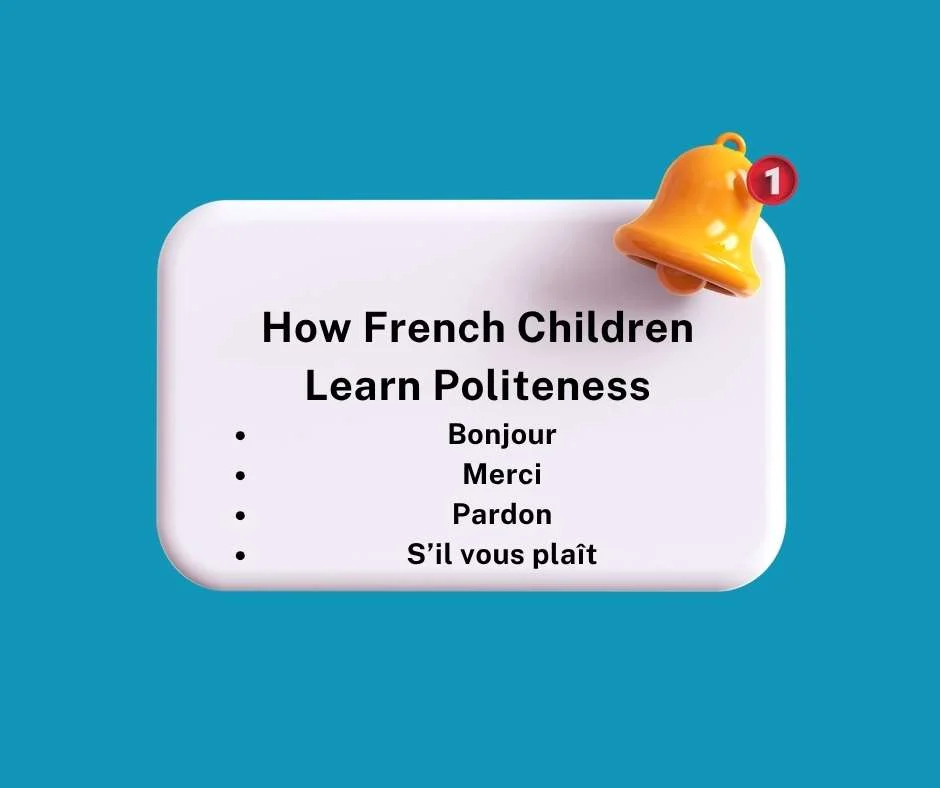
French children are taught polite expressions from a young age.
Common phrases include:
- Bonjour
- Merci
- Pardon
- S’il vous plaît
Parents and teachers encourage respectful communication daily.
This shows how important manners are in French culture.
Comparing French Excuse-Me Phrases
| French Phrase | English Meaning | Formal or Informal |
| Excusez-moi | Excuse me | Formal |
| Pardon | Sorry / Pardon | Neutral |
| Désolé | Sorry | Informal |
| Je suis désolé | I am sorry | Formal |
| Pardonnez-moi | Forgive me | Very formal |
This table helps beginners choose the right phrase for different situations.
Practical Travel Situations
At the Airport
- Excusez-moi, où est la porte 12 ?
(Excuse me, where is gate 12?)
On the Train
- Pardon, cette place est libre ?
(Excuse me, is this seat free?)
In a Store
- Excusez-moi, combien ça coûte ?
(Excuse me, how much does this cost?)
Travel becomes easier when you know polite expressions.
Fun Facts About French Language and Politeness
French Is Spoken Worldwide
French is used in countries across Europe, Africa, Canada, and the Caribbean.
Politeness Is Part of French Identity
French etiquette influences communication styles in schools, restaurants, and workplaces.
Many French Words Entered English
English borrowed many polite expressions and vocabulary words from French over time.
Frequently Asked Questions
How do you say excuse me in French politely?
The most polite and common phrase is Excusez-moi.
Is “Pardon” the same as excuse me in French?
Yes, “Pardon” can mean excuse me or sorry depending on the situation.
What is the informal way to say excuse me in French?
You can say Excuse-moi with friends or family.
When should I use “Je suis désolé”?
Use it when making a sincere apology or expressing regret.
Is politeness important in French conversations?
Yes, polite expressions are very important in French culture and daily communication.
How do I politely say “excuse me” in French?
The most polite way to say “excuse me” in French is Excusez-moi, which you use with strangers, older people, or in formal situations. You can also say Pardon when politely getting someone’s attention or apologizing for a small mistake.
Do the French say pardon?
Yes, French speakers commonly say Pardon in everyday conversations. It can mean “excuse me,” “sorry,” or “I beg your pardon,” depending on the situation, making it a natural and polite expression.
How do you say “excuse me politely”?
In French, the most polite expression is Excusez-moi. It is appropriate when asking for help, passing through a crowd, interrupting someone respectfully, or apologizing in formal settings.
Do the French actually say “je ne sais quoi”?
Yes, French people do say je ne sais quoi, which literally means “I don’t know what.” It is used to describe a special quality or charm that is difficult to explain, although it is more common in English as a borrowed expression.
Can I say “je suis bien”?
Yes, you can say je suis bien, but it usually means “I’m comfortable” or “I’m feeling good” rather than “I’m fine.” If someone asks how you are, Je vais bien is the more natural and commonly used response.
What does “sacre bleu” mean literally?
Literally, sacre bleu means “sacred blue.” It was an old French exclamation used as a mild substitute for stronger religious expressions. Today, it sounds old-fashioned and is rarely used by native French speakers.
Conclusion
Learning how to say excuse me in French helps you communicate politely and confidently in real-life situations.
Expressions like “Excusez-moi,” “Pardon,” and “Je suis désolé” are useful in travel, school, work, and everyday conversations.
With regular practice and attention to pronunciation, you can sound more natural and respectful while speaking French.
Also Check These Posts:
How to Say Motherfucker in Spanish: Meaning, Usage and Safer Alternatives
How to Say Tinnitus Made Easy for Health and Vocabulary Learning
How to Say With in Spanish Correctly with Simple Grammar Tips

Blake Kinslee
Hi! I’m Blake, a passionate writer who loves exploring the beauty of different languages and cultures through storytelling. Ever since I was young, I’ve been fascinated by how words can connect people across the world. Writing, for me, is not just a hobby—it’s a way to share ideas, emotions, and dreams with readers everywhere. When I’m not crafting stories, you’ll usually find me reading, traveling, or discovering new words in languages I’ve never spoken before. Every book I write is a journey, and I hope my readers feel that magic too.
Books:
-
Whispers Across Borders
-
The Language of Dreams