
Learning how to say beautiful in Japanese can make your conversations sound more natural, kind, and expressive.
Whether you love Japanese culture, anime, travel, or language learning, knowing the right word for “beautiful” helps you describe people, places, art, and emotions correctly.
Japanese has several ways to say “beautiful,” and each one carries a slightly different feeling and usage.
The Most Common Way to Say Beautiful in Japanese
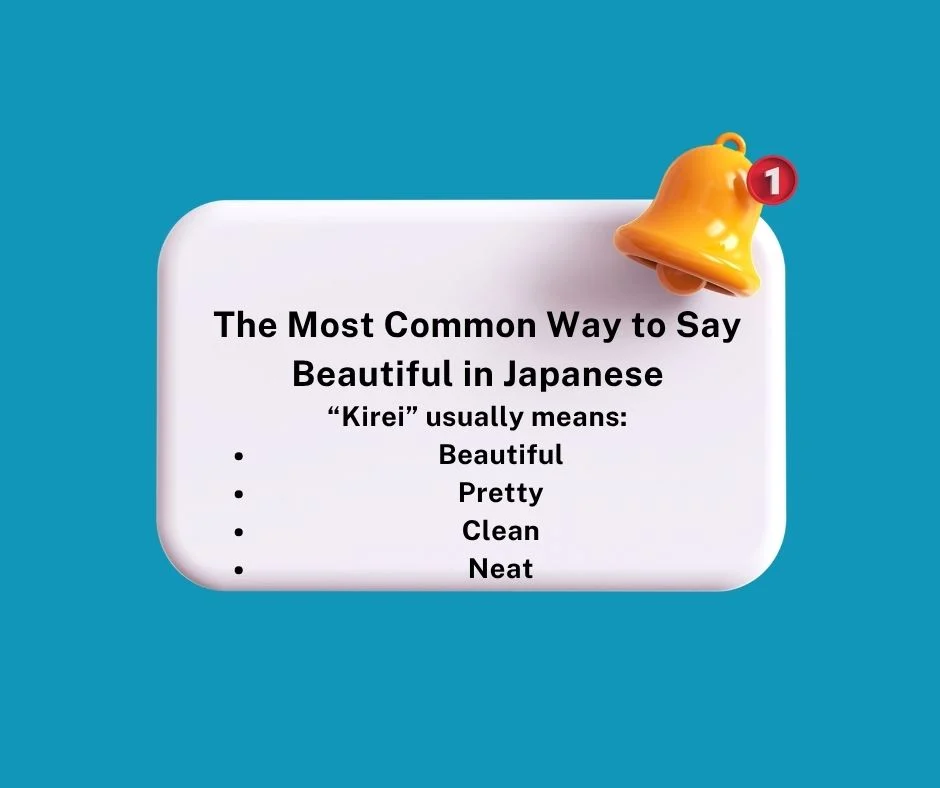
The most common Japanese word for “beautiful” is きれい (kirei).
What Does Kirei Mean?
“Kirei” usually means:
- Beautiful
- Pretty
- Clean
- Neat
Japanese speakers often use it in everyday conversation because it sounds natural and polite.
How to Pronounce Kirei
The pronunciation is:
kee-reh-ee
The “rei” part sounds soft and smooth.
Writing Kirei in Japanese
There are two common ways to write it:
- Hiragana: きれい
- Kanji: 綺麗
Beginners usually learn the hiragana version first because it is easier to remember.
Example Sentences Using Kirei
- あなたはきれいです。
Anata wa kirei desu.
“You are beautiful.” - この花はきれいです。
Kono hana wa kirei desu.
“This flower is beautiful.” - 京都はきれいな町です。
Kyoto wa kirei na machi desu.
“Kyoto is a beautiful city.”
How to say beautiful in japanese to a girl
When you want to say beautiful to a girl in Japanese, the most common and respectful word is きれい (kirei). It means beautiful, pretty, or lovely and people often use it as a compliment for someone’s appearance.
Here are 10 common ways and examples:
- Kirei (きれい) – Beautiful or pretty.
- Anata wa kirei desu (あなたはきれいです) – You are beautiful.
- Totemo kirei desu (とてもきれいです) – You are very beautiful.
- Hontō ni kirei desu (本当にきれいです) – You are truly beautiful.
- Sugoku kirei (すごくきれい) – Very beautiful (casual).
- Kao ga kirei desu (顔がきれいです) – Your face is beautiful.
- Egao ga suteki desu (笑顔が素敵です) – Your smile is beautiful.
- Utsukushii desu (美しいです) – You are beautiful (formal and elegant).
- Miryokuteki desu (魅力的です) – You are attractive.
- Kawaii desu (かわいいです) – You are cute (often used instead of beautiful).
How to say beautiful in japanese anime
Anime characters often use casual and expressive words when saying someone is beautiful. The choice depends on the relationship between the characters and the scene.
Here are 10 examples commonly heard in anime:
- Kirei da (きれいだ) – You’re beautiful.
- Sugoi kirei (すごいきれい) – So beautiful.
- Meccha kirei (めっちゃきれい) – Really beautiful.
- Utsukushii (美しい) – Beautiful and elegant.
- Kawaii (かわいい) – Cute and beautiful.
- Hontō ni kirei (本当にきれい) – Truly beautiful.
- Totemo utsukushii (とても美しい) – Very beautiful.
- Suteki (素敵) – Lovely or wonderful.
- Bijin da (美人だ) – She’s a beautiful woman.
- Kagayaiteru (輝いてる) – You are shining beautifully.
How to say beautiful in japanese informal
Japanese has many informal expressions for saying someone or something is beautiful. Friends usually avoid very formal language.
Here are 10 casual expressions:
- Kirei! (きれい!) – Beautiful!
- Sugoku kirei! (すごくきれい!) – Very beautiful!
- Meccha kirei! (めっちゃきれい!) – Super beautiful!
- Cho kirei! (超きれい!) – Extremely beautiful!
- Hontō ni kirei! (本当にきれい!) – Really beautiful!
- Kawaii! (かわいい!) – Cute!
- Suteki! (素敵!) – Lovely!
- Ii ne! (いいね!) – Looks great!
- Saikō! (最高!) – Amazing!
- Kagayaiteru! (輝いてる!) – You’re glowing!
How to say beautiful in japanese pronunciation
Knowing the pronunciation helps you speak naturally and confidently.
Here are 10 useful words with pronunciation:
- Kirei (kee-reh-ee) – Beautiful.
- Utsukushii (oo-tsoo-koo-shee) – Beautiful.
- Kawaii (kah-wah-ee) – Cute.
- Bijin (bee-jeen) – Beautiful woman.
- Suteki (soo-teh-kee) – Lovely.
- Totemo (toh-teh-moh) – Very.
- Sugoku (soo-goh-koo) – Extremely.
- Hontō ni (hohn-toh-nee) – Truly.
- Anata wa kirei desu (ah-nah-tah wah kee-reh-ee deh-soo) – You are beautiful.
- Totemo utsukushii (toh-teh-moh oo-tsoo-koo-shee) – Very beautiful.
How to say you are beautiful” in Japanese
There are several polite and natural ways to tell someone “You are beautiful” in Japanese.
Here are 10 examples:
- Anata wa kirei desu (あなたはきれいです) – You are beautiful.
- Anata wa totemo kirei desu (あなたはとてもきれいです) – You are very beautiful.
- Anata wa utsukushii desu (あなたは美しいです) – You are beautiful (formal).
- Kirei desu ne (きれいですね) – You’re beautiful, aren’t you?
- Hontō ni kirei desu (本当にきれいです) – You are truly beautiful.
- Sugoku kirei desu (すごくきれいです) – You are really beautiful.
- Anata wa suteki desu (あなたは素敵です) – You are lovely.
- Kao ga kirei desu (顔がきれいです) – Your face is beautiful.
- Egao ga kirei desu (笑顔がきれいです) – Your smile is beautiful.
- Miryokuteki desu (魅力的です) – You are attractive.
How to say beautiful in japanese hiragana
If you are learning Japanese, seeing beautiful written in hiragana makes reading easier.
Here are 10 useful words:
- きれい – Beautiful.
- うつくしい – Beautiful.
- かわいい – Cute.
- すてき – Lovely.
- とてもきれい – Very beautiful.
- すごくきれい – Really beautiful.
- ほんとうにきれい – Truly beautiful.
- きれいですね – You are beautiful.
- あなたはきれいです – You are beautiful.
- えがおがきれいです – Your smile is beautiful.
Very beautiful” in Japanese
To say very beautiful in Japanese, you can add words like totemo, sugoku, or hontō ni before kirei or utsukushii.
Here are 10 natural examples:
- Totemo kirei (とてもきれい) – Very beautiful.
- Sugoku kirei (すごくきれい) – Really beautiful.
- Hontō ni kirei (本当にきれい) – Truly beautiful.
- Totemo utsukushii (とても美しい) – Very beautiful.
- Sugoku utsukushii (すごく美しい) – Extremely beautiful.
- Cho kirei (超きれい) – Super beautiful.
- Meccha kirei (めっちゃきれい) – Really beautiful.
- Totemo suteki (とても素敵) – Very lovely.
- Kagayaku hodo kirei (輝くほどきれい) – Beautiful enough to shine.
- Hontō ni utsukushii (本当に美しい) – Truly beautiful.
Kirei in Japanese
Kirei (きれい) is one of the most common Japanese words. It means beautiful, pretty, clean, or neat, depending on the situation. Native speakers use it for people, places, flowers, clothes, scenery, and even clean rooms.
Here are 10 common uses of kirei:
- Kirei na hana (きれいな花) – Beautiful flower.
- Kirei na umi (きれいな海) – Beautiful sea.
- Kirei na sora (きれいな空) – Beautiful sky.
- Kirei na hito (きれいな人) – Beautiful person.
- Kirei na machi (きれいな町) – Beautiful town.
- Kirei na heya (きれいな部屋) – Clean room.
- Kirei na fuku (きれいな服) – Beautiful clothes.
- Kirei na e (きれいな絵) – Beautiful picture.
- Kirei na niwa (きれいな庭) – Beautiful garden.
- Kirei desu ne (きれいですね) – It is beautiful, isn’t it?
Different Words for Beautiful in Japanese
Japanese has several words that can mean beautiful depending on the situation.
Utsukushii – A Deep and Elegant Beauty
Another important word is 美しい (utsukushii).
This word sounds more formal, poetic, and emotional than “kirei.”
When to Use Utsukushii
People use “utsukushii” for:
- Nature
- Art
- Music
- Emotional beauty
- Elegant people
It is less common in casual daily conversation.
Example Sentences
- 美しい景色ですね。
Utsukushii keshiki desu ne.
“The scenery is beautiful.” - 彼女は美しいです。
Kanojo wa utsukushii desu.
“She is beautiful.”
Difference Between Kirei and Utsukushii
| Word | Meaning | Feeling | Common Usage |
| Kirei | Pretty, beautiful, clean | Casual and everyday | Daily conversations |
| Utsukushii | Beautiful, elegant | Deep and poetic | Literature and formal speech |
Cute vs Beautiful in Japanese
Many learners confuse “cute” and “beautiful” in Japanese.
Kawaii Means Cute
The Japanese word for cute is:
かわいい (kawaii)
People use it for:
- Pets
- Babies
- Fashion
- Small objects
- Anime characters
Example
- この猫はかわいいです。
Kono neko wa kawaii desu.
“This cat is cute.”
Why It Is Different From Beautiful
“Kawaii” focuses on charm and sweetness, while “kirei” focuses on beauty and attractiveness.
For example:
- A cute puppy = kawaii
- A beautiful sunset = kirei or utsukushii
How to Compliment Someone Beautiful in Japanese
Compliments are important in Japanese culture, but they are usually polite and gentle.
Simple Compliments
Here are common ways to compliment someone.
You Are Beautiful
- あなたはきれいです。
Anata wa kirei desu.
You Look Beautiful Today
- 今日とてもきれいですね。
Kyou totemo kirei desu ne.
Your Eyes Are Beautiful
- 目がきれいですね。
Me ga kirei desu ne.
Polite vs Casual Speech
Japanese changes depending on the level of politeness.
Polite Style
- きれいです
Kirei desu
Casual Style
- きれい
Kirei
Use polite language with strangers, teachers, coworkers, or older people.
Beautiful Words Related to Nature in Japanese
Japanese culture deeply connects beauty with nature.
Beautiful Sky
- 美しい空
Utsukushii sora
Beautiful Ocean
- きれいな海
Kirei na umi
Beautiful Cherry Blossoms
- 美しい桜
Utsukushii sakura
Why Nature Words Matter
Japanese poetry, anime, and songs often describe beauty through seasons and landscapes. Learning these phrases helps you understand Japanese culture better.
Romantic Ways to Say Beautiful in Japanese
Romantic compliments in Japanese are often softer than direct English compliments.
You Have a Beautiful Smile
- 笑顔がきれいですね。
Egao ga kirei desu ne.
Your Voice Is Beautiful
- 声がきれいです。
Koe ga kirei desu.
You Are Truly Beautiful
- 本当に美しいです。
Hontou ni utsukushii desu.
Important Cultural Tip
In Japan, strong compliments can sometimes feel too direct if said too often. A softer compliment sounds more natural and respectful.
Beautiful in Japanese Anime and Pop Culture
If you watch anime or Japanese dramas, you may hear different beauty-related expressions.
Common Anime Phrases
So Beautiful
- めっちゃきれい!
Meccha kirei!
“So beautiful!”
Beautiful Girl
- 美少女 (bishoujo)
Beautiful young girl
Handsome and Beautiful
- 美男子 (bidanshi)
Beautiful man
Why Anime Uses Different Expressions
Anime characters often speak dramatically or emotionally, so their language can sound stronger than normal daily conversation.
How Japanese Beauty Words Change With Context
Japanese words often depend on the situation.
For Objects
Use “kirei” for:
- Clothes
- Rooms
- Decorations
- Jewelry
Example:
- きれいなドレス
Kirei na doresu
“Beautiful dress”
For Nature
Use “utsukushii” for:
- Mountains
- Rivers
- Sunsets
- Landscapes
Example:
- 美しい山
Utsukushii yama
“Beautiful mountain”
For People
Both words can work, but “kirei” is more common in conversation.
Grammar Rules for Beautiful in Japanese
Understanding grammar helps you use these words correctly.
Kirei Is a Na-Adjective
“Kirei” behaves differently from regular adjectives.
Before a Noun
Add “na.”
- きれいな花
Kirei na hana
“Beautiful flower”
At the End of a Sentence
Use “desu.”
- 花がきれいです。
Hana ga kirei desu.
“The flower is beautiful.”
Common Mistakes Beginners Make
Many learners make small mistakes when using beauty words in Japanese.
Forgetting “Na”
Incorrect:
- きれい花
Correct:
- きれいな花
Using Utsukushii Too Often
While “utsukushii” sounds elegant, native speakers do not use it constantly in daily conversation.
“Kirei” sounds more natural for beginners.
Direct Translation Problems
English and Japanese express compliments differently. Translating word-for-word can sound awkward.
For example:
“You are hot” in English does not translate naturally the same way in Japanese.
Beautiful Kanji and Their Meanings
Japanese kanji often carry deep meanings.
Kanji for Beauty
The kanji for beauty is:
美
Meaning:
- Beauty
- Beautiful
- Grace
Words Using 美
| Word | Reading | Meaning |
| 美しい | Utsukushii | Beautiful |
| 美人 | Bijin | Beautiful person |
| 美容 | Biyou | Beauty care |
| 美術 | Bijutsu | Fine arts |
Learning kanji helps you recognize beauty-related words faster.
How to Say Beautiful Girl in Japanese
There are several ways to say “beautiful girl.”
Kirei na Onna no Ko
- きれいな女の子
Pretty girl
Bishoujo
- 美少女
Beautiful young girl
This word appears often in anime and manga.
Bijin
- 美人
Beautiful woman
Example:
- 彼女は美人です。
Kanojo wa bijin desu.
“She is a beautiful woman.”
How to Say Beautiful Boy or Handsome in Japanese
Japanese sometimes connects beauty with elegance in men too.
Ikemen – Handsome Guy
- イケメン
Handsome man
Bidanshi – Beautiful Man
- 美男子
Beautiful man
This expression sounds more dramatic and artistic.
Everyday Situations to Use Beautiful in Japanese
Using the words naturally helps you remember them better.
While Traveling
- この寺はきれいです。
“This temple is beautiful.”
At a Restaurant
- 盛り付けがきれいです。
“The presentation is beautiful.”
During Cherry Blossom Season
- 桜が美しいですね。
“The cherry blossoms are beautiful.”
Japanese Beauty Expressions on Social Media
Young people often shorten or simplify expressions online.
Popular Online Expressions
- きれいすぎる
Too beautiful - 美しすぎる
Extremely beautiful - 神レベル
God-level beauty
These phrases appear on Instagram, TikTok, and anime fan pages.
Cultural Meaning of Beauty in Japan
Beauty in Japanese culture is not only physical.
Inner Beauty Matters Too
Japanese culture values:
- Kindness
- Calm behavior
- Respect
- Elegance
- Simplicity
A person can be considered beautiful because of personality and actions.
Beauty in Traditional Japanese Culture
Traditional Japanese beauty includes:
- Cherry blossoms
- Tea ceremonies
- Kimono fashion
- Minimalist design
- Natural harmony
This is why beauty words in Japanese often sound emotional and artistic.
Easy Practice Tips for Beginners
Learning vocabulary becomes easier with practice.
Listen to Native Speakers
Watch:
- Anime
- Japanese YouTube videos
- Dramas
- Language lessons
Repeat Out Loud
Practice these daily:
- Kirei
- Utsukushii
- Kawaii
Use Flashcards
Write:
- Japanese word
- Pronunciation
- English meaning
- Example sentence
Speak Simple Sentences
Start with easy phrases like:
- 花がきれいです。
- 空が美しいです。
- 猫がかわいいです。
Frequently Asked Questions
What is the most common way to say beautiful in Japanese?
The most common word is “kirei,” which means beautiful, pretty, or clean depending on the situation.
Is kirei the same as utsukushii?
No. “Kirei” sounds casual and common, while “utsukushii” sounds more formal and poetic.
How do you say beautiful girl in Japanese?
You can say “kirei na onna no ko” or “bishoujo” for a beautiful girl.
Can kawaii mean beautiful in Japanese?
“Kawaii” usually means cute rather than beautiful, though both can sometimes overlap.
Is it polite to call someone beautiful in Japanese?
Yes, but soft and respectful compliments sound more natural in Japanese culture.
What is the Japanese word for beautiful?
The most common Japanese word for beautiful is きれい (kirei). It is used to describe beautiful people, places, flowers, and objects in everyday conversation. Another word, 美しい (utsukushii), also means beautiful but sounds more formal, poetic, and expressive.
How do you say beautiful in Japanese to a girl?
To compliment a girl in Japanese, people usually say きれい (kirei) because it sounds natural and polite. You can say 「きれいですね」(Kirei desu ne), which means “You’re beautiful” or “You look beautiful.” It is a respectful and commonly used compliment.
Is it kirei or utsukushi?
Both words mean beautiful, but they are used differently. きれい (kirei) is common in everyday conversations, while 美しい (utsukushii) is more formal and often appears in literature, songs, or emotional expressions. For daily speech, kirei is usually the better choice.
What does “suki” mean in Japanese?
好き (suki) means “to like” or “to be fond of.” It is commonly used to express affection for a person, hobby, food, or activity. Depending on the context, it can also imply romantic feelings, but it does not always mean “I love you.”
What does “suki suki suki” mean?
“Suki suki suki” literally means “like, like, like” or “I really like you.” Repeating suki adds emphasis and excitement. It is often used in anime, songs, and playful conversations to show strong affection or enthusiasm.
Do Japanese people say “I love you”?
Yes, Japanese people do say “I love you,” but not as often as in English-speaking cultures. The phrase 愛してる (aishiteru) is reserved for very deep and serious love, while 好き (suki) or 大好き (daisuki) are much more common for expressing affection in everyday relationships.
Conclusion
Understanding how to say beautiful in Japanese helps you communicate more naturally and appreciate the language on a deeper level.
Words like “kirei,” “utsukushii,” and “kawaii” each express different types of beauty.
By learning when and how to use them, you can sound more confident in conversations, enjoy Japanese media more fully, and connect better with Japanese culture.
Also Check These Posts:
How to Say Excuse Me in French | Easy Phrases Every Beginner Should Learn
How to Say Hello in Farsi | Easy Greetings Every Beginner Should Know
How to Say Address in Spanish Step by Step with Clear Examples

Ethan Moore
Ethan Moore is a passionate storyteller and language enthusiast who believes that words have the power to bridge cultures. Ever since he was young, Ethan has been fascinated by how languages shape our thoughts and connect people from different corners of the world. Through his writing, he explores the beauty of communication and the subtle nuances that make each language unique. When he’s not writing, Ethan enjoys traveling, learning new languages, and diving into different cultures. His goal is to inspire readers to embrace diversity and appreciate the richness of global expression.
Books:
-
Whispers Across Tongues
-
The Language of Dreams