

Learning how to say dates in Spanish is one of the most useful skills for everyday communication. If you are planning a trip, filling out forms, talking about birthdays, or discussing important events, knowing how to express dates correctly can help you sound more natural and confident.
This guide explains everything in a simple and beginner-friendly way.
Why Learning Dates in Spanish Matters
Dates are used in daily conversations more often than many learners realize. You may need to talk about your birthday, schedule appointments, discuss holidays, or mention historical events.
When you understand how to say dates in Spanish, you can:
- Talk about birthdays and anniversaries.
- Write letters, emails, and official documents.
- Understand calendars and schedules.
- Communicate more naturally with Spanish speakers.
- Improve your overall Spanish fluency.
Spanish dates follow a different format from English, so learning the correct structure is important.
The Basic Spanish Date Format
In Spanish, dates are usually written in this order:
Day + de + Month + de + Year
For example:
- 5 de mayo de 2026 — May 5, 2026
- 12 de enero de 2026 — January 12, 2026
- 25 de diciembre de 2026 — December 25, 2026
Unlike English, the day generally comes before the month.
Example Sentences
- Mi cumpleaños es el 8 de junio.
(My birthday is June 8.) - La reunión es el 15 de marzo de 2026.
(The meeting is March 15, 2026.) - Nací el 20 de octubre de 2005.
(I was born on October 20, 2005.)
Months of the Year in Spanish
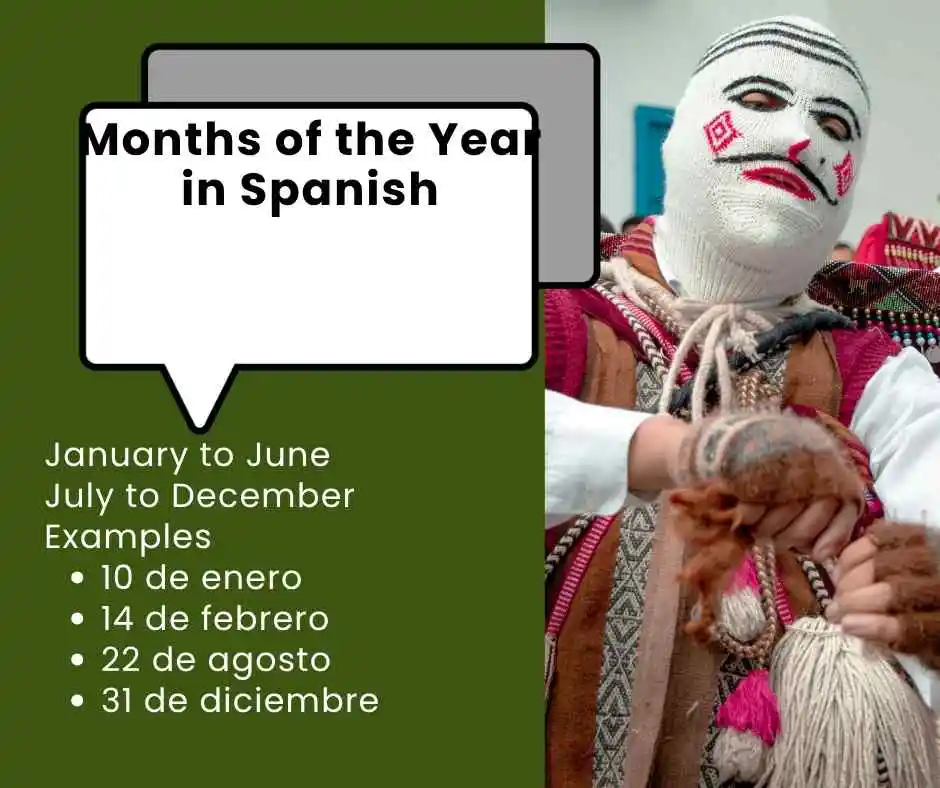
Before learning dates, it helps to know the Spanish names of the months.
January to June
- Enero — January
- Febrero — February
- Marzo — March
- Abril — April
- Mayo — May
- Junio — June
July to December
- Julio — July
- Agosto — August
- Septiembre — September
- Octubre — October
- Noviembre — November
- Diciembre — December
One important difference is that month names are usually not capitalized in Spanish unless they begin a sentence.
Examples
- 10 de enero
- 14 de febrero
- 22 de agosto
- 31 de diciembre
Days of the Month in Spanish
Most dates use regular numbers.
Common Examples
- 2 de abril
- 7 de mayo
- 11 de junio
- 18 de julio
- 29 de noviembre
Spanish speakers simply use the number followed by the month.
How to Say the First Day of the Month
The first day of the month is a special case.
Instead of saying:
- Uno de mayo
Spanish speakers usually say:
- Primero de mayo
Examples
- Primero de enero
- Primero de marzo
- Primero de septiembre
This is one of the most common grammar rules when discussing dates.
How to Ask for the Date in Spanish
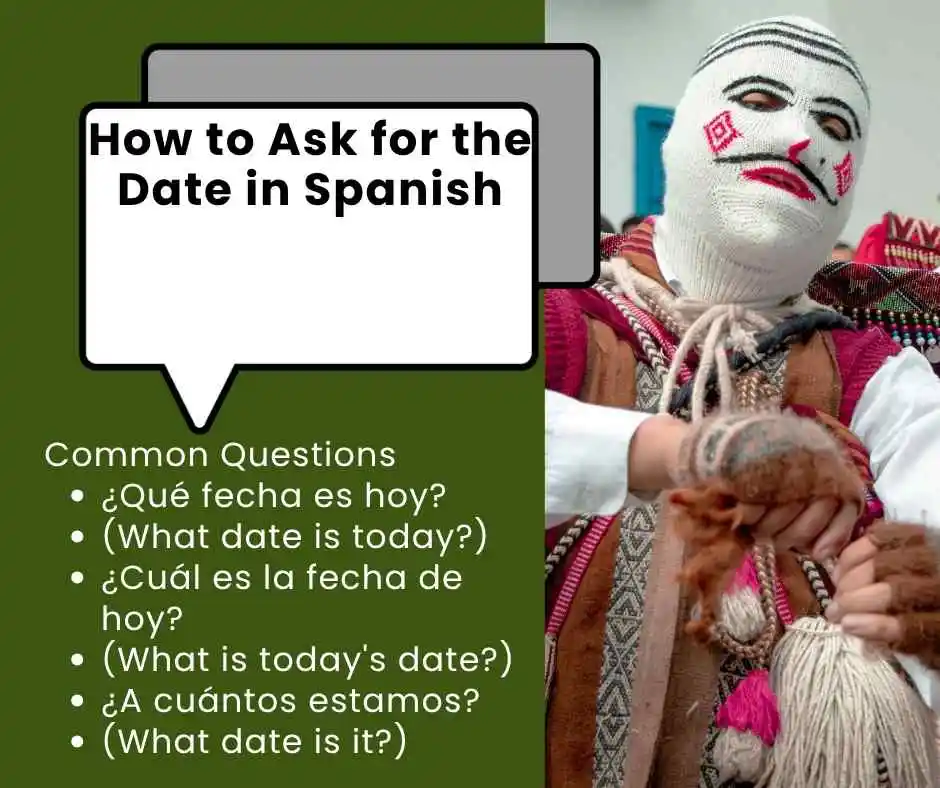
There are several ways to ask someone for the date.
Common Questions
- ¿Qué fecha es hoy?
(What date is today?) - ¿Cuál es la fecha de hoy?
(What is today’s date?) - ¿A cuántos estamos?
(What date is it?)
These questions are commonly used in classrooms, workplaces, and daily conversations.
How to Answer the Date in Spanish
When answering, use the structure:
Hoy es + date
Examples
- Hoy es 3 de abril.
- Hoy es 18 de junio.
- Hoy es 24 de septiembre.
- Hoy es 31 de diciembre.
For the first day:
- Hoy es primero de mayo.
How to Pronounce Dates in Spanish
Correct pronunciation helps listeners understand you clearly.
Example Pronunciations
- 5 de mayo — Cinco de mayo
- 12 de enero — Doce de enero
- 20 de agosto — Veinte de agosto
- 30 de noviembre — Treinta de noviembre
Practice speaking dates aloud to improve fluency and confidence.
How to Say Years in Spanish
Years are usually spoken as complete numbers.
Examples
- 1990 — Mil novecientos noventa
- 2005 — Dos mil cinco
- 2018 — Dos mil dieciocho
- 2026 — Dos mil veintiséis
Dates with Years
- 15 de marzo de 2026
- 8 de julio de 2024
- 21 de septiembre de 2025
Including the year is common in official documents and formal communication.
Writing Dates in Spanish
Spanish-speaking countries often use numerical formats.
Common Formats
- 05/06/2026
- 05-06-2026
- 05.06.2026
The order generally follows:
Day / Month / Year
This differs from the standard American format of Month/Day/Year.
Example
- 12/10/2026 usually means 12 October 2026.
Always pay attention to the country and context.
Using Dates in Everyday Conversations
Dates appear frequently in daily life.
Talking About Birthdays
- Mi cumpleaños es el 14 de febrero.
- Su cumpleaños es el 9 de octubre.
Talking About Events
- La fiesta es el 22 de mayo.
- El examen es el 17 de junio.
Talking About Travel Plans
- Llegamos el 12 de agosto.
- Salimos el 20 de septiembre.
Learning these patterns makes conversations easier and more natural.
Spanish Dates for Important Holidays
Many holidays are commonly discussed using dates.
Examples
- Navidad — 25 de diciembre
- Año Nuevo — 1 de enero
- Día de la Independencia — Depends on the country
- Día de la Madre — Varies by country
Sample Sentences
- Navidad es el 25 de diciembre.
- Año Nuevo es el primero de enero.
These examples help learners connect dates with real-world situations.
Formal and Informal Date Usage
Spanish dates work similarly in both formal and informal settings.
Informal Example
- Nos vemos el 10 de mayo.
(See you on May 10.)
Formal Example
- La conferencia tendrá lugar el 10 de mayo de 2026.
(The conference will take place on May 10, 2026.)
The structure remains mostly the same.
Common Mistakes When Saying Dates in Spanish
Many beginners make similar mistakes.
Using the English Order
Incorrect:
- Mayo 5
Correct:
- 5 de mayo
Capitalizing Months
Incorrect:
- Mayo
Correct:
- mayo
Forgetting “de”
Incorrect:
- 15 marzo 2026
Correct:
- 15 de marzo de 2026
Using “Uno” for the First Day
Incorrect:
- Uno de enero
Correct:
- Primero de enero
Avoiding these mistakes helps you sound more natural.
Helpful Date Vocabulary
These words often appear alongside dates.
Time-Related Words
- Hoy — Today
- Ayer — Yesterday
- Mañana — Tomorrow
- Semana — Week
- Mes — Month
- Año — Year
Examples
- Hoy es 10 de mayo.
- Ayer fue 9 de mayo.
- Mañana será 11 de mayo.
Learning these words makes date-related conversations easier.
Practice Examples for Beginners
Try reading these dates aloud.
Simple Dates
- 3 de enero
- 7 de febrero
- 12 de marzo
- 18 de abril
- 24 de mayo
Intermediate Dates
- 15 de junio de 2026
- 22 de julio de 2025
- 30 de agosto de 2024
- 17 de septiembre de 2027
Advanced Dates
- El evento será el 28 de noviembre de 2026.
- Nací el 14 de febrero de 2003.
- La reunión está programada para el 9 de octubre de 2026.
Practicing regularly will help you remember the format naturally.
Regional Differences in Spanish-Speaking Countries
Most Spanish-speaking countries use the same date structure.
Common Pattern
- Day + Month + Year
Examples:
- España
- México
- Argentina
- Colombia
- Chile
- Perú
While pronunciation and accents may vary, the date format remains largely consistent.
Tips to Remember Spanish Dates Easily
Learning dates becomes easier with consistent practice.
Useful Tips
- Read Spanish calendars daily.
- Practice writing today’s date.
- Learn months before memorizing longer dates.
- Use dates in short sentences.
- Listen to native Spanish speakers.
These habits can improve your understanding quickly.
Frequently Asked Questions
How do you say today’s date in Spanish?
Use the structure “Hoy es” followed by the date, such as “Hoy es 10 de mayo.”
How do you say dates in Spanish correctly?
The standard format is day, month, and year, such as “15 de marzo de 2026.”
Why is the first day of the month different in Spanish?
Spanish commonly uses “primero” instead of “uno” for the first day of the month.
Are Spanish months capitalized?
No, month names are usually written in lowercase unless they begin a sentence.
Do all Spanish-speaking countries use the same date format?
Most Spanish-speaking countries use the day-month-year format, although numeric styles may vary slightly.
Conclusion
Knowing how to say dates in Spanish is an essential skill for anyone learning the language. From discussing birthdays and holidays to understanding calendars and schedules, dates appear in everyday conversations. By learning the months, practicing the correct date structure, and using real-life examples, you can communicate more confidently and understand Spanish more naturally. Keep practicing regularly, and saying dates in Spanish will soon become second nature.
Also Check These Posts:
How to Say Shit in Spanish | Funny, Useful and Real-Life Expressions for 2026
How to Say Cheers in Korean | Speak Like a Local at Parties and Gatherings
How to Say Hi in Jamaican | Everyday Greetings Anyone Can Use
How to Say I Love You in Hawaiian

Darcy Lynn
Darcy Lynn has always been fascinated by the colors and stories of life. Her journey with writing began in childhood, and today she takes readers into new worlds through her stories. For her, every word is a way to explore new experiences and emotions. Darcy loves exploring stories across different cultures and languages, which also reflects in her unique writing style. She believes that a good story touches every heart and sparks deeper thinking. Alongside writing, she enjoys connecting directly with her readers and understanding their feelings.
Books:
-
Whispers Across Worlds
-
Echoes of Tomorrow