
If you’ve ever felt stuck trying to ask someone’s location in Spanish, this guide is just for you.
Learning how to say where are you in Spanish might seem small, but it can make a big difference in real conversations.
Whether you’re texting a friend, traveling, or meeting someone new, you deserve to feel confident and understood.
Don’t worry if you’re a beginner; you’re in the right place, and you’ll pick this up faster than you think.
Let’s make Spanish feel easy, one step at a time.
The Basic Way to Say Where Are You in Spanish
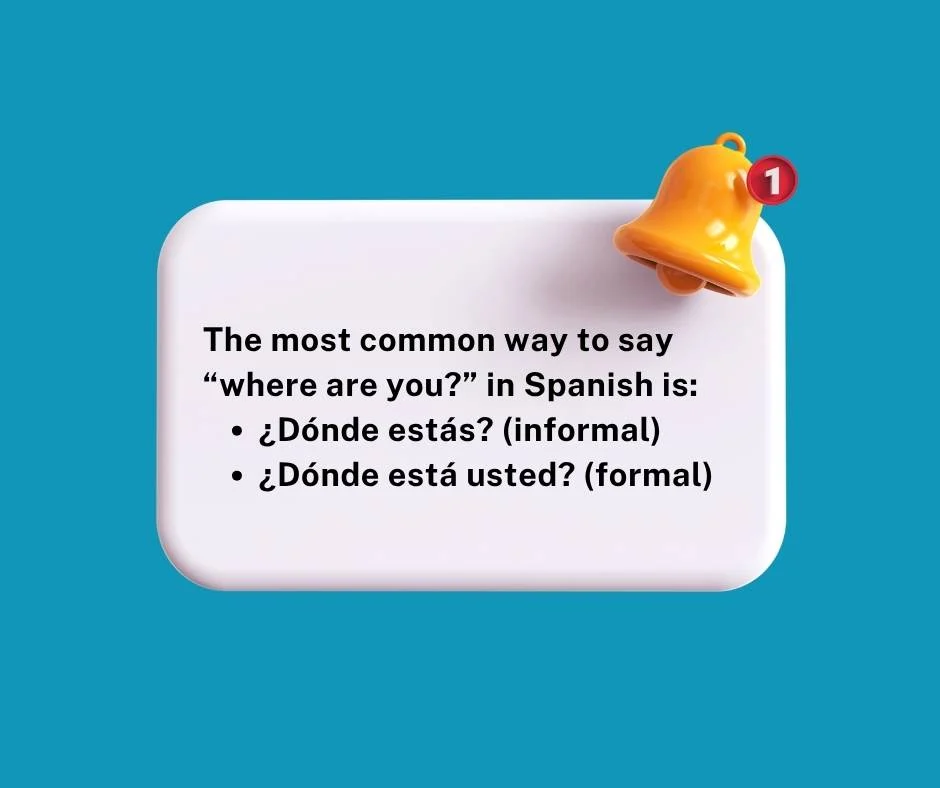
The most common way to say “where are you?” in Spanish is:
- ¿Dónde estás? (informal)
- ¿Dónde está usted? (formal)
What Do These Mean?
- Dónde = where
- Estás = you are (informal)
- Está usted = you are (formal)
👉 So, both phrases mean the same thing, but the tone changes depending on the situation.
Understanding Formal and Informal Usage
Spanish has two ways to address people: informal and formal. Choosing the right one is important.
Informal Version (Tú)
Use this when talking to:
- Friends
- Family
- People your age
- Someone you know well
👉 Example:
- ¿Dónde estás?
“Where are you?”
Formal Version (Usted)
Use this when talking to:
- Strangers
- Elders
- Teachers
- Professionals
👉 Example:
- ¿Dónde está usted?
“Where are you?”
Quick Tip
If you’re unsure, use the formal version. It shows respect and is always safe.
How to Pronounce Where Are You in Spanish
Pronunciation can feel tricky at first, but it gets easier with practice.
Breaking It Down
¿Dónde estás?
- Dónde → “DOHN-deh”
- Estás → “eh-STAHS”
👉 Full pronunciation: DOHN-deh eh-STAHS
Pronunciation Tips
- Stress the second part: “-STAHS”
- Keep vowels clear and short
- Practice slowly, then naturally speed up
Other Common Variations You Should Know
Spanish speakers often use different versions depending on context.
Asking About Location More Specifically
- ¿Dónde te encuentras?
👉 “Where are you located?” (slightly more formal) - ¿En dónde estás?
👉 Another way to say “Where are you?”
Asking in a Casual Way
- ¿Dónde andas?
👉 “Where are you hanging out?” (very casual) - ¿Por dónde estás?
👉 “Where about are you?”
Asking About Someone Else
- ¿Dónde está él? → Where is he?
- ¿Dónde está ella? → Where is she?
How to Use It in Real Conversations
Understanding grammar is good, but using it in real life is even better.
Situation: Meeting a Friend
- A: ¿Dónde estás?
- B: Estoy en el café
👉 “I’m at the café.”
Situation: Calling Someone
- A: Hola, ¿dónde estás?
- B: Estoy en casa
👉 “I’m at home.”
Situation: Formal Conversation
- A: Disculpe, ¿dónde está usted?
- B: Estoy en la oficina
👉 “I am in the office.”
Common Mistakes to Avoid
Beginners often make small mistakes when learning how to say where are you in Spanish.
Forgetting the Accent Mark
- Correct: Dónde
- Incorrect: Donde
👉 Without the accent, the meaning changes.
Mixing Formal and Informal Forms
- Wrong: ¿Dónde estás usted?
- Correct:
- ¿Dónde estás?
- ¿Dónde está usted?
Mispronouncing Words
- Don’t say “don-dee”
- Keep it simple: “DOHN-deh”
Understanding the Grammar Behind the Phrase
Knowing a little grammar helps you build more sentences.
The Verb “Estar”
The phrase uses the verb estar, which means “to be” (temporary state).
Conjugation for “You”
| Subject | Form | Example |
| Tú (informal) | estás | ¿Dónde estás? |
| Usted (formal) | está | ¿Dónde está usted? |
Why Use “Estar”?
Use estar when talking about:
- Location
- Temporary states
- Positions
👉 That’s why it’s perfect for asking “where are you?”
Expanding Your Sentence Skills
Once you know the basic phrase, you can build more complex sentences.
Add Details
- ¿Dónde estás ahora?
👉 “Where are you now?” - ¿Dónde estás exactamente?
👉 “Where exactly are you?”
Add Context
- ¿Dónde estás en este momento?
👉 “Where are you at this moment?”
Combine with Actions
- ¿Dónde estás trabajando?
👉 “Where are you working?”
Cultural Tips for Using This Phrase
Language is not just words; it’s also about culture.
Tone Matters
- Spanish speakers often sound expressive
- Don’t be afraid to use natural tone and emotion
Body Language
- People may use hand gestures while asking
- It makes communication more lively
Politeness
- Always say “Hola” or “Disculpe” in formal situations
- It shows respect and friendliness
Practice Exercises for Beginners
Practice helps you remember faster and speak confidently.
Exercise 1: Repeat Aloud
Say these 5 times:
- ¿Dónde estás?
- ¿Dónde está usted?
Exercise 2: Answer Questions
Try answering:
- ¿Dónde estás?
👉 Estoy en casa
Exercise 3: Role Play
Practice with a friend:
- Ask: ¿Dónde estás?
- Answer with different locations
Useful Vocabulary for Location
Learning related words will help you answer better.
Common Places
- Casa → house
- Escuela → school
- Trabajo → work
- Restaurante → restaurant
- Parque → park
Example Sentences
- Estoy en la escuela
👉 “I am at school.” - Estoy en el parque
👉 “I am in the park.”
Real-Life Situations Where You Use This Phrase
Knowing how to say where are you in Spanish is useful in everyday life.
Traveling
- Asking your guide: ¿Dónde está usted?
Meeting Friends
- Texting: ¿Dónde estás?
Emergency Situations
- Asking someone’s location quickly
Frequently Asked Questions (FAQs)
What is the most common way to say where are you in Spanish?
The most common way is ¿Dónde estás? for informal situations.
How do you say where are you in Spanish formally?
You say ¿Dónde está usted? when speaking respectfully.
Is ¿Dónde estás polite?
Yes, but it is informal. Use it with friends or people you know well.
Can beginners easily learn how to say where are you in Spanish?
Yes, it is simple and one of the first phrases beginners learn.
Why is it important to learn how to say where are you in Spanish?
It helps in daily conversations, travel, and connecting with Spanish speakers easily.
Conclusion
Learning how to say where are you in Spanish is a simple but powerful step in your language journey.
Phrases like ¿Dónde estás? and ¿Dónde está usted? help you communicate clearly in real-life situations.
With practice, proper pronunciation, and understanding context, you’ll feel confident using them in conversations.
Keep practicing daily, and your Spanish skills will grow naturally.
Also Check These Posts:
How to Say Hi in Swedish Correctly Every Time
How to Say Goodnight to Your Crush with Simple and Sweet Messages
How to Say Happy Birthday in Hawaiian | Fun and Easy Guide in 2026

Daniel Carter
Hi, I’m Daniel Carter, a passionate storyteller and lifelong explorer of languages and cultures. Writing has always been my way of connecting with the world, sharing stories that inspire, educate, and entertain. I love diving into the nuances of communication and finding beauty in the words we use every day. Over the years, I’ve dedicated myself to crafting stories that resonate across borders and languages. When I’m not writing, you’ll usually find me exploring new places or learning something new about the world around me. My goal is to create stories that make readers think, smile, and sometimes even dream.
Books:
-
Whispers Across Borders
-
The Language of Hearts