

Hey there! If you’ve ever wondered how to say Korean in Korean, you’re in the right place.
Learning a new language can feel tricky at first, but small, simple steps can make a huge difference in real conversations.
Imagine confidently introducing yourself or talking with friends, and feeling proud each time you get it right.
In this guide, we’ll walk you through it gently, so you can speak naturally and feel supported every step of the way.
What Does “Korean” Mean in Korean?
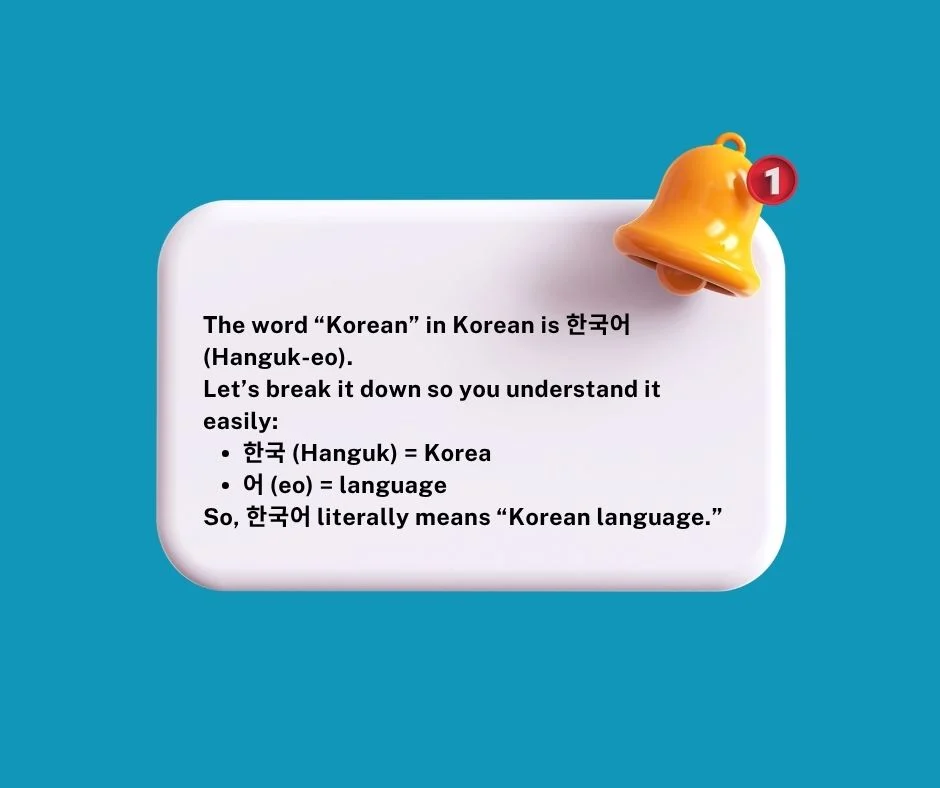
The word “Korean” in Korean is 한국어 (Hanguk-eo).
Let’s break it down so you understand it easily:
- 한국 (Hanguk) = Korea
- 어 (eo) = language
So, 한국어 literally means “Korean language.”
Simple Example
- 저는 한국어를 배워요
(Jeoneun Hangug-eoreul baewoyo)
👉 “I am learning Korean.”
This is one of the most common ways you will see the word used in real life.
How to say korean in korean pronunciation
The Korean word for “Korean” has a simple pronunciation that beginners can learn with practice. In Korean, the word is written as 한국어 (Hangugeo) when talking about the Korean language. The pronunciation sounds close to “han-goo-uh.” Each syllable flows smoothly, so try to say it naturally instead of stressing one part too much.
Learning the pronunciation feels easier when you listen to native speakers and repeat the sounds slowly. Korean uses a different sound system, but regular practice helps you speak more confidently.
How to say Korea in Korean

In Korean, the word for Korea is 한국 (Hanguk). People commonly use this word when they talk about Korea as a country. The pronunciation sounds like “han-gook.”
South Korea is usually called 대한민국 (Daehan Minguk) in formal situations, while 한국 (Hanguk) is the everyday name people use. Learning this word helps you understand Korean conversations, travel phrases, and cultural discussions.
How to say korean in korean informal
When speaking informally, Koreans usually use shorter and more casual expressions depending on the situation. For the Korean language, people still say 한국어 (Hangugeo) because the word itself does not become informal.
Among friends, the tone changes rather than the actual word. Korean speakers often use relaxed sentence endings and casual speech styles when talking with people they know well.
How to say Korean person in Korean
The Korean word for a Korean person is 한국인 (Hangugin). This word combines 한국 (Korea) and 인 (person), meaning “a person from Korea.”
You can use 한국인 when talking about someone’s nationality or background. It is a neutral and respectful term used in everyday Korean conversations.
How to say I speak Korean in Korean
To say “I speak Korean” in Korean, you can say 저는 한국어를 해요 (Jeoneun hangugeoreul haeyo) or 저는 한국어를 말해요 (Jeoneun hangugeoreul malhaeyo).
These phrases show that you can communicate in Korean. The first expression sounds natural in daily conversations, while the second focuses more on the act of speaking.
Learning this sentence helps beginners introduce their language skills and start conversations with Korean speakers.
How to say hello in Korean

The most common way to say hello in Korean is 안녕하세요 (Annyeonghaseyo). It is a polite greeting that people use in most daily situations.
You can use 안녕하세요 when meeting someone new, talking to older people, or showing respect. Friends may use the shorter greeting 안녕 (Annyeong) in casual conversations.
This simple greeting is one of the first Korean phrases many learners remember because it helps create a friendly connection.
How to say korean in japanese
In Japanese, “Korean” can be said as 韓国語 (Kankokugo) when referring to the Korean language. The word combines 韓国 (Kankoku) meaning Korea and 語 (go) meaning language.
If you want to say a Korean person in Japanese, you can use 韓国人 (Kankokujin). Japanese and Korean share some similar sentence structures, but their pronunciation and writing systems are different.
How to say korean in korean slang
In Korean slang, people usually shorten words or use casual speech when talking with friends. The standard word for “Korean” is 한국인 (Hangugin) for a Korean person or 한국어 (Hangug-eo) for the Korean language. In slang or very casual conversations, people often shorten expressions depending on the situation, but the standard words remain the most natural and widely understood.
- 한국인 (Hangugin) – Korean person
- 한국어 (Hangug-eo) – Korean language
- Used mostly in friendly conversations.
- Common among native speakers.
- Sounds natural in everyday speech.
- Context decides the best expression.
- Avoid using slang in formal situations.
- Standard terms are always safe.
- Native speakers understand these words easily.
- Casual speech changes with the conversation.
How to say korean in korean pronunciation
The Korean word for “Korean” changes depending on whether you mean the language or a person. 한국어 is pronounced Han-gug-eo, while 한국인 is pronounced Han-gu-gin. Speaking each syllable clearly helps improve your pronunciation and makes your Korean sound more natural.
- 한국어 – Han-gug-eo
- 한국인 – Han-gu-gin
- Speak each syllable clearly.
- Do not rush the pronunciation.
- Practice with native audio.
- Repeat the words daily.
- Focus on correct vowel sounds.
- Listen before speaking.
- Use simple conversations for practice.
- Regular practice improves pronunciation.
How to say korean in korean informal
When speaking informally with friends, Koreans still use 한국어 for the language and 한국인 for a Korean person. The difference comes from the sentence ending, not the word itself. Informal Korean sounds friendly and relaxed among people who know each other well.
- 한국어 remains the common word.
- 한국인 stays the same.
- Informal speech uses casual endings.
- Friends speak naturally.
- Family members often use informal language.
- Do not use informal speech with strangers.
- Respect matters in Korean culture.
- Learn casual expressions gradually.
- Listen to real conversations.
- Practice with native examples.
How to say Korean person in Korean
A Korean person is called 한국인 (Hangugin) in Korean. This is the standard and respectful word used in daily conversations, schools, workplaces, and official situations. It clearly refers to someone from Korea.
- 한국인 (Hangugin) means Korean person.
- It is the standard term.
- Suitable for formal and casual use.
- Used across South Korea.
- Easy for beginners to remember.
- Appears in Korean textbooks.
- Common in daily conversations.
- Shows clear meaning.
- Used in introductions.
- Recognized by all native speakers.
How to say I speak Korean in Korean

The most common way to say “I speak Korean” is 저는 한국어를 말해요 (Jeoneun Hangug-eoreul malhaeyo). This sentence is polite and works well in everyday conversations. Friends may use a more casual ending, but this version is suitable in most situations.
- 저는 한국어를 말해요 means I speak Korean.
- It is polite and natural.
- Great for beginners.
- Easy to remember.
- Common in introductions.
- Used in language classes.
- Suitable for everyday conversations.
- Helps start conversations.
- Practice saying it aloud.
- Learn it with correct pronunciation.
How to say korean in japanese
In Japanese, the word for Korean is 韓国 (Kankoku) when talking about Korea and 韓国語 (Kankokugo) when talking about the Korean language. These are the standard words used in Japan for everyday communication.
- 韓国 means Korea.
- 韓国語 means Korean language.
- Common in Japanese conversations.
- Used in schools.
- Appears in travel guides.
- Easy to recognize.
- Standard Japanese vocabulary.
- Suitable for formal situations.
- Used by native speakers.
- Helpful for language learners.
How to say hello in Korean
The most common way to say hello in Korean is 안녕하세요 (Annyeonghaseyo). It is polite, friendly, and suitable for most everyday situations. Friends who are very close may simply say 안녕 (Annyeong).
- 안녕하세요 is the standard greeting.
- 안녕 is informal.
- Use polite greetings with strangers.
- Smile while greeting.
- Common in daily life.
- Suitable for visitors.
- Easy for beginners.
- Practice correct pronunciation.
- Listen to native speakers.
- Use it with confidence.
Korean language in korean letters

The Korean language is written as 한국어 in Korean letters, which are called Hangul (한글). Hangul is a unique writing system that is simple to learn and helps people read and write Korean accurately.
- 한국어 means Korean language.
- 한글 means the Korean alphabet.
- Hangul uses simple characters.
- Easy to learn with practice.
- Every letter has a clear sound.
- Used throughout South Korea.
- Helps learners read Korean.
- Essential for language study.
- Widely respected for its design.
- Learning Hangul builds a strong foundation.
Korean language in korean letters
The Korean language is written using a writing system called 한글 (Hangul). Hangul contains letters that combine together to create Korean syllables.
For example:
- Korean language = 한국어 (Hangugeo)
- Korea = 한국 (Hanguk)
- Hello = 안녕하세요 (Annyeonghaseyo)
Hangul was designed to make reading and writing easier. Many learners find it logical because each letter represents a specific sound. Learning Korean letters helps you read Korean words instead of only memorizing English spellings.
How to Pronounce Korean in Korean
Pronunciation is very important when learning any language. Here’s how you can say 한국어 (Hanguk-eo) correctly:
Step-by-step pronunciation
- 한 (Han) → sounds like “Hahn”
- 국 (guk) → sounds like “gook” (short and crisp)
- 어 (eo) → sounds like “uh”
👉 Full pronunciation: Han-guk-uh
Quick Tips
- Keep your pronunciation smooth, not robotic
- Don’t stress too much on perfect accent at the start
- Practice slowly, then speed up naturally
Practice Sentence
- 한국어는 재미있어요
(Hangug-eoneun jaemiisseoyo)
👉 “Korean is fun.”
Example Sentences Using 한국어
저는 한국어를 배워요
(Jeoneun Hangug-eoreul baewoyo)
“I am learning Korean.”
한국어는 재미있어요
(Hangug-eoneun jaemiisseoyo)
“Korean is fun.”
Using the word 한국어 correctly will help you start many conversations with Korean speakers.
How to Say Korean Person in Korean
If you want to say Korean person in Korean, you use:
한국 사람 (Hanguk saram)
Meaning:
- 한국 (Hanguk) = Korea
- 사람 (saram) = person
So:
한국 사람 = Korean person
Examples
저는 한국 사람이 아니에요
(Jeoneun Hanguk sarami anieyo)
“I am not Korean.”
그 사람은 한국 사람이에요
(Geu sarameun Hanguk saramieyo)
“That person is Korean.”
Other Ways to Say Korean Person
You may also hear:
한국인 (Hangugin)
This is a more formal word meaning “Korean person.”
Difference:
| Korean Word | Meaning | Usage |
| 한국 사람 | Korean person | Everyday conversation |
| 한국인 | Korean national/person | Formal writing or news |
For casual conversations, 한국 사람 sounds more natural.
How to Say I Speak Korean in Korean
To say “I speak Korean” in Korean, you can say:
저는 한국어를 말해요
(Jeoneun Hangug-eoreul malhaeyo)
However, native speakers often use a more natural expression:
저는 한국어를 할 수 있어요
(Jeoneun Hangug-eoreul hal su isseoyo)
Meaning:
“I can speak Korean.”
Breaking Down the Sentence
- 저는 (jeoneun) = I
- 한국어를 (hangug-eoreul) = Korean language
- 할 수 있어요 (hal su isseoyo) = can do
More Useful Examples
한국어 조금 할 수 있어요
“I can speak a little Korean.”
한국어를 잘 못해요
“I cannot speak Korean well.”
한국어를 공부하고 있어요
“I am studying Korean.”
These phrases are very useful when meeting Korean speakers.
How to Say Hello in Korean
The most common way to say hello in Korean is:
안녕하세요 (Annyeonghaseyo)
안녕하세요
This is the standard polite greeting used in most situations.
Other Ways to Say Hello
Casual Hello
안녕 (Annyeong)
Used with:
- Close friends
- Family
- People younger than you
Formal Greeting
안녕하십니까 (Annyeonghashimnikka)
Used in:
- Business situations
- Formal speeches
- Professional settings
Example Conversation
Person A:
안녕하세요!
Hello!
Person B:
안녕하세요! 만나서 반가워요.
Hello! Nice to meet you.
Learning this greeting is one of the easiest ways to start speaking Korean naturally.
How to Say American in Korean
The word for American in Korean is:
미국인 (Migugin)
Meaning:
- 미국 (Miguk) = America / United States
- 인 (in) = person
So:
미국인 = American person
Examples
저는 미국인이에요
(Jeoneun Miguginieyo)
“I am American.”
그녀는 미국 사람이에요
“She is American.”
Related Words
| Korean | Meaning |
| 미국 | America / United States |
| 미국 사람 | American person |
| 미국인 | American citizen/person |
| 미국 영어 | American English |
Just like 한국 사람 and 한국인, both 미국 사람 and 미국인 are correct.
How to Write Korean in Korean Language
The Korean language uses a writing system called:
한글 (Hangeul)
It is important to understand the difference:
- 한국어 (Hangug-eo) = Korean language
- 한글 (Hangeul) = Korean alphabet/writing system
Example
저는 한국어를 말할 수 있어요
“I can speak Korean.”
저는 한글을 읽을 수 있어요
“I can read Korean letters.”
About Hangul
Hangul was created during the 15th century under King Sejong of the Joseon Dynasty. It was designed to make reading and writing easier for ordinary people.
Today, Hangul is considered one of the most logical writing systems in the world because its letters represent sounds in a systematic way.
Common Korean Letters
Some basic Hangul characters:
| Korean Letter | Sound |
| ㄱ | g/k |
| ㄴ | n |
| ㄷ | d/t |
| ㄹ | r/l |
| ㅁ | m |
| ㅂ | b/p |
Learning Hangul is a great first step before studying Korean vocabulary and grammar.
Do you speak Korean in Korean?
To ask “Do you speak Korean?” in Korean, you can say:
한국어 할 수 있어요?
(Hangug-eo hal su isseoyo?)
This is the most natural and common way to ask someone if they can speak Korean.
Breakdown:
- 한국어 (Hangug-eo) = Korean language
- 하다 (hada) = to do/speak
- 할 수 있어요 (hal su isseoyo) = can do / can speak
Another polite way to ask is:
한국어를 말할 수 있어요?
(Hangug-eoreul malhal su isseoyo?)
Meaning:
“Can you speak Korean?”
For casual conversations with friends, you can simply say:
한국어 해?
(Hangug-eo hae?)
Meaning:
“Do you speak Korean?” (casual)
How to Say Korean in Spanish
If you want to say Korean in Spanish, the word changes depending on the meaning.
Korean Language in Spanish
Coreano
Example:
Estoy aprendiendo coreano.
Meaning:
“I am learning Korean.”
Korean Person in Spanish
For a Korean person:
Coreano = Korean man/person
Coreana = Korean woman/person
Examples:
Él es coreano.
“He is Korean.”
Ella es coreana.
“She is Korean.”
Korean Language vs Korean Person in Spanish
| Spanish Word | Meaning |
| Coreano | Korean language or Korean person (male/general) |
| Coreana | Korean woman/person |
| Idioma coreano | Korean language |
The context usually tells you whether someone is talking about the language or a person.
Korean Words Beginners Should Know
Learning related vocabulary makes it easier to build Korean sentences.
| Korean | Pronunciation | Meaning |
| 한국 | Hanguk | Korea |
| 한국어 | Hangug-eo | Korean language |
| 한국말 | Hanguk-mal | Korean speech |
| 한글 | Hangeul | Korean alphabet |
| 사람 | Saram | Person |
| 배우다 | Baeuda | To learn |
| 말하다 | Malhada | To speak |
| 공부하다 | Gongbuhada | To study |
These basic words will help you create simple conversations quickly.
Common Mistakes When Saying Korean in Korean
Confusing 한국 and 한국어
Remember:
- 한국 = Korea
- 한국어 = Korean language
Adding 어 changes the meaning from the country to the language.
Confusing 한국어 and 한글
They are not the same:
- 한국어 = Korean language
- 한글 = Korean alphabet
Using the Wrong Level of Formality
Korean has different speech levels.
For beginners:
- Use 안녕하세요 for greetings
- Use 한국어 when talking about the language
- Use 한국말 in casual situations
Different Ways to Say Korean in Korean
While 한국어 (Hanguk-eo) is the most common, there are a few variations depending on context.
Standard Korean (South Korea)
- 한국어 (Hanguk-eo) → Korean language
North Korean Term
- 조선어 (Joseon-eo) → Korean language (used in North Korea)
Informal Reference
Sometimes people just say:
- 한국말 (Hanguk-mal) → Korean speech or Korean language (casual)
When to Use Each
- Use 한국어 in formal situations
- Use 한국말 in casual conversations
- You may hear 조선어 in historical or North Korean contexts
How to Use Korean in Korean in Sentences
Understanding how to use the word in sentences will help you sound more natural.
Talking About Learning Korean
- 저는 한국어를 공부해요
👉 “I study Korean.” - 한국어를 배우고 싶어요
👉 “I want to learn Korean.”
Asking About Language
- 한국어 할 수 있어요?
👉 “Can you speak Korean?” - 한국어가 어려워요?
👉 “Is Korean difficult?”
Describing Korean Language
- 한국어는 아름다운 언어예요
👉 “Korean is a beautiful language.”
Common Mistakes Beginners Make
Learning how to say Korean in Korean is simple, but beginners often make small mistakes.
Confusing Korean with Korea
- 한국 (Hanguk) = Korea (country)
- 한국어 (Hanguk-eo) = Korean (language)
👉 Don’t forget to add 어 when talking about the language.
Mispronouncing “어”
Many beginners struggle with 어 (eo).
- It is not “oh”
- It is closer to “uh”
👉 Practice this sound often to improve your pronunciation.
Using the Wrong Term in Casual Speech
- Saying 한국어 in very casual chat can sound slightly formal
- Use 한국말 when speaking casually with friends
Why Learning This Phrase Matters
You might wonder why such a simple phrase is important. The truth is, it helps you build a strong foundation.
Key Benefits
- Helps you introduce your language skills
- Builds confidence in speaking
- Improves your understanding of sentence structure
- Makes conversations more natural
Real-Life Example
Imagine meeting a Korean speaker:
- 저는 한국어를 배우고 있어요
👉 “I am learning Korean.”
This simple sentence can start a meaningful conversation.
Cultural Insight Behind the Word
Language is deeply connected to culture. Understanding the word 한국어 gives you insight into Korean identity.
Why “Hanguk”?
- “Hanguk” refers to South Korea
- It represents the modern Korean nation
Language and Identity
- Korean people take pride in their language
- Using the correct term shows respect
Fun Fact
Korean writing system is called 한글 (Hangeul), which is different from the word for the language itself.
Korean Writing System vs Language
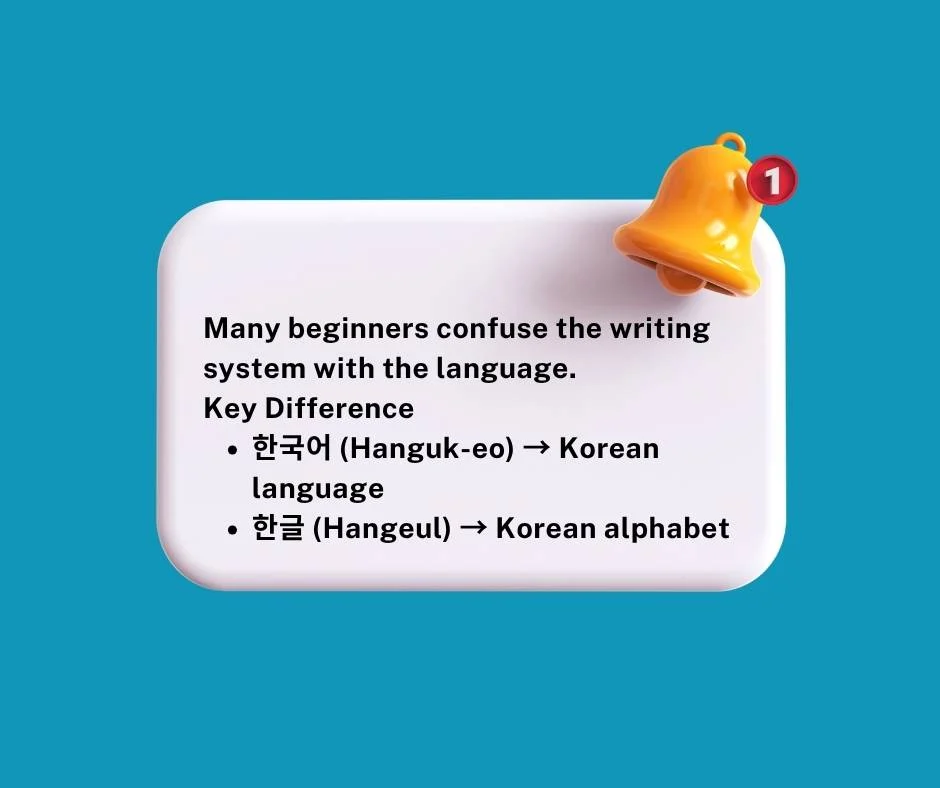
Many beginners confuse the writing system with the language.
Key Difference
- 한국어 (Hanguk-eo) → Korean language
- 한글 (Hangeul) → Korean alphabet
Example
- 저는 한글을 읽을 수 있어요
👉 “I can read Korean letters.” - 저는 한국어를 말할 수 있어요
👉 “I can speak Korean.”
Easy Practice Exercises
To master how to say Korean in Korean, practice regularly.
Exercise 1: Repeat Aloud
Say this 5 times:
- 한국어
- 한국말
Exercise 2: Simple Sentences
Try speaking:
- 저는 한국어를 배워요
- 한국어가 좋아요
Exercise 3: Ask a Question
- 한국어 할 수 있어요?
Practice with a friend or even in front of a mirror.
Useful Vocabulary Related to Korean
Learning related words helps you expand your knowledge quickly.
Basic Words
- 배우다 → to learn
- 말하다 → to speak
- 공부하다 → to study
- 어렵다 → difficult
- 쉽다 → easy
Example Sentences
- 한국어는 쉬워요
👉 “Korean is easy.” - 한국어는 어려워요
👉 “Korean is difficult.”
Tips to Remember the Phrase Easily
Memory tricks can make learning faster and more fun.
Simple Tricks
- Think of Hanguk = Korea
- Add eo = language
👉 Hanguk + eo = Korean language
Visual Memory
Imagine:
- A map of Korea → “Hanguk”
- A speech bubble → “eo”
Combine them in your mind.
Daily Practice Habit
- Use the word in at least 3 sentences daily
- Write it down in a notebook
- Say it out loud
Consistency is the key.
Real-Life Situations Where You Use it
Knowing how to say Korean in Korean is useful in many everyday situations.
At Language School
- 한국어 수업이에요
👉 “This is a Korean class.”
Talking to Friends
- 한국어 배워요?
👉 “Are you learning Korean?”
Traveling to Korea
- 한국어 조금 할 수 있어요
👉 “I can speak a little Korean.”
Frequently Asked Questions (FAQs)
What is the correct way to say Korean in Korean?
The correct way is 한국어 (Hanguk-eo), which means Korean language.
Is 한국말 the same as 한국어?
Yes, both mean Korean, but 한국말 is more casual while 한국어 is more formal.
How do you pronounce 한국어?
It is pronounced as Han-guk-uh, with a soft “uh” sound at the end.
Can beginners easily learn this word?
Yes, it is one of the easiest and most important words for beginners learning Korean.
Why is it important to know how to say Korean in Korean?
It helps you introduce your language skills and communicate more naturally with native speakers.
How do you say the Korean language in Korean?
The Korean language is called 한국어 (Hangugeo) in Korean. It means “the language of Korea” and is the most common term used by Korean people when talking about their language.
What is Korean called in Korean?
Korean is called 한국어 (Hangugeo) when referring to the Korean language. The word 한국 (Hanguk) means Korea, and 어 (eo) means language.
How do Korean people say “Korean”?
Korean people say 한국인 (Hangugin) for a Korean person and 한국어 (Hangugeo) for the Korean language. The meaning changes depending on whether they are talking about a person or a language.
Is it hangul or hanguk?
Hangul (한글) refers to the Korean writing system, while Hanguk (한국) means Korea. They are different words with different meanings.
Why was Hangul banned?
Hangul was restricted during the Japanese occupation of Korea (1910–1945), when the use of the Korean language and writing system was suppressed. Koreans later restored and promoted Hangul as a symbol of national identity.
How do Koreans say “hi” in text?
Koreans often write 안녕 (annyeong) as a casual way to say “hi” in text messages. Friends may also use shortened forms or playful expressions depending on their relationship.How do you say the Korean language in Korean?
The Korean language is called 한국어 (Hangugeo) in South Korea and 조선어 (Joseoneo) in North Korea. Both terms refer to the Korean language, but each reflects the country’s official naming convention.
What is Korean called in Korean?
In South Korea, Korean is called 한국어 (Hangugeo), while in North Korea it is called 조선어 (Joseoneo). Although the names differ, they both refer to the same language spoken across the Korean Peninsula.
How do Korean people say Korea?
South Koreans usually call their country 한국 (Hanguk), while North Koreans say 조선 (Joseon). The different names come from each country’s historical and political traditions.
Is it Hangul or hanguk?
Hangul (한글) is the Korean writing system or alphabet, while Hanguk (한국) is the Korean name for South Korea. They are different terms and should not be used interchangeably.
Why was Hangul banned?
Hangul was discouraged or restricted during the Japanese colonial rule of Korea (1910–1945) as part of efforts to promote the Japanese language. After Korea regained independence, Hangul was fully restored and became the official writing system.
How do Koreans say “hi” in text?
Koreans often type 안녕 (Annyeong) in casual text messages with friends. For a more polite greeting, they use 안녕하세요 (Annyeonghaseyo), which is suitable for most everyday conversations and online chats.
How do you say the Korean language in Korean?
The Korean language is called 한국어 (Hangugeo) in South Korea and 조선어 (Joseoneo) in North Korea. Both terms refer to the Korean language, but each reflects the country’s official naming convention.
What is Korean called in Korean?
In South Korea, Korean is called 한국어 (Hangugeo), while in North Korea it is called 조선어 (Joseoneo). Although the names differ, they both refer to the same language spoken across the Korean Peninsula.
How do Korean people say Korea?
South Koreans usually call their country 한국 (Hanguk), while North Koreans say 조선 (Joseon). The different names come from each country’s historical and political traditions.
Is it Hangul or hanguk?
Hangul (한글) is the Korean writing system or alphabet, while Hanguk (한국) is the Korean name for South Korea. They are different terms and should not be used interchangeably.
Why was Hangul banned?
Hangul was discouraged or restricted during the Japanese colonial rule of Korea (1910–1945) as part of efforts to promote the Japanese language. After Korea regained independence, Hangul was fully restored and became the official writing system.
How do Koreans say “hi” in text?
Koreans often type 안녕 (Annyeong) in casual text messages with friends. For a more polite greeting, they use 안녕하세요 (Annyeonghaseyo), which is suitable for most everyday conversations and online chats.
Conclusion
Learning how to say Korean in Korean is a small step that makes a big difference in your language journey.
The word 한국어 (Hanguk-eo) is simple, meaningful, and widely used in everyday conversations.
By understanding its pronunciation, usage, and variations, you build a strong foundation for learning Korean.
Keep practicing daily, and you’ll feel more confident using it naturally.
Also Check These Posts:
How to Say Hi in Swedish Correctly Every Time
How to Say Goodnight to Your Crush with Simple and Sweet Messages
How to Say Happy Birthday in Hawaiian | Fun and Easy Guide in 2026

Blake Kinslee
Hi! I’m Blake, a passionate writer who loves exploring the beauty of different languages and cultures through storytelling. Ever since I was young, I’ve been fascinated by how words can connect people across the world. Writing, for me, is not just a hobby—it’s a way to share ideas, emotions, and dreams with readers everywhere. When I’m not crafting stories, you’ll usually find me reading, traveling, or discovering new words in languages I’ve never spoken before. Every book I write is a journey, and I hope my readers feel that magic too.
Books:
-
Whispers Across Borders
-
The Language of Dreams