
Curious about how to say sleep in Spanish and want to sound natural when speaking?
Whether you mean “sleep” as a verb or a noun, Spanish has specific words that change depending on context.
This simple guide will help you understand the right word to use every time.
By the end, you’ll feel confident saying “sleep” in Spanish like a native speaker.
The Basic Word Used for Sleep in Spanish
Spanish uses one main verb to talk about sleep, but how you use it depends on context, tense, and sentence structure.
Understanding the basics first makes everything else easier.
Dormir as the Main Verb
The most common way to say sleep in Spanish is dormir.
You use dormir when talking about:
- Sleeping at night
- Taking rest
- Daily routines
- Habits
Examples:
- Yo duermo ocho horas.
I sleep eight hours. - Necesito dormir más.
I need to sleep more. - Ella duerme temprano.
She sleeps early.
Dormir is an irregular verb, which means it changes slightly in some forms.
Beginners should focus on common usage before worrying about every tense.
Present Tense Forms Used Daily
When speaking about sleep in everyday conversations, the present tense is used most often.
Common present tense forms:
- Yo duermo – I sleep
- Tú duermes – You sleep
- Él / Ella duerme – He / She sleeps
- Nosotros dormimos – We sleep
- Ellos duermen – They sleep
Examples in daily life:
- Duermo bien por la noche.
I sleep well at night. - ¿Duermes mucho los fines de semana?
Do you sleep a lot on weekends?
These forms are essential when learning how to say sleep in Spanish naturally.
Talking About Going to Sleep
Spanish uses different expressions when you want to say you are going to sleep, not just sleeping.
Ir a Dormir for Future Actions
To say you are about to sleep, Spanish often uses ir a dormir.
Examples:
- Voy a dormir ahora.
I am going to sleep now. - Vamos a dormir temprano.
We are going to sleep early.
This structure is very common and easy for beginners.
Acostarse for Going to Bed
Another important verb is acostarse, which means “to go to bed.”
You use acostarse when focusing on the action of getting into bed.
Examples:
- Me acuesto a las diez.
I go to bed at ten. - Se acuestan tarde.
They go to bed late.
This verb is often used together with dormir in conversations.
Sleep-Related Expressions Used by Native Speakers
Spanish speakers use many common expressions related to sleep. Learning these helps you sound more natural.
Common expressions:
- Dormir como un bebé
To sleep like a baby - Tener sueño
To be sleepy - Quedarse dormido
To fall asleep - No poder dormir
To not be able to sleep
Examples:
- Tengo mucho sueño hoy.
I am very sleepy today. - Me quedé dormido en el sofá.
I fell asleep on the couch.
These phrases are useful in everyday conversations.
Talking About Sleep Quality
When discussing how well or badly you sleep, Spanish has simple ways to express it.
Useful phrases:
- Dormir bien – to sleep well
- Dormir mal – to sleep badly
- Dormir poco – to sleep little
- Dormir mucho – to sleep a lot
Examples:
- Dormí mal anoche.
I slept badly last night. - Duermo bien cuando hago ejercicio.
I sleep well when I exercise.
These phrases are easy to remember and widely used.
Sleep in the Past Tense
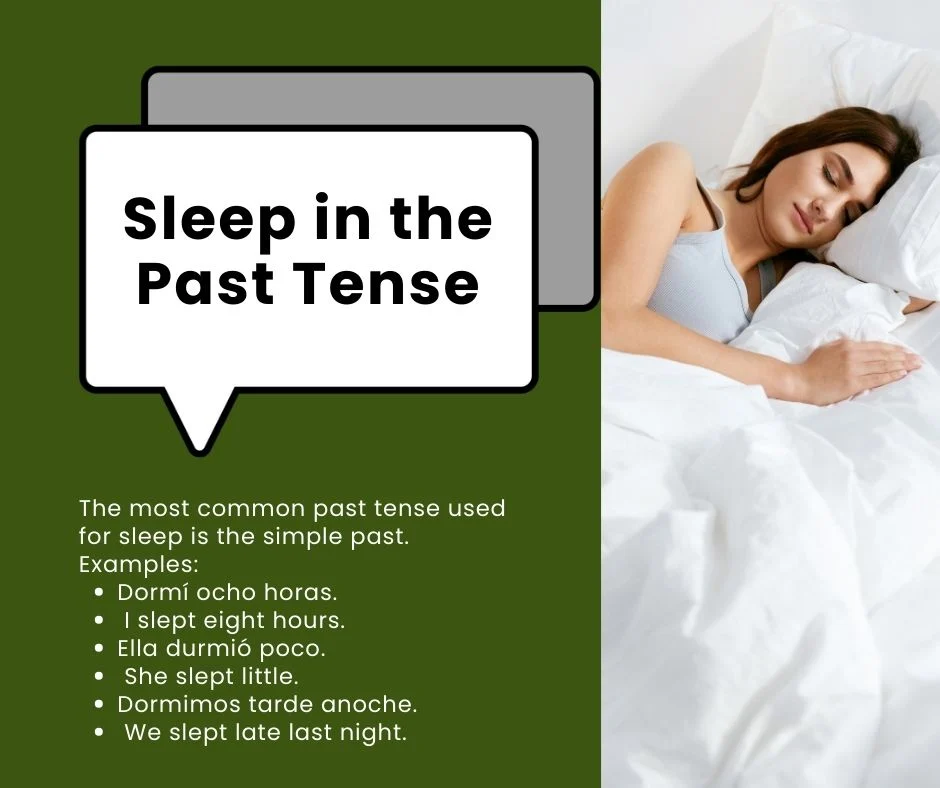
Talking about sleep in the past is very common, especially when discussing yesterday or last night.
Using the Simple Past
The most common past tense used for sleep is the simple past.
Examples:
- Dormí ocho horas.
I slept eight hours. - Ella durmió poco.
She slept little. - Dormimos tarde anoche.
We slept late last night.
These forms help you describe completed actions.
Sleep in the Future
To talk about sleep plans, Spanish uses simple future expressions.
Examples:
- Dormiré temprano hoy.
I will sleep early today. - Dormiremos mejor mañana.
We will sleep better tomorrow.
Future expressions are helpful when making plans or promises.
Sleep Commands and Requests
Sometimes you may want to tell someone to sleep or ask politely.
Common commands:
- Duerme bien.
Sleep well. - Ve a dormir.
Go to sleep.
Polite requests:
- Necesitas dormir más.
You need to sleep more. - Es hora de dormir.
It is time to sleep.
These expressions are commonly used with children or close family.
Cultural Notes About Sleep in Spanish-Speaking Countries
Sleep habits vary across Spanish-speaking cultures, and language reflects that.
Important cultural points:
- Dinner is often late
- Bedtime can be later than in some countries
- Afternoon naps are common in some regions
Common phrase:
- Tomar una siesta
To take a nap
Example:
- Me gusta tomar una siesta después de comer.
I like to take a nap after eating.
Understanding these habits helps you use sleep-related words more naturally.
Common Mistakes Beginners Make
Learners often confuse similar verbs or structures.
Common mistakes:
- Using acostarse instead of dormir incorrectly
- Forgetting verb changes in the present tense
- Translating directly from English
Correct example:
- Incorrect: Yo dormir a las diez
- Correct: Yo duermo a las diez
Small corrections make a big difference in fluency.
Practical Daily Conversations Using Sleep
Knowing how to say sleep in Spanish helps you in many real-life situations.
Examples:
- At the doctor
No duermo bien por la noche. - Traveling
Necesito dormir después del vuelo. - With friends
Dormí muy poco ayer.
These examples show how often the word appears in daily speech.
Practicing Sleep Vocabulary Effectively
Practice helps build confidence and memory.
Helpful practice tips:
- Write short sentences daily
- Say your sleep routine aloud
- Listen to native speakers
- Use sleep phrases before bed
Consistency is more important than speed.
Frequently Asked Questions
What is the main way to say sleep in Spanish?
The main verb is dormir, used in most situations.
How do you say I am sleepy in Spanish?
You say tengo sueño to express feeling sleepy.
Is dormir a regular verb?
No, dormir is irregular and changes in some forms.
How do you say go to sleep in Spanish?
You can say ir a dormir or acostarse, depending on context.
Can dormir be used in daily conversations?
Yes, dormir is very common in everyday Spanish.
Conclusion
Learning how to say sleep in Spanish gives you an essential tool for daily communication.
From dormir to common expressions like tener sueño and ir a dormir, these words help you talk about routines, health, and rest naturally.
With regular practice, you will feel more confident using sleep-related Spanish in real-life conversations.
Also Check These Posts:
How to Say Hello in Norwegian Like a Native Speaker in 2026
How to Say Excuse Me in Japanese | Formal & Casual Ways in 2026
How to Say Acai | Master the Correct Pronunciation in 2026
How to Say Happy Valentine’s Day in Spanish and Other Popular Languages

Ethan Moore
Ethan Moore is a passionate storyteller and language enthusiast who believes that words have the power to bridge cultures. Ever since he was young, Ethan has been fascinated by how languages shape our thoughts and connect people from different corners of the world. Through his writing, he explores the beauty of communication and the subtle nuances that make each language unique. When he’s not writing, Ethan enjoys traveling, learning new languages, and diving into different cultures. His goal is to inspire readers to embrace diversity and appreciate the richness of global expression.
Books:
-
Whispers Across Tongues
-
The Language of Dreams