

How to say i like you in korean is one of the first questions many Korean language learners ask. Whether you are a fan of Korean dramas, K-pop, or simply interested in the language, learning how to express your feelings is both fun and useful.
Knowing the right phrase can help you connect with Korean friends, understand romantic scenes in dramas, and communicate naturally in everyday conversations.
How to Say I Like You in Korean
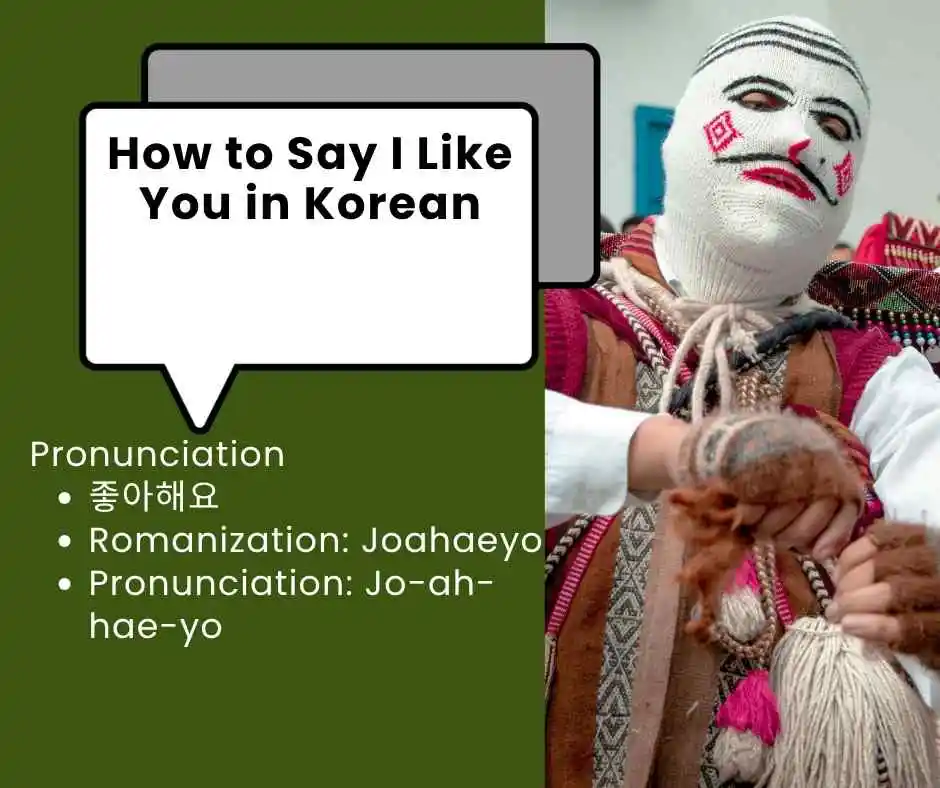
The most common way to say “I like you” in Korean is:
좋아해요 (Joahaeyo)
This phrase means “I like you” and is polite, making it suitable for most situations.
Pronunciation
- 좋아해요
- Romanization: Joahaeyo
- Pronunciation: Jo-ah-hae-yo
You can use it when expressing affection toward someone you like romantically or even when telling someone you care about them.
Example
- 저는 당신을 좋아해요.
- Jeoneun dangsineul joahaeyo.
- “I like you.”
In everyday Korean, people often drop the subject and simply say:
좋아해요.
“I like you.”
Different Ways to Say I Like You in Korean
Korean has different speech levels depending on your relationship with the other person.
Casual Form
좋아해 (Joahae)
This version is used with:
- Close friends
- Someone younger than you
- A romantic partner
Example:
- 너 좋아해.
- Neo joahae.
- “I like you.”
Polite Form
좋아해요 (Joahaeyo)
This is the safest and most common version for beginners.
Example:
- 정말 좋아해요.
- Jeongmal joahaeyo.
- “I really like you.”
Formal Form
좋아합니다 (Joahamnida)
This form sounds very formal and is less common in romantic situations.
Example:
- 당신을 좋아합니다.
- Dangsineul joahamnida.
- “I like you.”
How to Say I Really Like You in Korean
Sometimes “I like you” does not feel strong enough.
You can add words that increase the intensity of your feelings.
정말 좋아해요
Jeongmal joahaeyo
Meaning: “I really like you.”
많이 좋아해요
Mani joahaeyo
Meaning: “I like you a lot.”
너무 좋아해요
Neomu joahaeyo
Meaning: “I like you so much.”
These phrases are commonly heard in Korean dramas and real-life conversations.
How to Say I Like You Romantically in Korean
The phrase 좋아해요 can mean either romantic interest or general liking depending on the context.
To make your romantic feelings clearer, you can say:
많이 좋아하고 있어요
Mani joahago isseoyo
Meaning: “I like you a lot.”
오래전부터 좋아했어요
Oraejeonbuteo joahaesseoyo
Meaning: “I have liked you for a long time.”
These phrases often sound more sincere and heartfelt.
The Difference Between “I Like You” and “I Love You” in Korean
Many beginners confuse these two expressions.
I Like You
좋아해요 (Joahaeyo)
This is usually used when:
- Developing romantic feelings
- Expressing affection
- Talking about someone you are interested in
I Love You
사랑해요 (Saranghaeyo)
This means “I love you” and expresses deeper emotions.
Example:
- 사랑해요.
- Saranghaeyo.
- “I love you.”
In Korean culture, people often use “I like you” first before moving on to “I love you.”
Korean Confession Phrases You Should Know
Confessing feelings is an important part of Korean dating culture.
Here are some useful phrases.
너를 좋아해
Neoreul joahae
“I like you.”
진심으로 좋아해요
Jinsimeuro joahaeyo
“I genuinely like you.”
저랑 사귈래요?
Jeorang sagwillaeyo?
“Would you like to date me?”
제 마음을 받아주세요
Je maeumeul badajuseyo
“Please accept my feelings.”
These phrases are often used during romantic confessions.
How Korean Dramas Use “I Like You”
If you watch Korean dramas, you have probably heard characters say:
좋아해.
This simple phrase often appears during emotional moments.
In dramas, the tone of voice, facial expressions, and situation help determine whether the phrase means:
- Romantic love
- Affection
- Admiration
This is one reason learning Korean through dramas can be very helpful.
Cultural Tips When Saying I Like You in Korea

Understanding Korean culture can help you use the phrase naturally.
Koreans Often Express Feelings Gradually
People may not confess their feelings immediately. Building trust and friendship is often important first.
Respect Matters
Using the correct speech level shows politeness and maturity.
Beginners should generally use:
좋아해요 (Joahaeyo)
until they become close with the other person.
Actions Matter Too
In Korean culture, actions often communicate feelings as strongly as words.
Simple gestures such as helping someone, spending time together, or remembering important dates can express affection.
Useful Examples of I Like You in Korean
Here are some practical examples you can use.
Example 1
- 너를 좋아해.
- Neoreul joahae.
- I like you.
Example 2
- 정말 많이 좋아해요.
- Jeongmal mani joahaeyo.
- I really like you a lot.
Example 3
- 오래전부터 좋아했어요.
- Oraejeonbuteo joahaesseoyo.
- I have liked you for a long time.
Example 4
- 사실은 당신을 좋아해요.
- Sashireun dangsineul joahaeyo.
- To be honest, I like you.
Example 5
- 너를 볼 때마다 행복해.
- Neoreul bol ttaemada haengbokhae.
- I feel happy whenever I see you.
Common Mistakes Beginners Make
Learning romantic expressions can be exciting, but beginners often make a few mistakes.
Using the Wrong Speech Level
Using casual Korean with someone you do not know well can sound rude.
Confusing Love and Like
Remember:
- 좋아해요 = I like you
- 사랑해요 = I love you
They carry different emotional levels.
Ignoring Pronunciation
Practice saying:
Jo-a-hae-yo
slowly until it sounds natural.
Good pronunciation helps your message sound sincere.
Easy Way to Remember How to Say I Like You in Korean
A simple memory trick is:
- 좋아 = like
- 해요 = do (polite ending)
Together:
좋아해요 = I like you
Repeat the phrase several times each day and try using it in practice conversations.
The more you hear and speak it, the easier it becomes to remember.
Frequently Asked Questions
What is the most common way to say I like you in Korean?
The most common phrase is 좋아해요 (Joahaeyo). It is polite, natural, and suitable for most situations.
How do you say I really like you in Korean?
You can say 정말 좋아해요 (Jeongmal joahaeyo), which means “I really like you.”
Is 좋아해요 romantic?
Yes, it can be romantic depending on the context. It is often used when expressing romantic interest in someone.
What is the difference between 좋아해요 and 사랑해요?
좋아해요 means “I like you,” while 사랑해요 means “I love you.” 사랑해요 expresses deeper feelings.
Can beginners use 좋아해요 in everyday conversations?
Yes. 좋아해요 is beginner-friendly, polite, and widely used in everyday Korean conversations.
Conclusion
Learning how to say i like you in korean is a great step toward understanding both the Korean language and culture. The phrase 좋아해요 (Joahaeyo) is simple, useful, and commonly used in real conversations. Whether you are studying Korean, watching dramas, or expressing genuine feelings, knowing this phrase can help you communicate with confidence and connect more naturally with Korean speakers.
Also Check These Posts:
How to Say Happy Thanksgiving with Heart in 2026
How to Say 17 in Spanish Without Mistakes
Learn How to Say You’re Welcome in Italian and Impress Everyone

Daniel Carter
Hi, I’m Daniel Carter, a passionate storyteller and lifelong explorer of languages and cultures. Writing has always been my way of connecting with the world, sharing stories that inspire, educate, and entertain. I love diving into the nuances of communication and finding beauty in the words we use every day. Over the years, I’ve dedicated myself to crafting stories that resonate across borders and languages. When I’m not writing, you’ll usually find me exploring new places or learning something new about the world around me. My goal is to create stories that make readers think, smile, and sometimes even dream.
Books:
-
Whispers Across Borders
-
The Language of Hearts