

If you are searching for how to say have a nice day in Spanish, you are probably trying to sound more friendly in conversations, travel situations, or even social media messages.
Learning this simple phrase can help you connect better with Spanish speakers in a natural and respectful way. It is one of those everyday expressions that can instantly make your communication warmer and more polite.
In this guide, you will learn different ways to say it, how to pronounce it correctly, and when to use each version in real life.
Basic Translation and Meaning in Spanish
The most common way to say have a nice day in Spanish is:
- “Que tengas un buen día” (informal)
- “Que tenga un buen día” (formal)
Both phrases mean you are wishing someone a good day, but the difference lies in the level of respect or familiarity.
Simple breakdown:
- Que tengas / Que tenga → “May you have”
- Un buen día → “A good day”
So, the full meaning becomes:
“May you have a good day”
This is the most natural and widely used expression across Spanish-speaking countries.
Most Common Ways to Say Have a Nice Day in Spanish
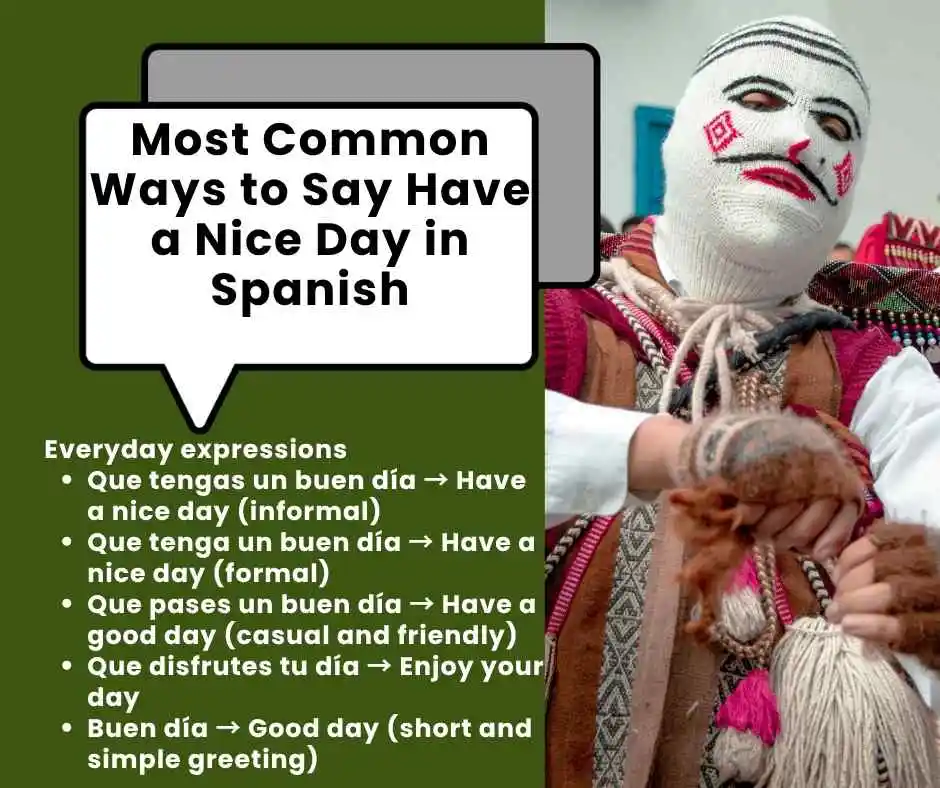
Spanish is a rich language, and there are many ways to express kindness. Here are the most commonly used phrases for how to say have a nice day in Spanish:
Everyday expressions
- Que tengas un buen día → Have a nice day (informal)
- Que tenga un buen día → Have a nice day (formal)
- Que pases un buen día → Have a good day (casual and friendly)
- Que disfrutes tu día → Enjoy your day
- Buen día → Good day (short and simple greeting)
Polite variations
- Que tengas un excelente día → Have an excellent day
- Que tengas un maravilloso día → Have a wonderful day
- Te deseo un buen día → I wish you a good day
These variations are useful depending on how expressive or polite you want to sound.
Understanding Formal and Informal Usage
One of the most important things when learning how to say have a nice day in Spanish is knowing when to use formal or informal speech.
Informal situations
Use informal phrases like:
- Que tengas un buen día
- Que pases un buen día
These are used with:
- Friends
- Family
- People your age
- Casual conversations
Formal situations
Use formal phrases like:
- Que tenga un buen día
These are used with:
- Teachers
- Bosses
- Elderly people
- Strangers
Using the correct form shows respect and cultural awareness, which is very important in Spanish-speaking cultures.
Pronunciation Guide for Beginners
Pronunciation is key when learning how to say have a nice day in Spanish. Even a simple phrase sounds better when spoken correctly.
Que tengas un buen día
Pronunciation:
keh TEN-gas oon bwen DEE-ah
Que tenga un buen día
Pronunciation:
keh TEN-gah oon bwen DEE-ah
Que pases un buen día
Pronunciation:
keh PAH-ses oon bwen DEE-ah
Tips to improve pronunciation:
- Speak slowly at first
- Break the sentence into parts
- Listen to native speakers
- Practice daily with short phrases
Real-Life Situations Where You Can Use It
Understanding how to say have a nice day in Spanish is more useful when you apply it in real situations.
At a store
Customer: “Gracias por su ayuda”
You: “Que tenga un buen día”
With friends
Friend: “Nos vemos luego”
You: “Que tengas un buen día”
In travel situations
At hotel checkout:
“Gracias por todo”
Reception: “Que tengas un buen día”
In messages or social media
- “¡Que tengas un buen día! 😊”
- “Espero que tengas un buen día”
These small phrases can make your communication feel more natural and friendly.
Common Variations Across Spanish-Speaking Countries
Spanish changes slightly depending on the country. While learning how to say have a nice day in Spanish, it helps to know regional differences.
Mexico and Central America
- Que tengas un buen día
- Que pases un buen día
Spain
- Que tengas un buen día
- Buen día (less common than in Latin America)
South America
- Que tengas un lindo día
- Que tengas un excelente día
Caribbean regions
- Que disfrutes tu día
- Bendiciones (sometimes used as a warm goodbye)
Even though expressions vary, the meaning stays the same: wishing someone positivity for their day.
Advanced and Natural Expressions
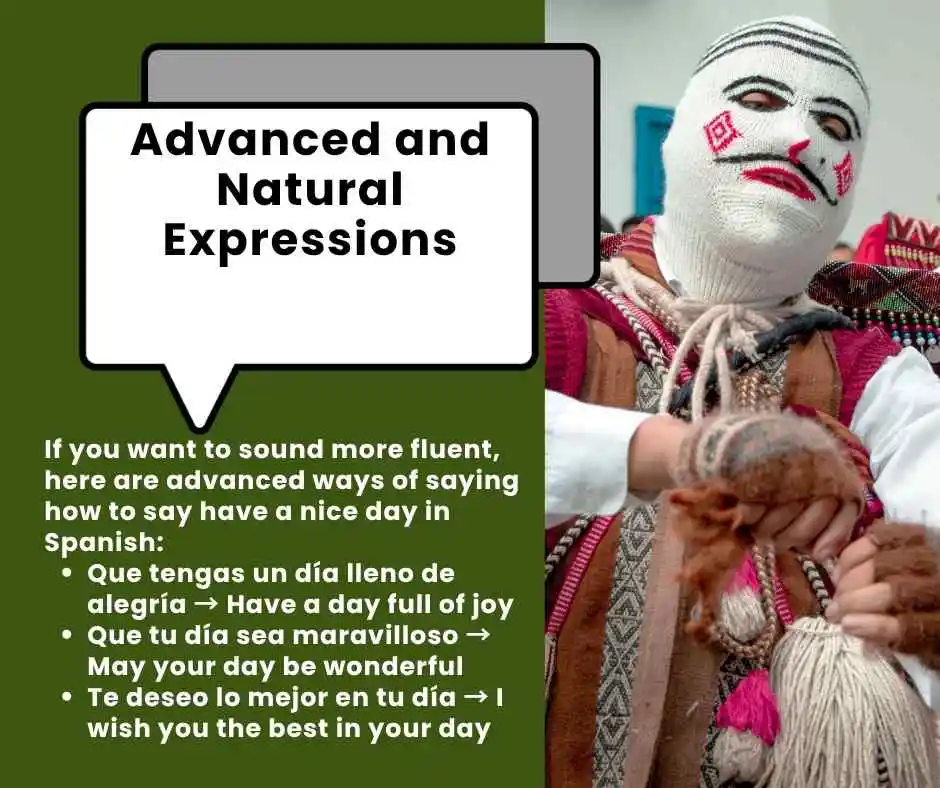
If you want to sound more fluent, here are advanced ways of saying how to say have a nice day in Spanish:
- Que tengas un día lleno de alegría → Have a day full of joy
- Que tu día sea maravilloso → May your day be wonderful
- Te deseo lo mejor en tu día → I wish you the best in your day
- Que tu día esté lleno de cosas buenas → May your day be full of good things
These phrases are perfect for:
- Cards
- Messages
- Emotional conversations
- Special occasions
Common Mistakes Learners Make
When learning how to say have a nice day in Spanish, beginners often make small mistakes.
Mistake 1: Using only literal translation
- Incorrect: “Have a nice day” → “Tener un bonito día”
- Correct: “Que tengas un buen día”
Mistake 2: Wrong form (formal vs informal)
- Using “tenga” with friends
- Using “tengas” with strangers
Mistake 3: Overcomplicating the phrase
- Keep it simple; native speakers often use short expressions
Tip:
Focus on natural usage, not direct translation.
Friendly Alternatives You Can Use
Sometimes you may want to avoid repeating the same phrase. Here are friendly alternatives:
- Cuídate → Take care
- Nos vemos → See you
- Hasta luego → See you later
- Pásala bien → Have a good time
- Que estés bien → Be well
These are often used instead of repeating how to say have a nice day in Spanish in every conversation.
Why Learning This Phrase Matters
Learning how to say have a nice day in Spanish is more than just vocabulary. It helps you:
- Build better relationships
- Sound polite and respectful
- Improve your travel experience
- Connect emotionally with native speakers
Even a small phrase like this can leave a positive impression.
FAQs
What is the most common way to say have a nice day in Spanish?
The most common phrase is “Que tengas un buen día,” which is used in informal situations with friends, family, or people you know well.
How do you say have a nice day in Spanish formally?
You can say “Que tenga un buen día” when speaking politely to strangers, elders, or in professional environments.
Is there a short way to say have a nice day in Spanish?
Yes, simply saying “Buen día” is a short and casual way to greet someone or wish them a good day.
Can I use have a nice day in Spanish in messages?
Yes, phrases like “Que tengas un buen día 😊” are commonly used in texts, chats, and social media posts.
What is the difference between tengas and tenga?
“Tengas” is informal and used with people you know, while “tenga” is formal and used in respectful or professional situations.
Conclusion
Learning how to say have a nice day in Spanish is a simple but powerful step toward better communication. Whether you use “Que tengas un buen día” or “Que tenga un buen día,” the meaning stays warm and positive. By practicing these expressions, you can speak more naturally and confidently with Spanish speakers in everyday life.
Also Check These Posts:
How to Say Hi in Swedish Correctly Every Time
How to Say Goodnight to Your Crush with Simple and Sweet Messages
How to Say Happy Birthday in Hawaiian | Fun and Easy Guide in 2026

Darcy Lynn
Darcy Lynn has always been fascinated by the colors and stories of life. Her journey with writing began in childhood, and today she takes readers into new worlds through her stories. For her, every word is a way to explore new experiences and emotions. Darcy loves exploring stories across different cultures and languages, which also reflects in her unique writing style. She believes that a good story touches every heart and sparks deeper thinking. Alongside writing, she enjoys connecting directly with her readers and understanding their feelings.
Books:
-
Whispers Across Worlds
-
Echoes of Tomorrow