
If you’ve ever wondered how to say happy Hanukkah in Hebrew, you’re not alone.
During the holiday season, many people want to greet friends and family in a meaningful way.
Learning this simple phrase can help you connect with Jewish culture, show respect, and spread joy.
The good news? It’s easy to learn and even easier to use in real life.
The Basic Way to Say Happy Hanukkah in Hebrew
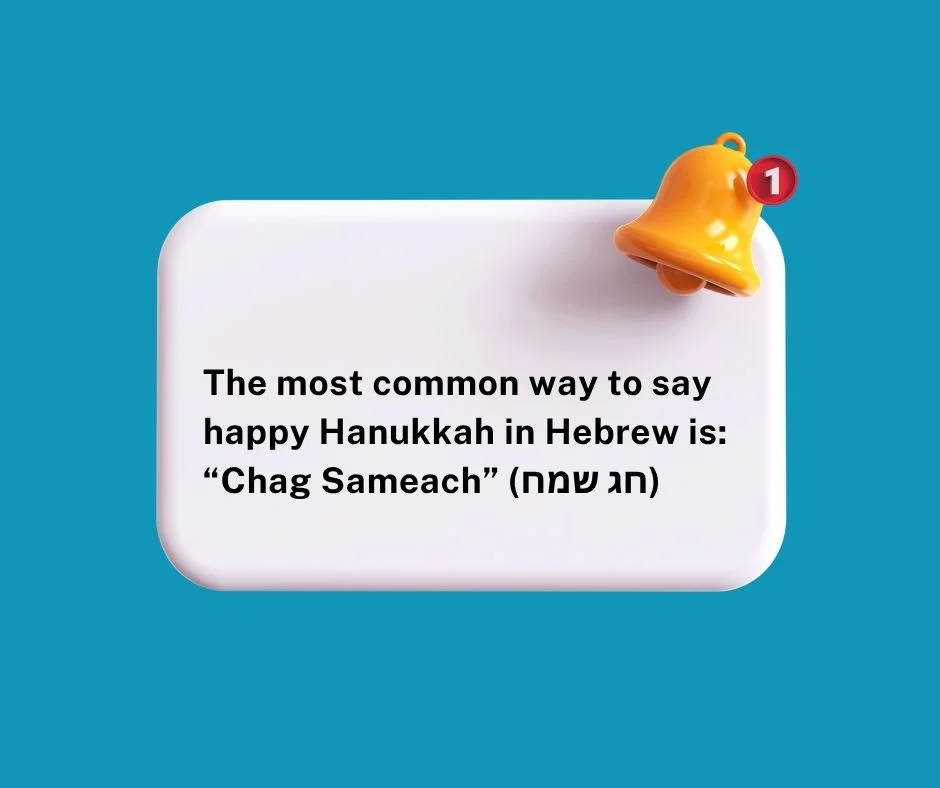
The most common way to say happy Hanukkah in Hebrew is:
“Chag Sameach” (חג שמח)
What does “Chag Sameach” mean?
- Chag (חג) = Holiday or festival
- Sameach (שמח) = Happy
So, when you say Chag Sameach, you are literally saying “Happy Holiday.”
Why this phrase is used
- It works for Hanukkah and other Jewish holidays
- It’s simple and widely understood
- It’s perfect for both formal and casual greetings
Example usage
- Saying goodbye to a Jewish friend before Hanukkah
- Writing a greeting card
- Posting on social media
Example sentence:
“Wishing you a joyful Hanukkah; Chag Sameach!”
A More Specific Hanukkah Greeting
If you want to be more specific when learning how to say happy Hanukkah in Hebrew, you can say:
“Chag Hanukkah Sameach” (חג חנוכה שמח)
Breakdown of the phrase
- Chag = Holiday
- Hanukkah = The name of the festival
- Sameach = Happy
Meaning
“Happy Hanukkah Holiday”
When to use this version
- When you want to be extra clear and festive
- In formal greetings or messages
- When speaking to someone unfamiliar with general greetings
Example
“Chag Hanukkah Sameach to you and your family!”
How to Pronounce It Correctly
Pronunciation can feel tricky at first, but it becomes easier with practice.
Chag Sameach pronunciation
- Chag → pronounced like “khag” (a soft throat sound)
- Sameach → “sah-meh-akh”
Helpful tips
- The “ch” sound is like the Scottish “loch”
- Speak slowly at first
- Listen to native speakers if possible
Simple pronunciation guide
- Chag Sameach → khahg sah-meh-akh
- Chag Hanukkah Sameach → khahg hah-nuh-kah sah-meh-akh
Writing Happy Hanukkah in Hebrew
If you want to go beyond speaking and actually write it, here’s how:
Hebrew script
- חג שמח → Chag Sameach
- חג חנוכה שמח → Chag Hanukkah Sameach
Writing tips for beginners
- Hebrew is written right to left
- Letters may look different at first, but practice helps
- You can copy and paste the phrase when needed
Where to use written Hebrew
- Greeting cards
- Social media posts
- Messages to friends or colleagues
Other Hanukkah Greetings You Can Use
While learning how to say happy Hanukkah in Hebrew, it’s helpful to know a few variations.
Popular alternatives
- Happy Hanukkah (English)
- Hanukkah Sameach
- Happy Festival of Lights
When to use each
- Use Hebrew phrases for a cultural touch
- Use English if you’re unsure about pronunciation
- Mix both for a friendly tone
Example combinations
- “Happy Hanukkah! Chag Sameach!”
- “Wishing you joy; Chag Hanukkah Sameach!”
Cultural Meaning Behind the Greeting
Understanding the meaning adds depth when you say the phrase.
What is Hanukkah?
Hanukkah is known as the Festival of Lights. It celebrates:
- The rededication of the Holy Temple
- The miracle of the oil lasting eight days
Why greetings matter
- They show respect for tradition
- They help build cultural understanding
- They spread joy and positivity
Emotional value
When you say Chag Sameach, you’re not just saying “happy holiday.” You’re sharing warmth, kindness, and connection.
When and Where to Use the Greeting
Knowing when to say it is just as important as knowing how.
Best times to say it
- During the eight days of Hanukkah
- Before the holiday begins
- In messages or greetings
Common situations
- Meeting someone celebrating Hanukkah
- Sending holiday wishes
- Writing emails or texts
Example scenarios
- At work: “Chag Sameach! Enjoy the holiday.”
- With friends: “Have a great Hanukkah; Chag Sameach!”
Common Mistakes to Avoid
Learning how to say happy Hanukkah in Hebrew is simple, but beginners often make small mistakes.
Mistake 1: Wrong pronunciation
- Saying “Chag” like “tag”
- Fix: Practice the throat sound
Mistake 2: Using the wrong phrase
- Mixing up words
- Fix: Stick to “Chag Sameach”
Mistake 3: Overthinking it
- Feeling nervous about saying it perfectly
- Fix: Focus on sincerity, not perfection
Practical Examples You Can Use Today
Here are some ready-to-use examples:
In text messages
- “Chag Sameach! Wishing you peace and joy.”
- “Happy Hanukkah; Chag Hanukkah Sameach!”
On social media
- “Celebrating the Festival of Lights. Chag Sameach!”
- “Warm wishes to everyone celebrating; Chag Sameach!”
In conversation
- “Oh, it’s Hanukkah? Chag Sameach!”
- “Enjoy your holiday; Chag Sameach!”
Why Learning This Phrase Is Useful
Learning how to say happy Hanukkah in Hebrew has real-life benefits.
Personal benefits
- Builds cultural awareness
- Helps you connect with others
- Shows respect and kindness
Social benefits
- Makes your greetings more meaningful
- Helps you stand out in conversations
- Creates positive impressions
Professional benefits
- Useful in diverse workplaces
- Shows cultural sensitivity
- Builds stronger relationships
Tips to Remember the Phrase Easily
If you’re worried about forgetting, try these tips:
Memory tricks
- Think: Chag = Holiday
- Think: Sameach = Smile (happy)
Practice ideas
- Say it out loud daily
- Write it down
- Use it in real conversations
Quick reminder
Keep a note on your phone with:
Chag Sameach = Happy Holiday
Frequently Asked Questions (FAQs)
1. How do you say happy Hanukkah in Hebrew?
You say “Chag Sameach” or “Chag Hanukkah Sameach.”
2. What does Chag Sameach mean?
It means “Happy Holiday” in Hebrew.
3. Is Chag Sameach only for Hanukkah?
No, it can be used for many Jewish holidays.
4. How do you pronounce happy Hanukkah in Hebrew?
It’s pronounced “khahg sah-meh-akh.”
5. Can beginners easily learn this phrase?
Yes, it’s simple, short, and beginner-friendly.
Conclusion
Now you know exactly how to say happy Hanukkah in Hebrew with confidence.
Whether you use Chag Sameach or Chag Hanukkah Sameach, the meaning stays warm and joyful.
This small effort can make a big difference in how you connect with others.
So go ahead; use the phrase, share the joy, and celebrate the spirit of Hanukkah.
Also Check These Posts:
How to Say Ass in Spanish: Friendly Guide You Can Trust
How to Say That in Spanish: Easy Tricks to Remember
How to Say Breakfast in Spanish: Beginner-Friendly Tips and Phrases

Darcy Lynn
Darcy Lynn has always been fascinated by the colors and stories of life. Her journey with writing began in childhood, and today she takes readers into new worlds through her stories. For her, every word is a way to explore new experiences and emotions. Darcy loves exploring stories across different cultures and languages, which also reflects in her unique writing style. She believes that a good story touches every heart and sparks deeper thinking. Alongside writing, she enjoys connecting directly with her readers and understanding their feelings.
Books:
-
Whispers Across Worlds
-
Echoes of Tomorrow