

How to say cute in Korean is something many K-pop fans, drama lovers, and language beginners search for when they start learning Korean.
It helps you understand emotions, compliments, and everyday expressions used by native speakers.
Learning this word can make your conversations sound more natural and friendly in real life. In this guide, you will learn everything step by step in a simple way.
Understanding the Meaning of “Cute” in Korean Culture
In Korean language and culture, the idea of “cute” is not just about appearance. It can describe personality, behavior, voice, or even small actions. Koreans often use emotional words to express feelings more deeply than in English.
For example, someone might be called cute because:
- They act shy or innocent
- They have a soft or sweet personality
- They do something adorable without realizing it
- They look young or charming
The word is also widely used in friendships, family talk, and romantic situations. Because of this, learning how to say cute in Korean helps you understand emotional communication better.
In Korea, being cute is often seen as a positive and warm trait, not just something physical. That is why you will hear this word very often in daily conversations, songs, and dramas.
Basic Translation of Cute in Korean
The most common way to say cute in Korean is:
귀엽다 (gwiyeopda)
This is the dictionary form of the word. However, in real life, Koreans rarely use only the basic form. Instead, they change it depending on the situation.
Here is how it changes:
- 귀여워 (gwiyeowo) → casual way
- 귀엽습니다 (gwiyeopseumnida) → formal and polite way
- 귀엽네요 (gwiyeopneyo) → soft and polite observation
When you want to say “You are cute,” you can say:
- 너 귀여워 (neo gwiyeowo) → You are cute (informal)
- 당신은 귀엽습니다 (dangshineun gwiyeopseumnida) → You are cute (formal)
This word is very flexible and widely used in daily Korean communication.
Common Ways to Say Cute in Korean
There is not only one way to express “cute” in Korean. Depending on emotion and situation, Koreans use different forms.
Some common variations include:
귀엽다 (gwiyeopda)
- Standard dictionary form
- Used in writing or learning context
귀여워 (gwiyeowo)
- Casual spoken form
- Used with friends, siblings, or people younger than you
귀엽네요 (gwiyeopneyo)
- Polite and soft tone
- Used when reacting to something cute
귀여운 (gwiyeoun)
- Adjective form meaning “cute (something)”
- Example: 귀여운 고양이 (cute cat)
These variations make Korean expressions rich and emotional. When learning how to say cute in Korean, understanding these forms helps you speak more naturally.
Cute in Korean Slang and Informal Expressions
Korean slang is very popular among young people, especially in texting and social media. While “귀엽다” is standard, slang expressions add fun and emotion.
Some informal expressions include:
- ㅋㅋ 귀엽다 → “lol, so cute”
- 완전 귀여워 → “super cute”
- 미쳤다 귀여워 → “so cute it’s crazy”
Young Koreans often exaggerate feelings when texting. So instead of just saying “cute,” they might say something stronger to express excitement.
You might also see emojis combined with Korean words:
- 귀여워😍
- 너무 귀여워ㅠㅠ
These expressions are very common on Instagram, TikTok, and K-drama fan pages.
How to Use Cute in Real Korean Sentences
To fully understand how to say cute in Korean, you need to see real examples. Here are practical sentences used in daily life:
- 이 강아지 정말 귀여워요
(This puppy is really cute) - 너 오늘 너무 귀여워 보여
(You look so cute today) - 아기가 정말 귀엽다
(The baby is really cute) - 그 옷 귀엽다
(That outfit is cute) - 너 말하는 거 귀여워
(The way you talk is cute)
These sentences show how flexible the word is. It can describe people, animals, objects, and even behavior.
Difference Between Cute, Pretty, and Lovely in Korean
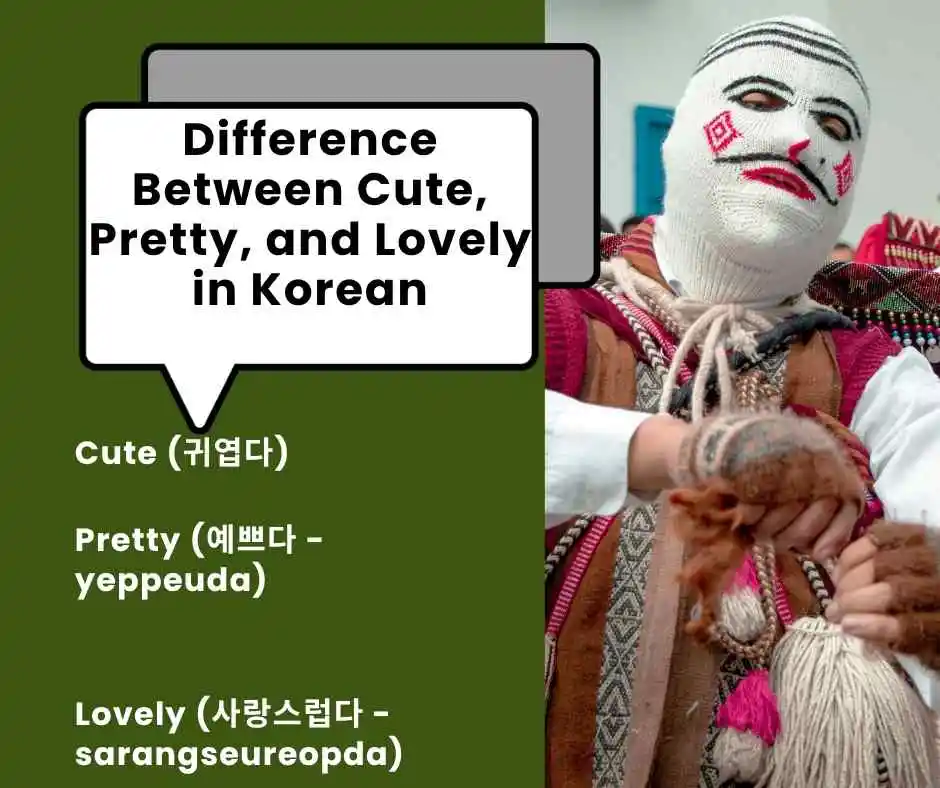
Many beginners confuse “cute,” “pretty,” and “lovely” in Korean. Each word has a different emotional tone.
Cute (귀엽다)
- Used for small, adorable, or innocent things
- Often for babies, animals, or playful behavior
Pretty (예쁘다 – yeppeuda)
- Used mainly for appearance
- Often describes girls, flowers, or scenery
Lovely (사랑스럽다 – sarangseureopda)
- Strong emotional affection
- Used for someone deeply loved or admired
For example:
- A puppy is 귀엽다 (cute)
- A flower is 예쁘다 (pretty)
- A child you deeply love is 사랑스럽다 (lovely)
Understanding this difference helps you use Korean more naturally.
Polite vs Casual Usage in Korean
Korean language changes depending on respect levels. When learning how to say cute in Korean, this is very important.
Casual speech (informal)
- Used with friends or younger people
- Example: 귀여워
Polite speech
- Used with strangers or people older than you
- Example: 귀엽네요 / 귀엽습니다
Using the wrong level can sound rude or unnatural. That’s why beginners should always be careful with tone.
In K-dramas, you will often notice characters switching between polite and casual speech depending on relationships.
Cute Expressions in K-pop and K-dramas
Korean entertainment is full of expressions related to cuteness. K-pop idols and actors often use this word in fan interactions.
Some common examples:
- “너무 귀여워!” during fan meetings
- Idol reacting to fans: “귀엽다~”
- Drama characters teasing each other playfully
Fans also use it a lot when describing idols:
- “He is so cute on stage!”
- “Her smile is so cute!”
This is one reason many learners start searching how to say cute in Korean after watching Korean shows.
Common Mistakes Learners Make
When learning Korean, beginners often make small mistakes with this word.
Some common mistakes include:
- Using only dictionary form in conversation
- Mixing polite and casual speech incorrectly
- Overusing “귀여워” in formal situations
- Not changing adjective form when describing nouns
For example:
❌ 그 고양이 귀엽다 (in casual speech conversation)
✔ 그 고양이 귀여워 (correct casual form)
Avoiding these mistakes helps you sound more natural and fluent.
Tips to Sound More Natural in Korean
If you want to sound like a native speaker when using cute in Korean, follow these tips:
- Listen to K-dramas and repeat expressions
- Practice casual vs polite versions
- Use emotional tone when speaking
- Combine words with natural reactions like “와” or “진짜”
- Don’t translate word-by-word from English
Native speakers often express feelings more emotionally, not literally. So instead of just saying “cute,” they might say “so cute I can’t handle it.”
Frequently Asked Questions
What is the most common way to say cute in Korean?
The most common way is “귀엽다 (gwiyeopda).” It is used in many situations and can describe people, animals, or objects. In conversation, it often changes to “귀여워” for casual speech.
How do you say you are cute in Korean?
You can say “너 귀여워” in casual situations. In polite form, you can say “당신은 귀엽습니다.” The choice depends on your relationship with the person.
Is 귀엽다 used for people only?
No, it is not only for people. It can also describe animals, objects, behavior, and even voices. Anything adorable or charming can be called 귀엽다.
What is the difference between 귀엽다 and 예쁘다?
“귀엽다” means cute and is used for adorable or innocent things. “예쁘다” means pretty and is used mainly for appearance, beauty, or scenery.
Can I use 귀여워 in formal situations?
No, “귀여워” is casual. In formal situations, you should use “귀엽습니다” or “귀엽네요” to show respect and politeness.
Conclusion
Learning how to say cute in Korean is a simple but powerful step in understanding everyday Korean communication. The word “귀엽다” and its variations help you express emotions naturally in different situations. Whether you are watching K-dramas, listening to K-pop, or talking with friends, this word will appear often. Practicing it regularly will help you sound more fluent and confident in Korean conversations.
Also Check These Posts:

Darcy Lynn
Darcy Lynn has always been fascinated by the colors and stories of life. Her journey with writing began in childhood, and today she takes readers into new worlds through her stories. For her, every word is a way to explore new experiences and emotions. Darcy loves exploring stories across different cultures and languages, which also reflects in her unique writing style. She believes that a good story touches every heart and sparks deeper thinking. Alongside writing, she enjoys connecting directly with her readers and understanding their feelings.
Books:
-
Whispers Across Worlds
-
Echoes of Tomorrow