
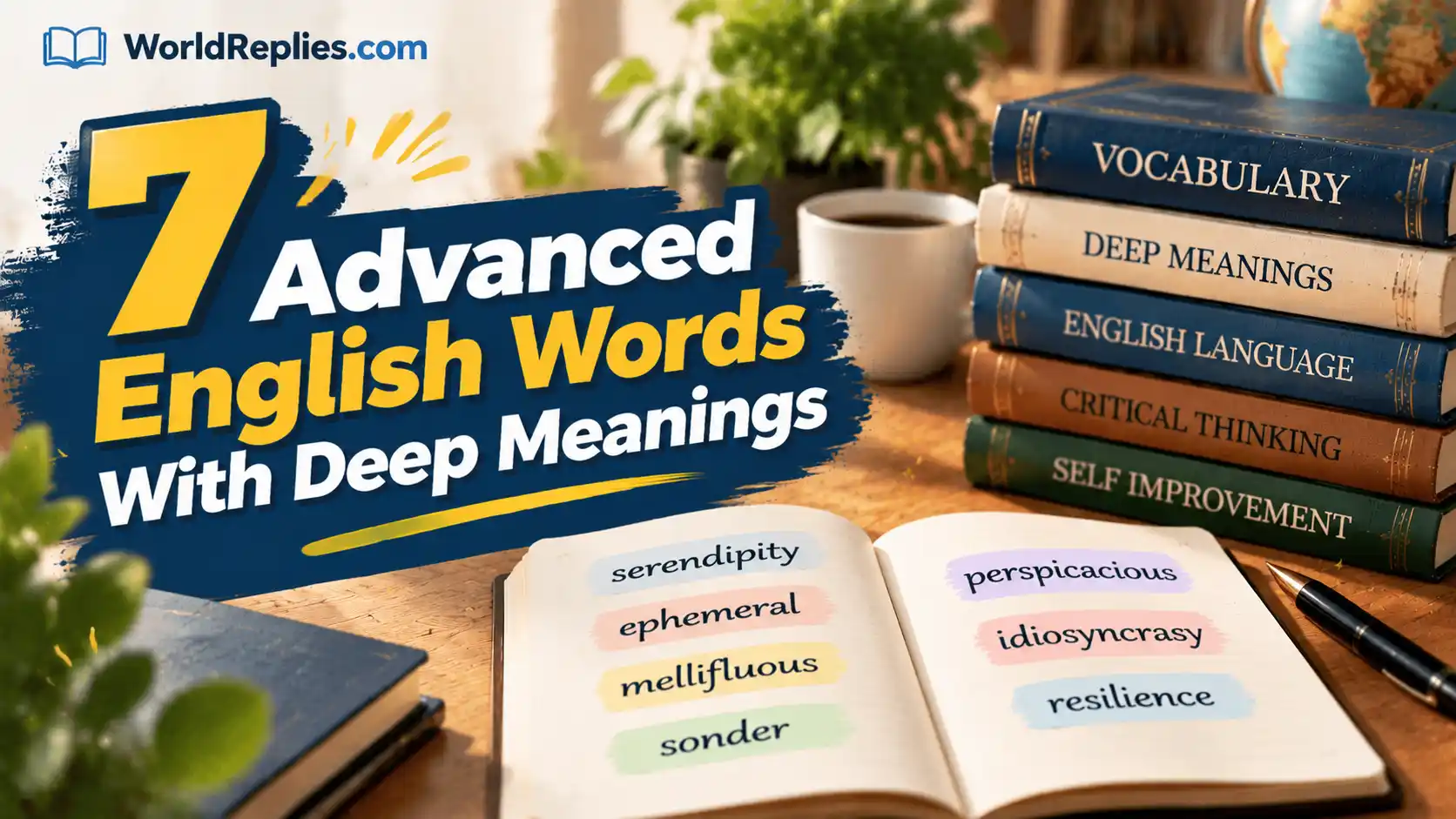
Language is the bridge between our inner thoughts and the outer world. Often, we find ourselves searching for a word that captures a complex emotion or state of being but settle for something mundane. Expanding your lexicon isn’t just about sounding intellectual; it is about precision, nuance, and the ability to express the depth of human experience. In this guide, we explore 7 advanced English words with deep meanings that will refine your writing and speaking, allowing you to articulate ideas with newfound sophistication and clarity.
7 Advanced English Words That Define Nuance
This list covers seven powerful, evocative words including Ethereal, Mellifluous, Ephemeral, Petrichor, Serendipity, Nefarious, and Luminous. Each word offers a unique way to describe sensory experiences and abstract concepts.
1. Ethereal
Ethereal describes something extremely delicate, light, and almost heavenly. It is often used to characterize beauty that feels too perfect for this world. Think of the way light filters through forest trees or a soft, haunting melody. Using this word helps convey a sense of otherworldly elegance.
2. Mellifluous
This word describes a sound that is sweet, smooth, and pleasant to hear, like honey to the ears. It is perfect for describing voices, music, or poetry that flows gracefully. Unlike simply saying “nice sounding,” mellifluous suggests a rich, soothing quality.
3. Ephemeral
Ephemeral refers to things that last for a very short time. It captures the fleeting nature of life, like a sunset or a passing mood. Understanding this word helps you appreciate transient moments and articulate the beauty found in things that do not last.
4. Petrichor
Have you ever noticed the pleasant, earthy scent that rises from the ground after it rains? That specific aroma is called petrichor. It is a wonderful, descriptive word that grounds your writing in sensory realism and connects the reader to nature.
5. Serendipity
Serendipity is the occurrence of events by chance in a happy or beneficial way. It is the “fortunate accident.” Using this word adds a layer of positivity to unexpected discoveries and helps describe life’s surprising turns of fate.
6. Nefarious
When something is truly wicked, criminal, or villainous, it is nefarious. This word carries more weight than “bad” or “evil,” suggesting a calculated, dark intent. It is an excellent choice for character descriptions in creative writing.
7. Luminous
Beyond simply being bright, luminous describes something that emits light or glows with an inner brilliance. It is often used to describe clarity of thought or a person’s radiant appearance, suggesting a quality of brilliance that shines from within.
Recommended Resources for Vocabulary Building
If you are eager to continue your journey into the English language, these resources will provide structured guidance and practice to help you master new vocabulary.
Discovering English Words

Best For: Fluent communication enthusiasts
A deep dive into both common and uncommon vocabulary to help you communicate more effectively.
Practical Tips: Use this guide to look up root words, which makes remembering complex vocabulary significantly easier.
Recommended: Language Mastery Series
Ultimate 7th Grade All Subject Workbook

Best For: Students and lifelong learners
A robust curriculum workbook that includes dedicated Language Arts sections for vocabulary expansion.
Practical Tips: Consistent daily practice in grammar and vocabulary is the best way to move new words into your active speaking lexicon.
Recommended: Homeschool Curriculum
McGraw-Hill Education Vocabulary Grades 3-5

Best For: Building strong vocabulary foundations
Focuses on foundational vocabulary building, which is essential before tackling highly advanced terminology.
Practical Tips: Great for parents or tutors looking to explain simple concepts before introducing more advanced vocabulary words.
Recommended: Education Basics
How to Integrate Advanced Vocabulary
To truly own these words, do not just memorize the definitions. Write them down in a notebook, use them in a sentence related to your daily life, and try to incorporate at least one new word into your conversations each week. The goal is active usage, not just recognition.
Frequently Asked Questions
Why is it important to learn advanced vocabulary?
Advanced vocabulary allows for more precise communication, helps you express complex emotions, and improves your ability to articulate ideas clearly.
How can I remember new words easily?
Use the words in context. Creating a story or a specific sentence involving the word helps the brain encode the meaning better than rote memorization.
Final Thoughts
Mastering advanced English words is a rewarding pursuit that enriches both your creative expression and your professional communication. By incorporating words like ‘ethereal’ and ‘serendipity’ into your daily vernacular, you bridge the gap between simple speech and meaningful connection. Start small, stay consistent, and watch how your confidence grows with every new word you master.
