
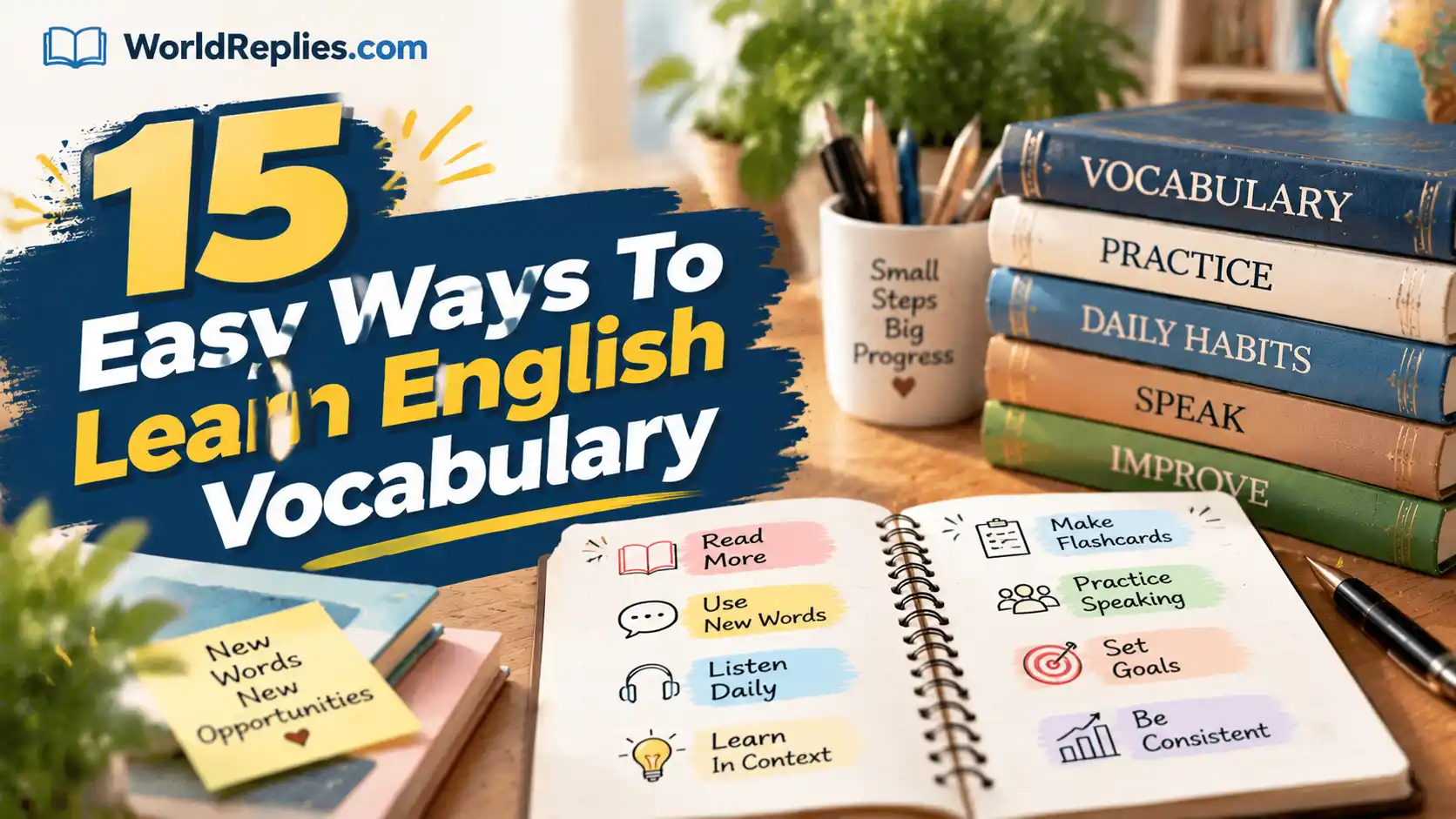
Learning a new language can feel overwhelming, especially when you face thousands of unfamiliar words. However, mastering English doesn’t require endless hours of rote memorization. By integrating simple, engaging habits into your daily routine, you can expand your word bank naturally and efficiently. Whether you are a student, a professional, or just someone looking to improve their communication, these 15 easy ways to learn English vocabulary will provide the structure and motivation you need to succeed. Let’s dive into how you can make English vocabulary acquisition a fun and permanent part of your life.
15 Proven Methods for English Vocabulary Mastery
From digital tools to immersive media, these techniques cover everything you need to boost your language fluency, build context-based learning, and retain words longer.
1. Read Consistently and Diverse
Reading books, blogs, and newspapers exposes you to new words in context. Aim for material that is slightly above your current level to challenge yourself without getting frustrated.
2. Use Spaced Repetition Systems
Tools like Anki or Quizlet utilize spaced repetition to help you review words right before you are likely to forget them, ensuring long-term retention.
3. Keep a Vocabulary Journal
Write down new words you encounter throughout the day along with their definition and a sample sentence. This physical act of writing aids memory retention.
4. Watch Movies with Subtitles
Watching films in English with English subtitles connects the written form of a word to its correct pronunciation and tone.
5. Listen to Podcasts
Podcasts are perfect for learning natural speech patterns and idioms. Try listening during your commute or while doing chores to maximize your time.
6. Label Your Home
Stick sticky notes on household items. It sounds simple, but it helps you learn daily object names without effort.
7. Master Prefixes and Suffixes
Learning how words are built—like ‘un-‘ meaning ‘not’ or ‘-able’ meaning ‘capable of’—allows you to decode hundreds of unfamiliar terms.
8. Learn Word Families
Instead of learning ‘happy’, also learn ‘happiness’, ‘happily’, and ‘unhappy’. Grouping these words saves time and expands your versatility.
9. Play Word Games
Apps like Scrabble, Wordscapes, or Crossword puzzles turn vocabulary building into a competitive, fun activity.
10. Use English Flashcards
Flashcards are a classic for a reason. Keep a deck handy for quick five-minute study sessions whenever you have downtime.
11. Practice Speaking Daily
Vocabulary is useless if you don’t use it. Try talking to yourself or a partner about your day to activate your passive knowledge.
12. Focus on Idioms and Phrasal Verbs
Native English is full of idioms. Focusing on these will make your speech sound significantly more natural and fluid.
13. Don’t Learn Words in Isolation
Always learn new words as part of a phrase or sentence. This provides the context necessary to know how and when to use the word correctly.
14. Set Small, Daily Goals
Rather than trying to learn 50 words in one day, focus on learning 5-10 words well. Consistency is the secret to long-term success.
15. Engage in English Communities
Join forums or language exchange groups. Interaction forces you to think on your feet and apply your vocabulary in real-world situations.
Recommended Learning Resources
To help you implement these 15 easy ways to learn English vocabulary, we have curated the best books and guides that offer structured support for learners of all levels.
Collins Easy Learning English Vocabulary

Best For: Beginners to intermediate learners looking for accurate, standard usage.
This comprehensive guide acts as a perfect reference for learners who want to improve their accuracy and word usage in day-to-day English.
Practical Tips: Use this as your primary desk reference when you find a word you don’t fully understand in your daily reading.
Recommended: Collins Easy Learning Series
English From Zero To Hero

Best For: Students who need a high-paced, high-volume learning approach.
Packed with 150 actionable ways to learn, this book focuses on speed and practical application.
Practical Tips: Pick one ‘way’ from this book each week and apply it strictly to your routine for three months.
Recommended: Zero to Hero Language Guides
College Freshmen Vocabulary Improvement Guide

Best For: College students and those preparing for professional English testing.
This book specifically targets academic and conversational vocabulary growth, making it perfect for students transitioning into higher education.
Practical Tips: Focus on the context-building exercises to improve your essay writing and critical thinking skills.
Recommended: Academic Success Series
Collins Easy Learning English – Vocabulary Edition

Best For: Learners who want a clear, no-nonsense approach to vocabulary.
A focused edition dedicated to vocabulary, emphasizing common errors and effective word choices.
Practical Tips: Go through the ‘common mistakes’ sections to clean up your grammar and usage habits.
Recommended: Collins Language Learning
How to Choose the Right Vocabulary Tool
When selecting a resource, consider your learning style. If you are a visual learner, flashcards or picture-based dictionaries are essential. If you are an auditory learner, prioritize podcasts or audio-based vocabulary guides. Always look for books that provide example sentences, as learning words in context is far more effective than rote memorization of word lists.
Frequently Asked Questions
How many words should I learn per day?
It is better to learn 5-10 words thoroughly—meaning you can use them in a sentence—than to memorize 50 words you cannot use.
Is reading enough to build a strong vocabulary?
Reading is excellent for passive vocabulary, but you must combine it with active usage (speaking or writing) to move words into your active vocabulary.
Final Thoughts
Learning English vocabulary is a journey, not a race. By combining these 15 easy strategies with high-quality resources, you will find yourself feeling more confident and articulate in no time. Remember that consistency is the key to lasting results. Start small, stay curious, and enjoy the process of unlocking new ways to express yourself in English every single day.
