
Learning how to say We in Spanish is a simple but important step in speaking the language confidently.
If you’re forming sentences with friends, family, or classmates, using the right word makes your Spanish sound natural.
This guide will show you easy ways to use it correctly in everyday conversation.
By the end, you’ll feel confident expressing “we” in Spanish like a native speaker.
Basic Use of We in Spanish
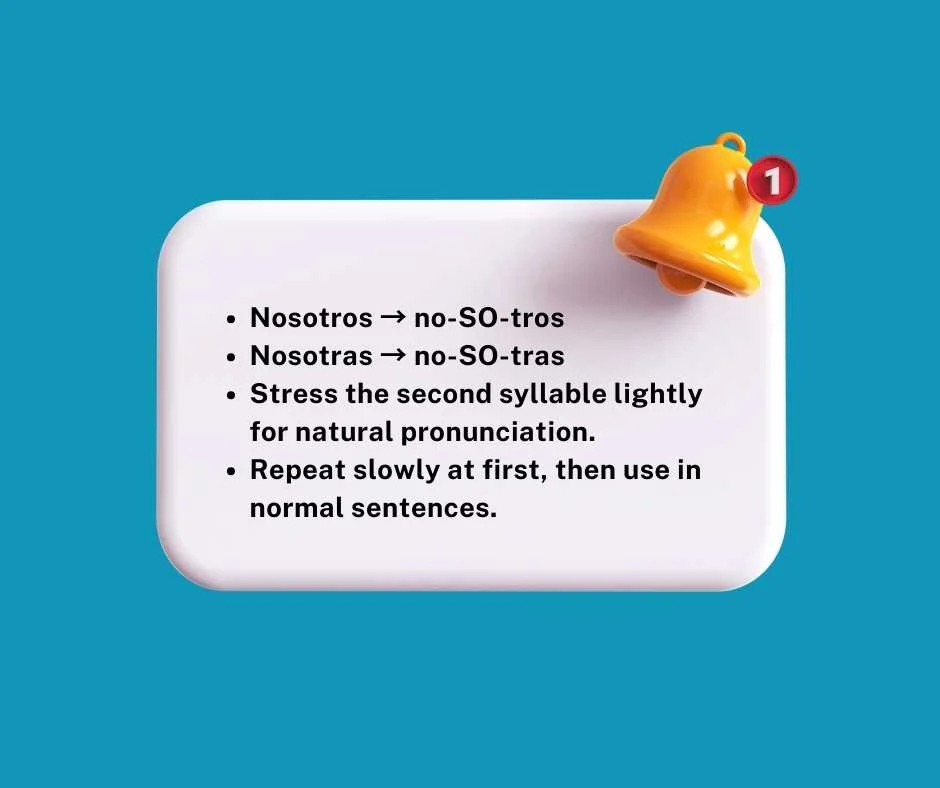
The pronoun “we” in Spanish is “nosotros” for males or mixed groups and “nosotras” for females only.
Choosing the correct form depends on the people you are referring to.
Pronunciation Tips
- Nosotros → no-SO-tros
- Nosotras → no-SO-tras
- Stress the second syllable lightly for natural pronunciation.
- Repeat slowly at first, then use in normal sentences.
Simple Examples
- “We are going to the park.” → Nosotros vamos al parque.
- “We are happy today.” → Nosotras estamos felices hoy.
- “We will study together.” → Nosotros estudiaremos juntos.
Using nosotros/nosotras correctly helps convey the right meaning when talking about groups.
Differences Between Nosotros and Nosotras
Gender plays a role in Spanish pronouns, and it is important to understand when to use each.
Mixed or Male Groups
- Nosotros is used when the group is all male or a mix of male and female.
- Examples:
- “We are going to the movies.” → Nosotros vamos al cine.
- “We love playing soccer.” → Nosotros amamos jugar al fútbol.
- “We are going to the movies.” → Nosotros vamos al cine.
Female-Only Groups
- Nosotras is used exclusively for groups of females.
- Examples:
- “We are cooking dinner.” → Nosotras estamos cocinando la cena.
- “We will travel next summer.” → Nosotras viajaremos el próximo verano.
- “We are cooking dinner.” → Nosotras estamos cocinando la cena.
This distinction is unique to Spanish and shows how language reflects social and cultural nuances.
Using We in Different Tenses
Knowing how to say we in Spanish includes using it across different verb tenses.
Present Tense
- “We speak Spanish.” → Nosotros hablamos español.
- “We live in Madrid.” → Nosotras vivimos en Madrid.
Past Tense
- “We went to the beach yesterday.” → Nosotros fuimos a la playa ayer.
- “We ate lunch together.” → Nosotras almorzamos juntas.
Future Tense
- “We will visit the museum tomorrow.” → Nosotros visitaremos el museo mañana.
- “We will learn new things.” → Nosotras aprenderemos cosas nuevas.
Conditional and Subjunctive
- “We would help you if we could.” → Nosotros te ayudaríamos si pudiéramos.
- “It is important that we finish on time.” → Es importante que nosotras terminemos a tiempo.
Using pronouns correctly in all tenses makes your sentences grammatically accurate and natural.
Talking About Activities With We
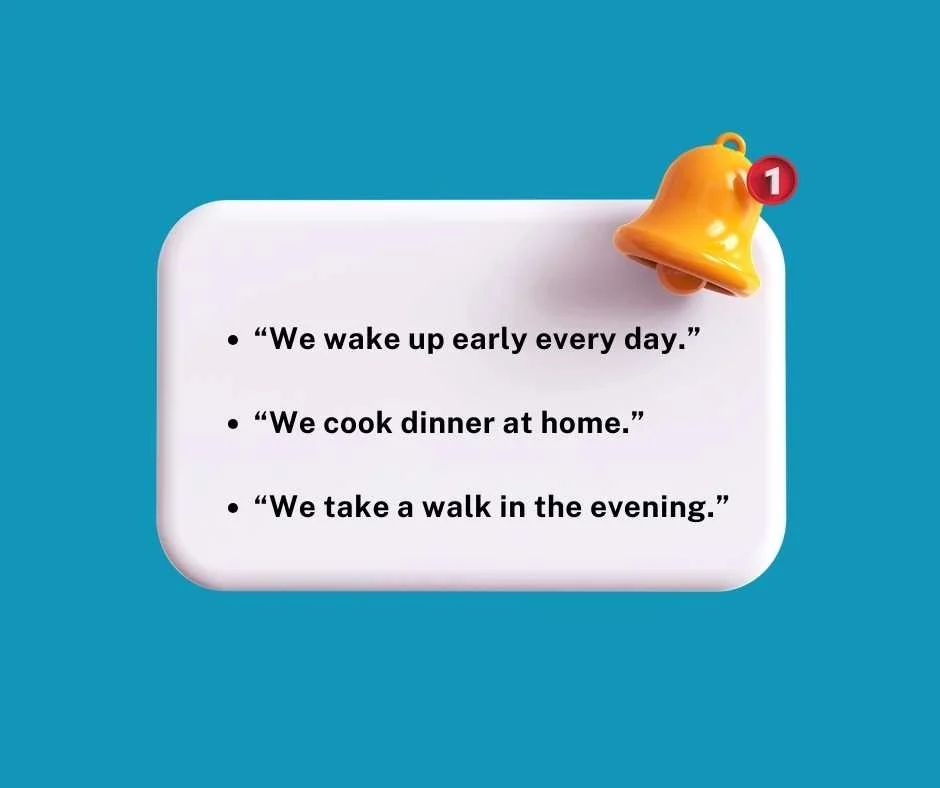
Using we in sentences allows you to talk about daily routines, hobbies, and experiences.
Everyday Activities
- “We wake up early every day.” → Nosotros nos despertamos temprano todos los días.
- “We cook dinner at home.” → Nosotras cocinamos la cena en casa.
- “We take a walk in the evening.” → Nosotros damos un paseo por la tarde.
Hobbies and Interests
- “We play basketball every weekend.” → Nosotros jugamos baloncesto todos los fines de semana.
- “We enjoy reading together.” → Nosotras disfrutamos leer juntas.
- “We like listening to music.” → Nosotros nos gusta escuchar música.
Work and School
- “We study Spanish every day.” → Nosotros estudiamos español todos los días.
- “We work on projects as a team.” → Nosotras trabajamos en proyectos como equipo.
- “We help each other at school.” → Nosotros nos ayudamos en la escuela.
Practical examples like these show how to apply pronouns naturally in real-life situations.
Expressing Possession and Actions With We
In Spanish, we can also appear in reflexive or possessive constructions.
Reflexive Actions
- “We wash our hands.” → Nosotros nos lavamos las manos.
- “We get ready in the morning.” → Nosotras nos preparamos por la mañana.
- “We enjoy ourselves at parties.” → Nosotros nos divertimos en las fiestas.
Possessive Constructions
- “Our house is big.” → Nuestra casa es grande.
- “Our friends are coming.” → Nuestros amigos vienen.
- “Our books are on the table.” → Nuestros libros están en la mesa.
These examples show how nosotros/nosotras combines with other words to express possession or action.
Talking About Plans With We
Expressing group plans is a common way to use we in conversations.
Future Plans
- “We will travel to Spain next year.” → Nosotros viajaremos a España el próximo año.
- “We will celebrate her birthday.” → Nosotras celebraremos su cumpleaños.
- “We will go shopping this weekend.” → Nosotros iremos de compras este fin de semana.
Intentions and Goals
- “We want to learn more Spanish.” → Nosotras queremos aprender más español.
- “We hope to finish the project on time.” → Nosotros esperamos terminar el proyecto a tiempo.
- “We plan to meet every Friday.” → Nosotras planeamos reunirnos todos los viernes.
Using we in planning sentences helps you communicate intentions clearly.
Using We in Questions
Asking questions about groups is another way to use we naturally.
Examples
- “Are we going to the park?” → ¿Nosotros vamos al parque?
- “Do we have homework today?” → ¿Nosotras tenemos tarea hoy?
- “Will we meet tomorrow?” → ¿Nosotros nos veremos mañana?
- “Can we help you?” → ¿Nosotras podemos ayudarte?
- “Should we start now?” → ¿Nosotros debemos empezar ahora?
Forming questions with nosotros/nosotras is straightforward and useful in daily conversations.
Expressing Feelings With We
Talking about emotions as a group is another practical use of we.
Examples of Feelings
- “We are happy today.” → Nosotros estamos felices hoy.
- “We feel tired after work.” → Nosotras nos sentimos cansadas después del trabajo.
- “We are excited about the trip.” → Nosotros estamos emocionados por el viaje.
- “We feel proud of our achievements.” → Nosotras estamos orgullosas de nuestros logros.
- “We are worried about the test.” → Nosotros estamos preocupados por el examen.
These phrases allow you to describe collective experiences and emotions naturally.
Advanced Use of We in Subjunctive and Hypothetical Situations
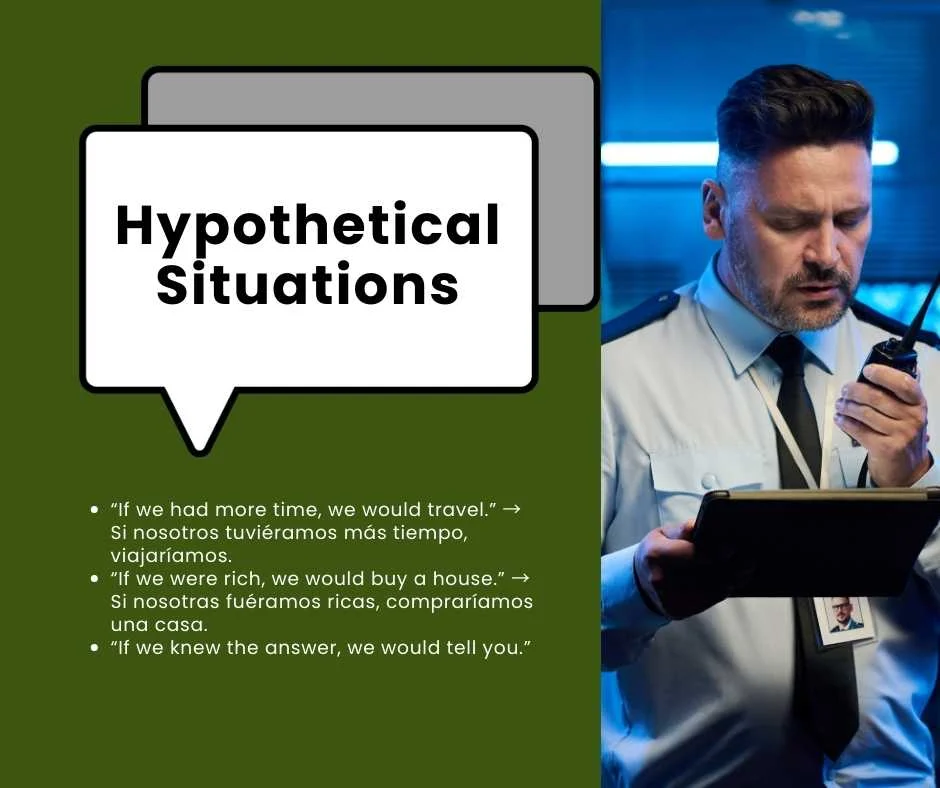
Spanish often requires the subjunctive mood in specific scenarios with we.
Subjunctive Examples
- “It is important that we study together.” → Es importante que nosotros estudiemos juntos.
- “I hope that we can help them.” → Espero que nosotras podamos ayudarlos.
- “It’s necessary that we finish this today.” → Es necesario que nosotros terminemos esto hoy.
Hypothetical Situations
- “If we had more time, we would travel.” → Si nosotros tuviéramos más tiempo, viajaríamos.
- “If we were rich, we would buy a house.” → Si nosotras fuéramos ricas, compraríamos una casa.
- “If we knew the answer, we would tell you.” → Si nosotros supiéramos la respuesta, te lo diríamos.
Mastering these advanced uses allows learners to speak more fluently and accurately in complex situations.
Frequently Asked Questions
1. How do you say we in Spanish?
Use nosotros for male or mixed groups and nosotras for female-only groups.
2. Can I use nosotros and nosotras interchangeably?
No. Nosotras is only for groups of females. Nosotros works for males or mixed groups.
3. How do we say we in the past tense?
You still use nosotros/nosotras, but change the verb: “We went” → Nosotros fuimos.
4. Can we use we in questions?
Yes. For example: “Are we going?” → ¿Nosotros vamos?
5. Is there a formal way to use we?
Nosotros/nosotras is standard for all levels of formality. Pair it with polite verbs for formal situations.
Conclusion
Knowing how to say we in Spanish is essential for clear and accurate communication.
From daily activities to expressing emotions, asking questions, and discussing plans, nosotros and nosotras allow you to talk about groups naturally.
Understanding gender, verb conjugation, and advanced uses in subjunctive or hypothetical situations strengthens your Spanish skills and builds confidence in speaking with others.
Also Check These Posts:
How to Say Good Night in German | Essential Words for Every Night in 2026
How to Say Lunch in Spanish | Easy Phrases to Use Every Day in 2026
How to Say Happy New Year | Greetings Everyone Will Remember in 2026

Blake Kinslee
Hi! I’m Blake, a passionate writer who loves exploring the beauty of different languages and cultures through storytelling. Ever since I was young, I’ve been fascinated by how words can connect people across the world. Writing, for me, is not just a hobby—it’s a way to share ideas, emotions, and dreams with readers everywhere. When I’m not crafting stories, you’ll usually find me reading, traveling, or discovering new words in languages I’ve never spoken before. Every book I write is a journey, and I hope my readers feel that magic too.
Books:
-
Whispers Across Borders
-
The Language of Dreams