
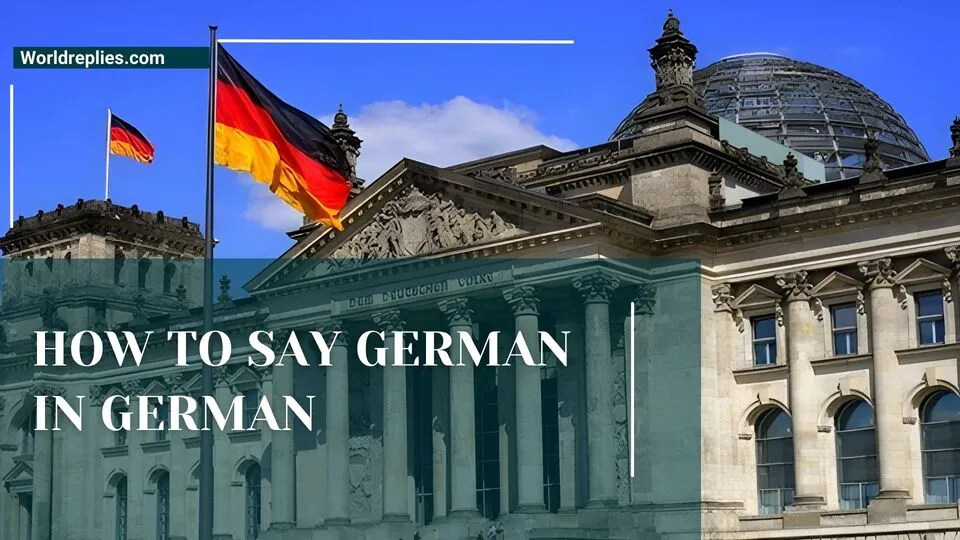
If you’ve ever wondered how to say German in German, you’re in the right place.
This quick guide explains the exact word native speakers use and how to pronounce it correctly.
Whether you’re learning the language, traveling, or studying for school, knowing this term really matters.
By the end of this article, you’ll confidently use the German word for “German” in real conversations.
The main word Germans use for German
The most important word to understand when learning how to say German in German is Deutsch.
This word is used to talk about the German language itself.
Examples:
- Ich lerne Deutsch. (I am learning German.)
- Deutsch ist interessant. (German is interesting.)
- Sprichst du Deutsch? (Do you speak German?)
Whenever you talk about the language, Deutsch is the correct and natural choice.
How to say german in german words
- Deutsch — This is the German word for “German.” If you are talking about the language, you simply say Deutsch.
- You pronounce Deutsch roughly as Doych.
- Native German speakers use this word in everyday conversations.
- If someone asks what language you speak, Deutsch is the correct answer.
- The word refers to both the German language and things related to Germany, depending on the context.
- You will hear Deutsch in schools, travel, and daily life across Germany.
- Learning this word is one of the first steps when studying German.
- It is commonly written with a capital D because German nouns are capitalized.
- Many language apps and dictionaries also use Deutsch as the official name.
- Knowing Deutsch helps you recognize German-language signs, books, and websites.
How to say Germany in German
- Deutschland is the German name for Germany.
- You pronounce it roughly as Doych-lahnt.
- German people always refer to their country as Deutschland.
- The word combines Deutsch with Land, meaning “German land.”
- You will see Deutschland on maps, sports jerseys, and official documents.
- It is the standard name used throughout German-speaking countries.
- Travelers often hear this word at airports and train stations.
- If you want to sound natural, use Deutschland instead of “Germany.”
- The name has been used for centuries in the German language.
- Learning Deutschland helps you understand basic German conversations.
I speak german in german google translate
- The correct German translation is Ich spreche Deutsch.
- It means “I speak German.”
- Ich means “I.”
- Spreche means “speak.”
- Deutsch means “German.”
- This sentence is simple, polite, and commonly used.
- It works well when introducing yourself.
- Language learning apps and translation tools use this same translation.
- Native speakers understand this phrase immediately.
- It is one of the most useful beginner German sentences.
How to say german in german audio
- The German word is Deutsch.
- It sounds similar to Doych when spoken by native speakers.
- Listening to native pronunciation helps improve your accent.
- Audio examples make it easier to hear the correct vowel sounds.
- German pronunciation is often clearer when you hear it instead of only reading it.
- Many language apps include audio for Deutsch.
- Repeating the word aloud builds speaking confidence.
- Practice slowly before increasing your speed.
- Focus on matching the native pronunciation.
- Regular listening improves your overall German speaking skills.
How to say german in german phrases
- The basic word is Deutsch.
- Ich spreche Deutsch. means “I speak German.”
- Lernst du Deutsch? means “Are you learning German?”
- Kannst du Deutsch sprechen? means “Can you speak German?”
- Wir sprechen Deutsch. means “We speak German.”
- Ein bisschen Deutsch. means “A little German.”
- Deutsch ist interessant. means “German is interesting.”
- Ich lerne Deutsch. means “I am learning German.”
- These phrases are useful for beginners.
- You can use them in everyday conversations.
How to say Dutch in German
- The German word for “Dutch” is Niederländisch.
- It refers to the Dutch language.
- A person from the Netherlands is called Niederländer (male) or Niederländerin (female).
- The Netherlands is called die Niederlande in German.
- This word helps avoid confusion between German and Dutch.
- Native speakers commonly use Niederländisch in conversation.
- It appears in schools, books, and language courses.
- The pronunciation takes practice because it is a longer word.
- It is the standard translation in German dictionaries.
- Learning it improves your vocabulary about countries and languages.
How to say German in spanish
- The Spanish word for “German” is alemán when referring to a man or the language.
- Alemana refers to a German woman.
- Alemán also describes the German language in many contexts.
- The country Germany is called Alemania in Spanish.
- Spanish speakers use these words in daily conversation.
- You will find them in textbooks and dictionaries.
- They are common when talking about languages and nationalities.
- The pronunciation is different from English but easy to learn with practice.
- These words are useful for travelers and language learners.
- Knowing them makes multilingual conversations easier.
Do you speak German in German
- The correct German phrase is Sprichst du Deutsch?
- It means “Do you speak German?”
- Sprichst means “do you speak.”
- Du means “you” in an informal conversation.
- Deutsch means “German.”
- This question is common when meeting someone new.
- For formal situations, you can say Sprechen Sie Deutsch?
- Native speakers use both forms depending on the situation.
- It is a useful phrase for travel and language practice.
- Learning this question helps you start simple conversations.
Using Deutsch in everyday sentences
To feel confident with how to say German in German, it helps to see Deutsch used in real-life sentences.
Common examples:
- Ich spreche Deutsch. (I speak German.)
- Deutsch ist nicht schwer. (German is not hard.)
- Mein Deutsch ist gut. (My German is good.)
These sentences are very common and perfect for beginners.
Saying German as an adjective
When “German” describes something, such as food, culture, or language, German grammar changes slightly. This is an important part of understanding how to say German in German correctly.
Examples:
- die deutsche Sprache (the German language)
- deutsches Essen (German food)
- deutsche Musik (German music)
The word deutsch changes its ending based on gender and grammar.
Understanding deutsch and Deutsch
One detail that often confuses learners is capitalization.
- Deutsch with a capital D is used as a noun, meaning the language
- deutsch with a lowercase d is used as an adjective
Examples:
- Ich lerne Deutsch. (noun)
- Das ist ein deutsches Buch. (adjective)
This small difference matters in writing.
Saying a German person in German
Another common meaning connected to how to say German in German is referring to people from Germany.
For a male German:
- ein Deutscher
For a female German:
- eine Deutsche
Examples:
- Er ist Deutscher. (He is German.)
- Sie ist Deutsche. (She is German.)
These words are nouns and are always capitalized.
Plural form for German people
When talking about more than one German person, the plural form is used.
Examples:
- die Deutschen (the Germans)
- Viele Deutsche sprechen Englisch. (Many Germans speak English.)
This form is common in conversations about culture or nationality.
Saying I am German in German
Many learners want to know how to introduce themselves. This is a practical part of how to say German in German.
Examples:
- Ich bin Deutscher. (I am German – male)
- Ich bin Deutsche. (I am German – female)
These sentences are simple and useful when meeting new people.
Talking about the German language politely
When discussing languages, Germans often use polite and clear expressions.
Examples:
- Deutsch ist meine Muttersprache. (German is my native language.)
- Ich lerne Deutsch als Fremdsprache. (I learn German as a foreign language.)
These phrases sound natural in both casual and formal settings.
Asking about German in conversations
Questions are a big part of learning how to say German in German.
Common questions:
- Sprichst du Deutsch? (Do you speak German?)
- Lernst du Deutsch? (Are you learning German?)
- Ist Deutsch schwer? (Is German difficult?)
These questions are friendly and commonly used.
Formal and informal usage
German, like many languages, has formal and informal speech. This also affects how Deutsch appears in sentences.
Informal example:
- Sprichst du Deutsch?
Formal example:
- Sprechen Sie Deutsch?
Both are correct, but the formal version is used with strangers or in professional situations.
Using German in school and work
In educational and professional environments, Deutsch is used in a clear and direct way.
Examples:
- Der Unterricht ist auf Deutsch. (The class is in German.)
- Das Dokument ist auf Deutsch. (The document is in German.)
These phrases are useful for students and workers.
Common expressions with Deutsch
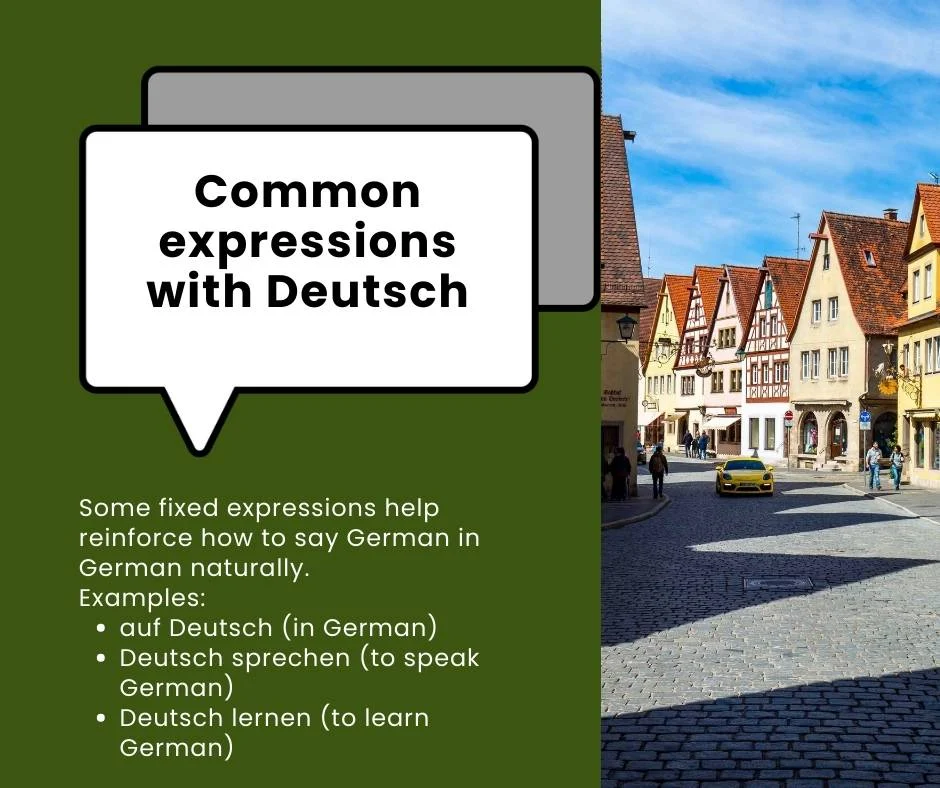
Some fixed expressions help reinforce how to say German in German naturally.
Examples:
- auf Deutsch (in German)
- Deutsch sprechen (to speak German)
- Deutsch lernen (to learn German)
Example sentence:
- Bitte sprechen Sie auf Deutsch. (Please speak in German.)
Using deutsch as an adjective correctly
German adjectives change endings depending on grammar. This is a more advanced part of how to say German in German, but it is helpful to understand.
Examples:
- ein deutsches Auto (a German car)
- die deutsche Kultur (German culture)
- der deutsche Akzent (the German accent)
Even beginners benefit from seeing these patterns early.
Cultural meaning of the word Deutsch
Learning how to say German in German also includes cultural understanding.
In Germany:
- Language and identity are closely connected
- Saying Deutsch correctly shows effort and respect
- Clear pronunciation is appreciated
Using the correct word helps create positive impressions.
Pronunciation tips for Deutsch
Correct pronunciation makes a big difference.
Tips:
- Deutsch sounds like “Doytch”
- The “eu” sounds like “oy”
- The “ch” is soft, not hard
Practice slowly, then naturally.
Common mistakes learners make
Beginners often make small mistakes when learning how to say German in German.
Common errors:
- Using German instead of Deutsch
- Forgetting capitalization
- Mixing deutsch and Deutsch
Correct examples:
- ❌ Ich lerne german
- ✅ Ich lerne Deutsch
These small corrections improve fluency quickly.
Comparing English and German usage
In English, one word covers many meanings. In German, context matters more.
English:
- German (language, person, adjective)
German:
- Deutsch (language)
- Deutscher / Deutsche (person)
- deutsch (adjective)
Understanding this difference is key to mastering usage.
Using German in travel situations
Travelers often need to know how to say German in German.
Useful examples:
- Ich spreche ein bisschen Deutsch. (I speak a little German.)
- Können Sie Deutsch sprechen? (Can you speak German?)
These sentences help you communicate politely.
Using German online and in media
You will often see Deutsch used online.
Examples:
- Sprache: Deutsch (Language: German)
- Video auf Deutsch (Video in German)
Recognizing this helps with apps, websites, and media.
Learning tips for remembering the word
Helpful tips:
- Link Deutsch with the sound “Doytch”
- Practice daily sentences
- Write it with a capital D when it is a noun
- Say it out loud often
Consistency builds confidence.
Practice sentences for beginners
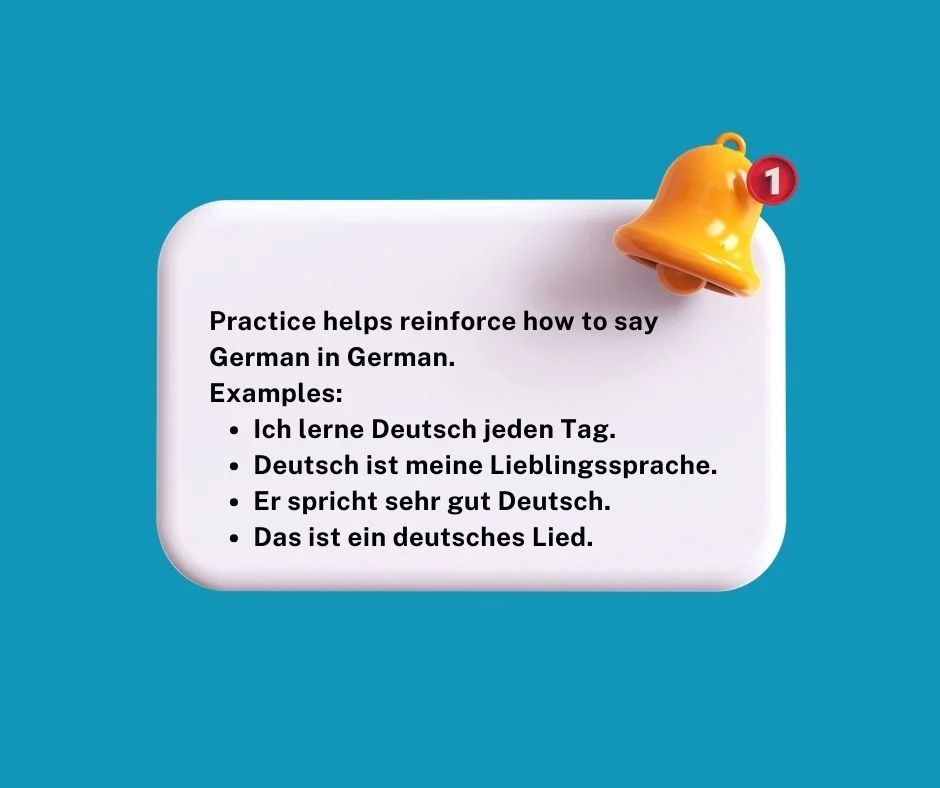
Practice helps reinforce how to say German in German.
Examples:
- Ich lerne Deutsch jeden Tag.
- Deutsch ist meine Lieblingssprache.
- Er spricht sehr gut Deutsch.
- Das ist ein deutsches Lied.
Repeating these improves memory and comfort.
Frequently Asked Questions
How to say German in German for the language
You say Deutsch when talking about the German language.
How to say a German person in German
A male is Deutscher and a female is Deutsche.
Is Deutsch capitalized in German
Yes, Deutsch is capitalized when it is used as a noun.
How to say I am German in German
You say Ich bin Deutscher or Ich bin Deutsche, depending on gender.
Can deutsch be used without capitalization
Yes, deutsch is lowercase when used as an adjective.
What is German called in German?
In German, the language is called Deutsch. Native speakers say “Ich spreche Deutsch” to mean “I speak German.” The word Deutsch refers to both the German language and, depending on the context, something related to Germany.
Can I say “Ich bin gut”?
Yes, you can say “Ich bin gut,” but it usually means “I am good” as a person or at doing something. If someone asks how you are, Germans more commonly say “Mir geht’s gut” or “Es geht mir gut,” which means “I’m doing well.”
What does “auf auf” mean?
“Auf auf” is an encouraging German expression similar to saying “Come on!” or “Let’s go!” It is often used to motivate people to get moving, start a task, or continue with energy and enthusiasm.
Should I say Deutsch or German?
Use Deutsch when speaking or writing in German, and use German when speaking or writing in English. Both words refer to the same language, but each is correct only in its respective language.
How do Germans say the word German?
Germans say Deutsch when referring to the German language. If they are talking about a German person, they say Deutscher for a man and Deutsche for a woman.
What is German for “I’m sorry”?
A common way to say “I’m sorry” in German is “Es tut mir leid.” For a quick apology in everyday conversations, many Germans simply say “Entschuldigung,” which also means “Excuse me” or “Sorry.”
Conclusion
Learning how to say German in German is a simple but powerful step in your language journey.
Using Deutsch, Deutscher, and deutsch correctly helps you speak clearly and confidently.
With practice and attention to context, these words will feel natural and easy in everyday conversations.
Also Check These Posts:
Learn How to Say Date in Spanish Today
How to Say Nice to Meet You in French | Spoken & Formal in 2026
How to Say Sentence in Spanish | Spoken & Written Use in 2026

Blake Kinslee
Hi! I’m Blake, a passionate writer who loves exploring the beauty of different languages and cultures through storytelling. Ever since I was young, I’ve been fascinated by how words can connect people across the world. Writing, for me, is not just a hobby—it’s a way to share ideas, emotions, and dreams with readers everywhere. When I’m not crafting stories, you’ll usually find me reading, traveling, or discovering new words in languages I’ve never spoken before. Every book I write is a journey, and I hope my readers feel that magic too.
Books:
-
Whispers Across Borders
-
The Language of Dreams