
You’re here because you’ve probably paused mid-conversation, wondering how to say that in Spanish without feeling awkward or unsure.
We’ve all been there; wanting to express something simple, yet not knowing the right words.
This guide is made just for you, to gently walk you through real-life phrases you’ll actually use.
No pressure, no confusion; just clear, friendly help to build your confidence step by step.
By the end, you’ll feel more comfortable speaking Spanish in everyday moments that matter.
The Basic Word for “That” in Spanish
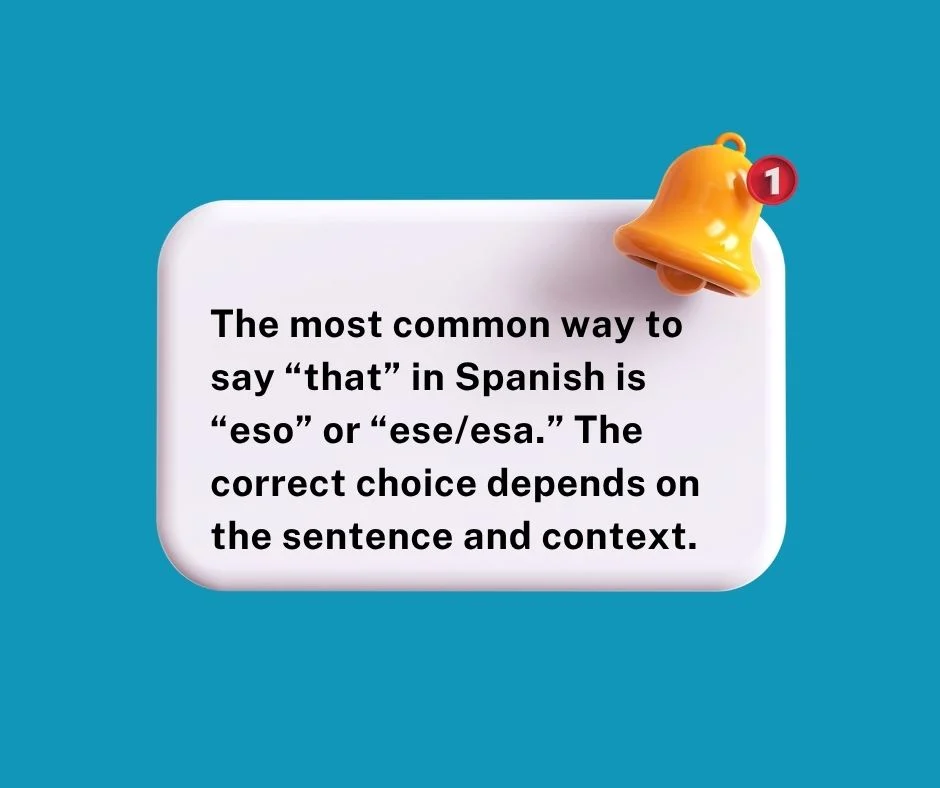
The most common way to say “that” in Spanish is “eso” or “ese/esa.” The correct choice depends on the sentence and context.
Using “Eso”
“Eso” is often used when referring to something general or unknown.
Examples:
- Eso es bueno. (That is good.)
- No entiendo eso. (I don’t understand that.)
Using “Ese” and “Esa”
These words change depending on gender.
- Ese (masculine noun)
- Esa (feminine noun)
Examples:
- Ese libro (That book)
- Esa casa (That house)
Understanding Gender in Spanish
Spanish nouns have gender, and “that” must match it.
Masculine vs Feminine
- Masculine nouns use ese
- Feminine nouns use esa
Examples:
- Ese coche (That car)
- Esa mesa (That table)
Why It Matters
Using the correct gender makes your sentence sound natural and correct.
Using “That” as a Pronoun
Sometimes “that” replaces a noun. In this case, Spanish uses pronouns.
Common Pronouns
- Eso = that (neutral)
- Ese = that one (masculine)
- Esa = that one (feminine)
Examples:
- Quiero eso. (I want that.)
- Prefiero esa. (I prefer that one.)
Using “That” in Sentences
You will use “that” often when speaking.
Simple Sentence Structure
Subject + Verb + That
Examples:
- Quiero eso. (I want that.)
- Dame ese libro. (Give me that book.)
More Examples
- Me gusta esa película. (I like that movie.)
- No quiero eso. (I don’t want that.)
Using “That” to Point at Something
When pointing at something, Spanish uses demonstrative words.
Demonstrative Words
- Ese = that (near)
- Aquel = that (far away)
Examples
- Ese perro (That dog nearby)
- Aquel edificio (That building far away)
Difference Between “Ese” and “Aquel”
Spanish has more than one way to say “that,” depending on distance.
Nearby vs Far
- Ese = closer to the listener
- Aquel = far from both speaker and listener
Example Comparison
- Ese coche (That car near you)
- Aquel coche (That car far away)
Using “That” in Clauses
Sometimes “that” connects ideas in a sentence.
Using “Que”
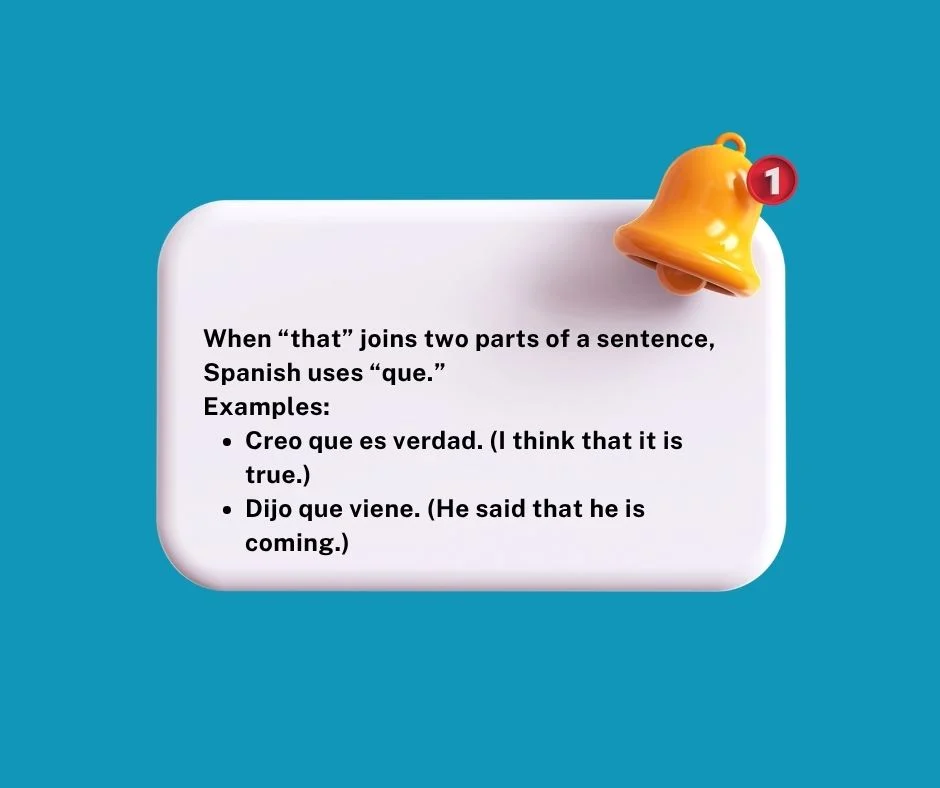
When “that” joins two parts of a sentence, Spanish uses “que.”
Examples:
- Creo que es verdad. (I think that it is true.)
- Dijo que viene. (He said that he is coming.)
Important Tip
“Que” is one of the most common words in Spanish, so practice using it often.
Common Phrases Using “That”
Learning phrases will help you speak more naturally.
Everyday Expressions
- Eso es todo (That’s all)
- Eso es correcto (That is correct)
- Me gusta eso (I like that)
Example Sentences
- Eso es importante. (That is important.)
- No quiero eso ahora. (I don’t want that now.)
How Context Changes the Meaning
The meaning of “that” depends on the situation.
Talking About Objects
- Ese libro (That book)
Talking About Ideas
- Eso es interesante. (That is interesting.)
Talking About Distance
- Aquel lugar (That place far away)
Common Mistakes to Avoid
Avoiding mistakes will help you improve faster.
Using the Wrong Gender
Wrong: Ese casa
Correct: Esa casa
Confusing “Eso” and “Ese”
- Use eso for general ideas
- Use ese/esa for specific nouns
Forgetting “Que”
Do not forget to use “que” in connecting sentences.
Wrong: Creo es verdad
Correct: Creo que es verdad
Advanced Uses of “That” in Spanish
Once you learn the basics, you can explore more complex usage.
Expressing Opinions
- Pienso que es bueno. (I think that it is good.)
- Creo que funciona. (I believe that it works.)
Expressing Emotions
- Me alegra que estés aquí. (I am happy that you are here.)
Formal Sentences
- Es importante que estudies. (It is important that you study.)
Real-Life Examples for Practice
Practice using real-life situations.
At School
- Dame ese lápiz. (Give me that pencil.)
At Home
- Eso es mío. (That is mine.)
While Traveling
- Aquel hotel es bonito. (That hotel is beautiful.)
Tips to Master “That” in Spanish
Learning becomes easier with smart strategies.
Practice Daily
Use “eso,” “ese,” and “esa” in sentences every day.
Learn by Context
Focus on meaning instead of memorizing rules.
Listen and Repeat
Watch Spanish videos and repeat what you hear.
Use Simple Sentences
Start small and build confidence step by step.
How to Sound Natural When Using “That”
Fluency comes with practice and awareness.
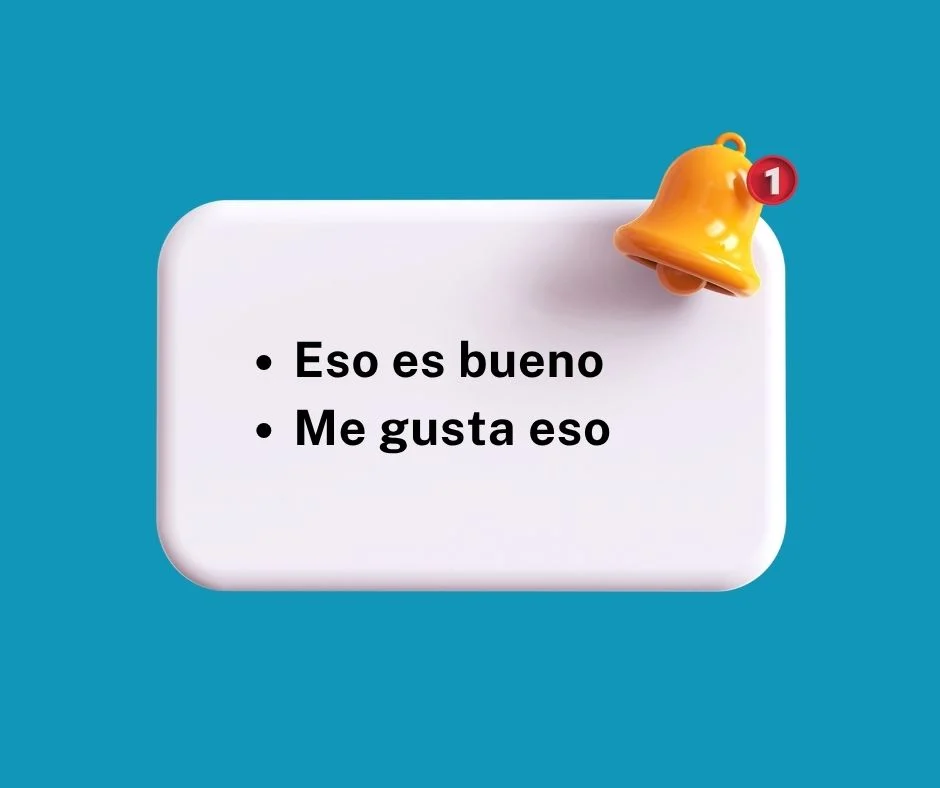
Use Common Expressions
- Eso es bueno
- Me gusta eso
Speak Clearly
Take your time and pronounce words properly.
Practice Conversations
Talk with friends or language partners.
Frequently Asked Questions (FAQs)
What is the most common way to say that in Spanish?
The most common words are “eso,” “ese,” and “esa,” depending on the context.
How to say that in Spanish for objects?
Use “ese” for masculine nouns and “esa” for feminine nouns.
When should I use “eso” instead of “ese”?
Use “eso” when referring to general ideas or unknown things.
What is “que” used for in Spanish?
“Que” is used to connect sentences, meaning “that.”
Is it hard to learn how to say that in Spanish?
No, it becomes easy with practice and understanding context.
Conclusion
Understanding how to say that in Spanish helps you form clear and natural sentences.
By learning when to use eso, ese, esa, aquel, and que, you can express ideas, point to objects, and connect thoughts easily.
With regular practice and real-life usage, you will become more confident and fluent in Spanish communication.
Also Check These Posts:
How to Say Breakfast in Spanish: Beginner-Friendly Tips and Phrases
How to Say From in Spanish for Absolute Beginners: Simple, Clear and Fun
How to Say Yes Easily in English and Other Languages

Blake Kinslee
Hi! I’m Blake, a passionate writer who loves exploring the beauty of different languages and cultures through storytelling. Ever since I was young, I’ve been fascinated by how words can connect people across the world. Writing, for me, is not just a hobby—it’s a way to share ideas, emotions, and dreams with readers everywhere. When I’m not crafting stories, you’ll usually find me reading, traveling, or discovering new words in languages I’ve never spoken before. Every book I write is a journey, and I hope my readers feel that magic too.
Books:
-
Whispers Across Borders
-
The Language of Dreams