

Are you struggling to express your feelings and want to say “I like you” in Japanese the right way? 💖
You’re not alone, and this guide is made just for you.
Learning how to share your emotions in another language can be exciting and a little nerve-wracking but don’t worry, we’ll make it simple and fun.
By the end of this article, you’ll confidently know the perfect ways to say “I like you” in Japanese, and maybe even touch someone’s heart. 🌸
Understanding the Basics of I Like You in Japanese
Japanese has multiple ways to say “I like you,” and each expression carries its own nuance.
Unlike English, Japanese is highly contextual, and your choice of words depends on your relationship, age, and formality.
The Standard Phrase
The most common way to say “I like you” is:
- 好きです (Suki desu)
Breaking it down:
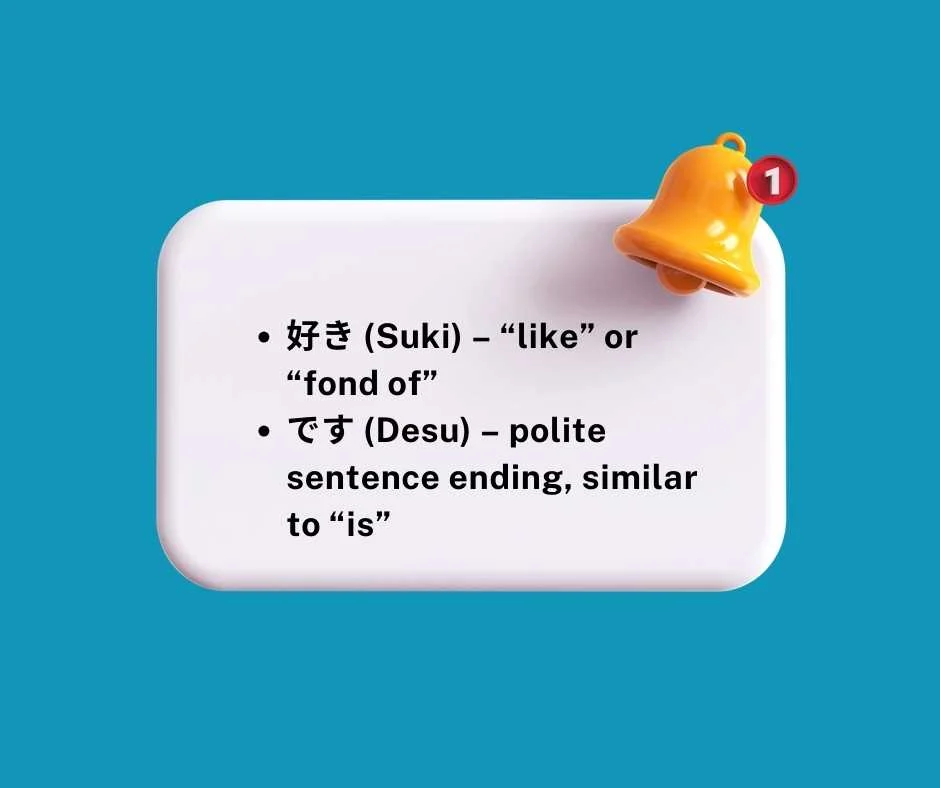
- 好き (Suki) – “like” or “fond of”
- です (Desu) – polite sentence ending, similar to “is”
Practical example:
“私はあなたが好きです。”
Translation: “I like you.”
This is polite, appropriate for beginners, and widely understood in both spoken and written Japanese.
Casual Form
Among friends or peers, a casual form is often used:
- 好きだよ (Suki da yo)
This version is less formal and conveys warmth and friendliness.
Example:
After spending time with a close friend:
“実は、君が好きだよ。”
Translation: “Actually, I like you.”
The addition of よ (yo) adds emphasis, showing that you are sharing your feelings sincerely.
Pronunciation Tips for Beginners
Correct pronunciation ensures your words are understood clearly.
- 好きです (Suki desu) → “Soo-kee dess”
- 好きだよ (Suki da yo) → “Soo-kee dah yo”
Tips for beginners:
- Emphasize su and ki equally.
- Keep desu soft and light, almost like “dess.”
- In casual conversation, da yo should flow naturally with the previous word.
Practicing in front of a mirror or recording yourself helps improve confidence and clarity.
Expressing I Like You in Different Contexts
Japanese expressions vary depending on your relationship with the person you’re speaking to.
Romantic Situations
If you want to confess your feelings to someone you like:
- 好きです (Suki desu) is polite and respectful, ideal for formal confessions.
- 大好きです (Daisuki desu) adds intensity and means “I really like you” or “I love you a little bit.”
Example:
“ずっと前から、あなたのことが大好きです。”
Translation: “I’ve liked you for a long time.”
This phrase conveys deep emotion without sounding overly aggressive, making it suitable for first confessions.
Casual or Friendly Situations
Among friends or peers, use casual expressions:
- 好きだよ (Suki da yo) – friendly and warm
- ちょっと好き (Chotto suki) – “I like you a little,” playful or teasing
Example:
“実はちょっと君のことが好き。”
Translation: “Actually, I like you a little.”
This is often used in lighthearted contexts, teasing, or when you want to soften your confession.
Written Communication
Japanese often uses texts, notes, or social media to express feelings:
- “君が好きです❤️” → “I like you ❤️”
- Use emojis to add emotion and warmth.
- Casual texts can drop です, like “好き❤️” to convey playfulness.
Advanced Expressions and Nuances
Once you understand basic phrases, you can use more nuanced ways to express affection.
Emphasizing Your Feelings
- 本当に好きです (Hontō ni suki desu) – “I really like you”
- 心から好きです (Kokoro kara suki desu) – “I like you from the heart”
Example:
“君のことを心から好きです。”
Translation: “I like you from the bottom of my heart.”
Adding 本当に or 心から intensifies sincerity, perfect for serious confessions.
Playful or Romantic Variations
- 大好き (Daisuki) – “I really like you” or “I love you a lot”
- 好きすぎる (Suki sugiru) – “I like you too much,” often used in romantic drama or playful teasing
Example:
“君のことが好きすぎる!”
Translation: “I like you too much!”
This expresses strong emotion and is commonly seen in anime, manga, or romantic contexts.
Combining With Other Expressions
You can combine 好き with other words to express admiration or affection:
- あなたの笑顔が好きです (Anata no egao ga suki desu) – “I like your smile”
- 一緒にいる時間が好きです (Issho ni iru jikan ga suki desu) – “I like the time we spend together”
These expressions are thoughtful and personal, making them more meaningful than a simple “I like you.”
Common Mistakes to Avoid
When learning how to say I like you in Japanese, beginners often make mistakes.
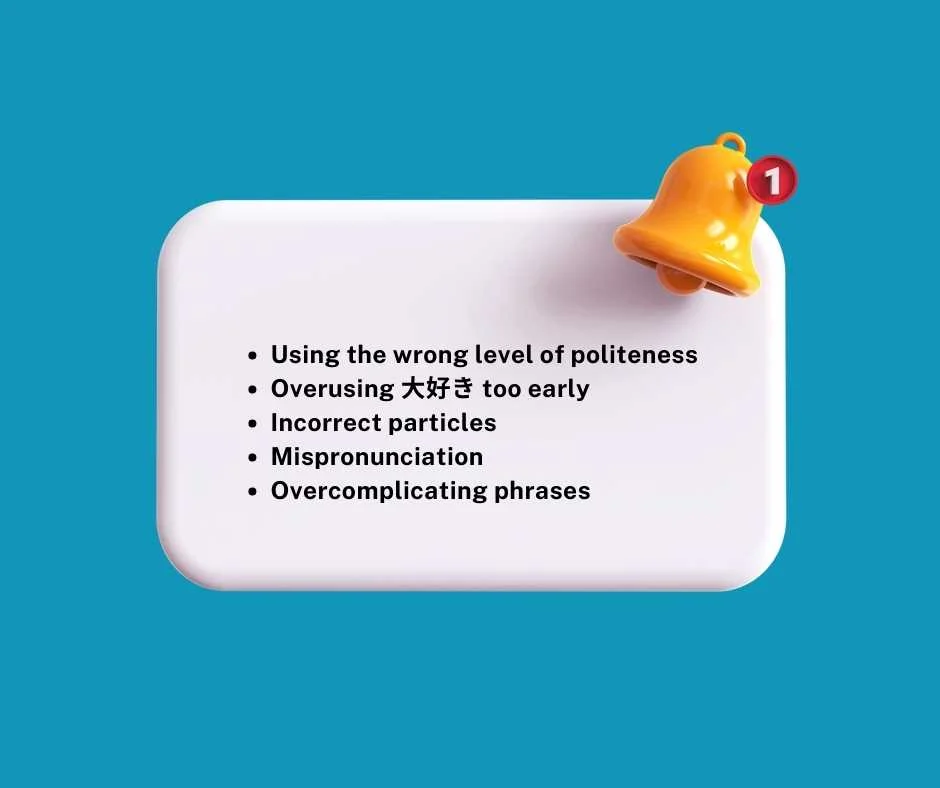
- Using the wrong level of politeness: Casual expressions with strangers may sound rude.
- Overusing 大好き too early: It can feel too intense if the relationship is new.
- Incorrect particles: Ensure correct grammar, e.g., 君が好きです (Kimi ga suki desu).
- Mispronunciation: Soft vowels and intonation matter for clarity.
- Overcomplicating phrases: Simple expressions are often more sincere.
Tip: Start simple, then add nuance as your confidence and understanding of context improve.
Practical Examples for Everyday Use
Confessing to Someone You Like
- Polite:
“ずっと前からあなたのことが好きです。” → “I’ve liked you for a long time.” - Casual:
“実は君が好きだよ。” → “Actually, I like you.”
Expressing Affection to Friends
- Friendly:
“君のことが好き!” → “I like you!” - Playful:
“ちょっと好きかも。” → “I might like you a little.”
Using in Digital Communication
- Text: “好き❤️” – simple and heartfelt
- Social media: “あなたのことが大好きです💖” – adds emotion with emojis
- Notes: Handwritten messages are often seen as more sincere in Japanese culture
Storytelling or Roleplay
- “君のことが好きすぎて、話しかけるだけでドキドキする。”
Translation: “I like you so much that just talking to you makes my heart race.”
This helps learners practice expressing feelings naturally in full sentences.
Advanced Techniques for Natural Expression
Using Body Language
Japanese communication relies heavily on non-verbal cues:
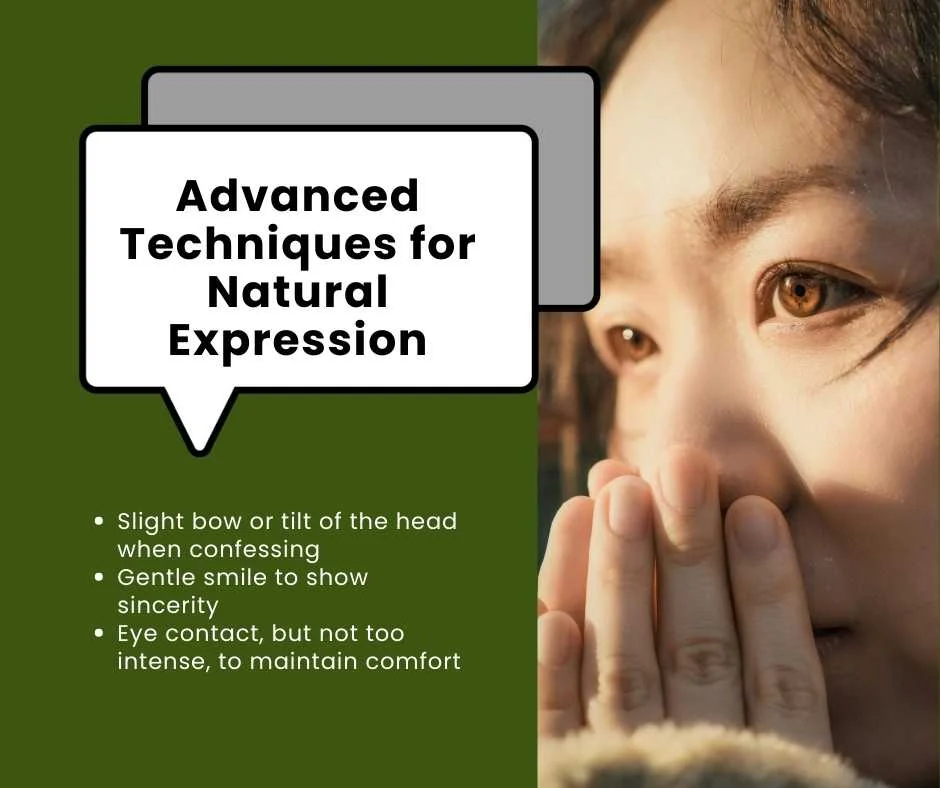
- Slight bow or tilt of the head when confessing
- Gentle smile to show sincerity
- Eye contact, but not too intense, to maintain comfort
Combining Phrases With Compliments
- “君の笑顔が好きです。” → “I like your smile.”
- “声が好きです。” → “I like your voice.”
This personalizes your expression and makes it more memorable.
Expressing Gradual Affection
- “最近、君のことが好きになってきた。” → “Lately, I’ve started to like you.”
- “友達として好きだけど、少し特別な気持ちもある。” → “I like you as a friend, but I also have special feelings.”
Gradual expressions help manage expectations and show thoughtfulness.
Frequently Asked Questions (FAQs)
1. Can I just say “好き” to someone?
Yes, in casual or playful contexts, saying 好き alone can convey “I like you,” especially with tone or gestures.
2. What’s the difference between 好きです and 大好きです?
好きです (Suki desu) is polite and moderate, while 大好きです (Daisuki desu) is stronger, often expressing deep affection.
3. How do I say I like you in a cute or playful way?
Use casual forms like 好きだよ (Suki da yo) or ちょっと好きかも (Chotto suki kamo) for teasing or playful expressions.
4. Can I write it in texts?
Absolutely! Short forms like 好き❤️ or 大好き💖 are common and friendly in messages.
5. Are there gender differences when saying I like you?
Politeness and word choice matter. Both males and females can say 好きです or 大好きです, but casual forms like 好きだよ are more context-dependent.
Conclusion
Learning how to say I like you in Japanese opens the door to expressing feelings sincerely and effectively.
From polite confessions with 好きです to playful or romantic expressions like 大好き or 好きだよ, mastering these phrases helps you communicate affection naturally.
Practicing pronunciation, context, and body language ensures your words are heartfelt and culturally appropriate.
Expressing your feelings in Japanese is more than words; it’s about connection, sincerity, and understanding the subtle beauty of the language.
Also Check These Posts:
How to Say I Love You in ASL | Learn the Gesture That Touches Hearts
How to Say Dad in Spanish | Master the Perfect Word for Your Father in 2026
How to Say Shit in Spanish | Funny, Useful and Real-Life Expressions for 2026
How to Say Cheers in Korean | Speak Like a Local at Parties and Gatherings

Darcy Lynn
Darcy Lynn has always been fascinated by the colors and stories of life. Her journey with writing began in childhood, and today she takes readers into new worlds through her stories. For her, every word is a way to explore new experiences and emotions. Darcy loves exploring stories across different cultures and languages, which also reflects in her unique writing style. She believes that a good story touches every heart and sparks deeper thinking. Alongside writing, she enjoys connecting directly with her readers and understanding their feelings.
Books:
-
Whispers Across Worlds
-
Echoes of Tomorrow