
Confused about how to say date in Spanish and when to use the right word?
You’re not alone; Spanish uses different terms for dates, romantic outings, and calendar days.
Whether you’re learning Spanish for travel, study, or daily conversation, knowing how to say date in Spanish correctly can save you from awkward mistakes.
This guide explains everything in simple English so you get the right meaning every time.
The two main meanings of date in Spanish
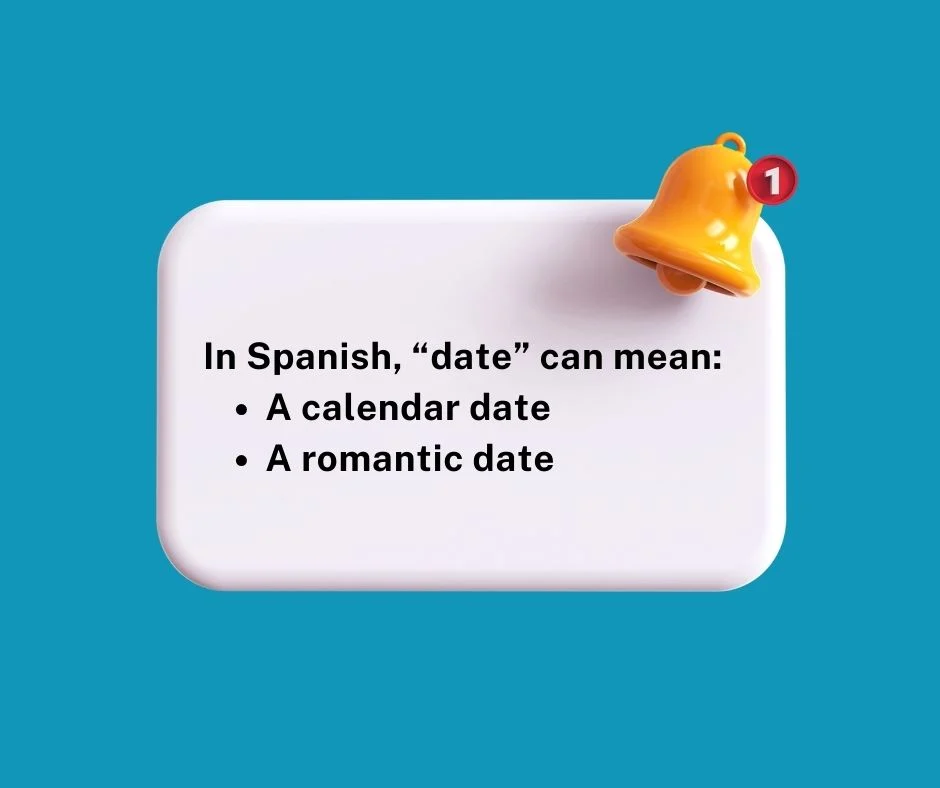
When learning how to say date in Spanish, it is important to know that English uses one word for different ideas, while Spanish uses different words depending on context.
In Spanish, “date” can mean:
- A calendar date
- A romantic date
Each meaning uses a different word, so choosing the correct one is essential.
Date as a calendar day
When “date” refers to a day on the calendar, Spanish uses the word fecha.
Examples:
- La fecha de hoy (today’s date)
- ¿Cuál es la fecha? (What is the date?)
- Anota la fecha, por favor. (Write down the date, please.)
This is the most common meaning in school, work, and official situations.
Using fecha in everyday sentences
To fully understand how to say date in Spanish, it helps to see fecha used in daily life.
Examples:
- La fecha es importante. (The date is important.)
- No recuerdo la fecha exacta. (I don’t remember the exact date.)
- La fecha del examen es mañana. (The exam date is tomorrow.)
You will hear and read fecha often in schedules, forms, and announcements.
Asking for the date in Spanish
Asking for the date is a common situation.
Common ways to ask:
- ¿Cuál es la fecha de hoy? (What is today’s date?)
- ¿Qué fecha es hoy? (What date is it today?)
Both are natural and widely used.
Saying the date correctly in Spanish
Spanish date format is different from English, which is important when learning how to say date in Spanish.
The usual order is:
- Day + de + month + de + year
Example:
- Hoy es 15 de mayo de 2025.
(Today is May 15, 2025.)
Notice that:
- Months are not capitalized
- “De” connects the parts
Names of months in Spanish
Knowing the months helps you use dates correctly.
Examples:
- enero – January
- febrero – February
- marzo – March
- abril – April
- mayo – May
Example sentence:
- Mi cumpleaños es en julio. (My birthday is in July.)
This knowledge supports correct date usage.
Date as a romantic meeting
When “date” means a romantic meeting, Spanish uses the word cita.
Examples:
- Tengo una cita. (I have a date.)
- Es una cita romántica. (It’s a romantic date.)
- Salimos en una cita. (We went on a date.)
This meaning is very different from fecha, so context matters.
Using cita in relationships
Understanding how to say date in Spanish includes knowing how cita works in conversations about relationships.
Examples:
- Mi primera cita fue divertida. (My first date was fun.)
- Él me invitó a una cita. (He invited me on a date.)
- Tenemos una cita esta noche. (We have a date tonight.)
These sentences are common in casual conversation.
Asking someone on a date in Spanish
If you want to invite someone out, Spanish offers polite and natural expressions.
Examples:
- ¿Quieres salir conmigo? (Do you want to go out with me?)
- ¿Te gustaría tener una cita? (Would you like to go on a date?)
- ¿Puedo invitarte a una cita? (Can I invite you on a date?)
These phrases sound respectful and natural.
Formal and informal use of cita
Cita can also mean an appointment, not only a romantic date.
Examples:
- Tengo una cita con el doctor. (I have a doctor’s appointment.)
- La cita es a las tres. (The appointment is at three.)
Context tells you whether it is romantic or professional.
Difference between fecha and cita
This distinction is central to mastering how to say date in Spanish.
Simple comparison:
- Fecha = calendar date
- Cita = meeting or romantic date
Examples:
- La fecha de la cita es mañana.
(The date of the appointment is tomorrow.)
Here, both words appear with different meanings.
Using date in questions and answers
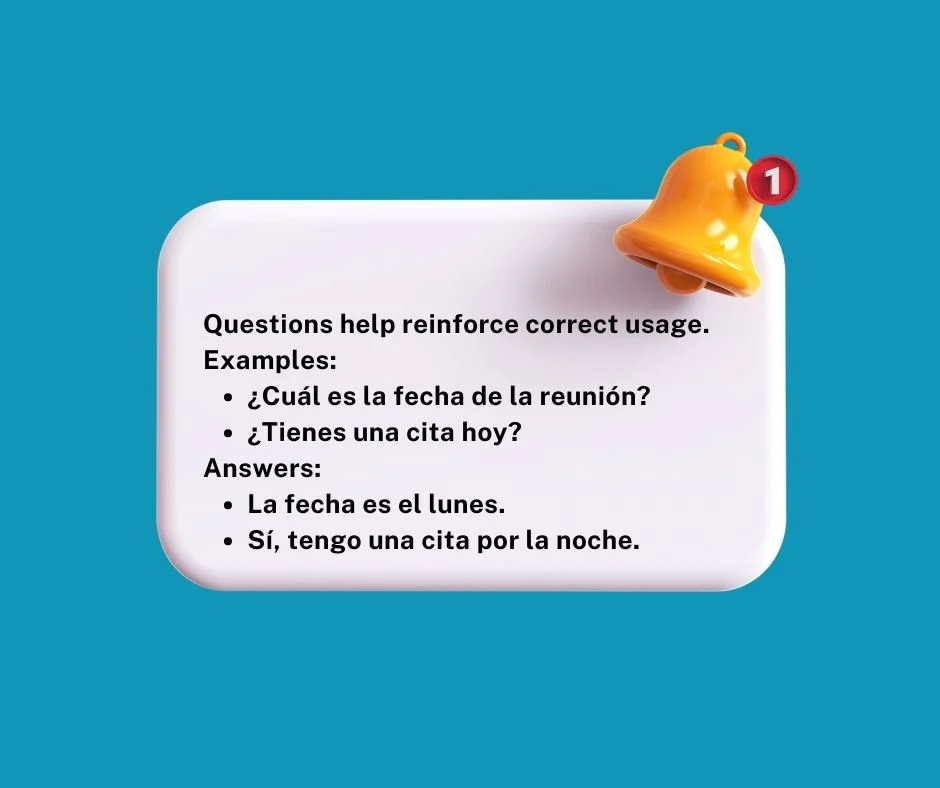
Questions help reinforce correct usage.
Examples:
- ¿Cuál es la fecha de la reunión?
- ¿Tienes una cita hoy?
Answers:
- La fecha es el lunes.
- Sí, tengo una cita por la noche.
These patterns appear often in real conversations.
Common expressions with fecha
Some fixed expressions use fecha naturally.
Examples:
- Hasta la fecha (to date, so far)
- Fecha límite (deadline)
- Fecha de nacimiento (date of birth)
Learning these expressions improves fluency.
Common expressions with cita
Cita also appears in useful expressions.
Examples:
- Confirmar una cita (confirm an appointment)
- Cancelar una cita (cancel a date or appointment)
- Tener una cita importante (have an important appointment)
These phrases are practical for daily use.
Writing dates in Spanish
When writing, Spanish dates follow a specific style.
Examples:
- 15/05/2025
- 15 de mayo de 2025
In formal writing, the full written form is preferred.
Speaking about past and future dates
Talking about past and future dates is part of everyday Spanish.
Examples:
- La fecha fue cambiada. (The date was changed.)
- La fecha será anunciada. (The date will be announced.)
- Nuestra cita fue ayer. (Our date was yesterday.)
- La cita será mañana. (The date will be tomorrow.)
Verb tense helps clarify meaning.
Cultural notes about dates in Spanish-speaking countries
Understanding how to say date in Spanish also involves cultural awareness.
Key points:
- Day comes before month
- Romantic dates are often casual
- Appointments are taken seriously
Using the right word shows respect and clarity.
Common mistakes learners make
Beginners often confuse meanings when learning how to say date in Spanish.
Common mistakes:
- Using fecha for a romantic date
- Using cita for a calendar date
- Mixing English word order
Correct examples:
- ❌ Tengo una fecha con ella
- ✅ Tengo una cita con ella
Small corrections improve communication greatly.
Practice sentences for beginners
Practice helps you remember the difference.
Examples:
- La fecha de hoy es correcta.
- Mi cita empieza a las ocho.
- No recuerdo la fecha exacta.
- La cita fue muy agradable.
Repeating these builds confidence.
Learning tips for remembering the difference
Helpful tips:
- Think of fecha as facts and calendars
- Think of cita as meetings and people
- Practice both in short sentences
- Pay attention to context
These tricks make learning easier.
Using date in school and work settings
In academic or professional settings, fecha appears more often.
Examples:
- Fecha de entrega (due date)
- Fecha del evento (event date)
Using the correct word avoids misunderstandings.
Using date in social conversations
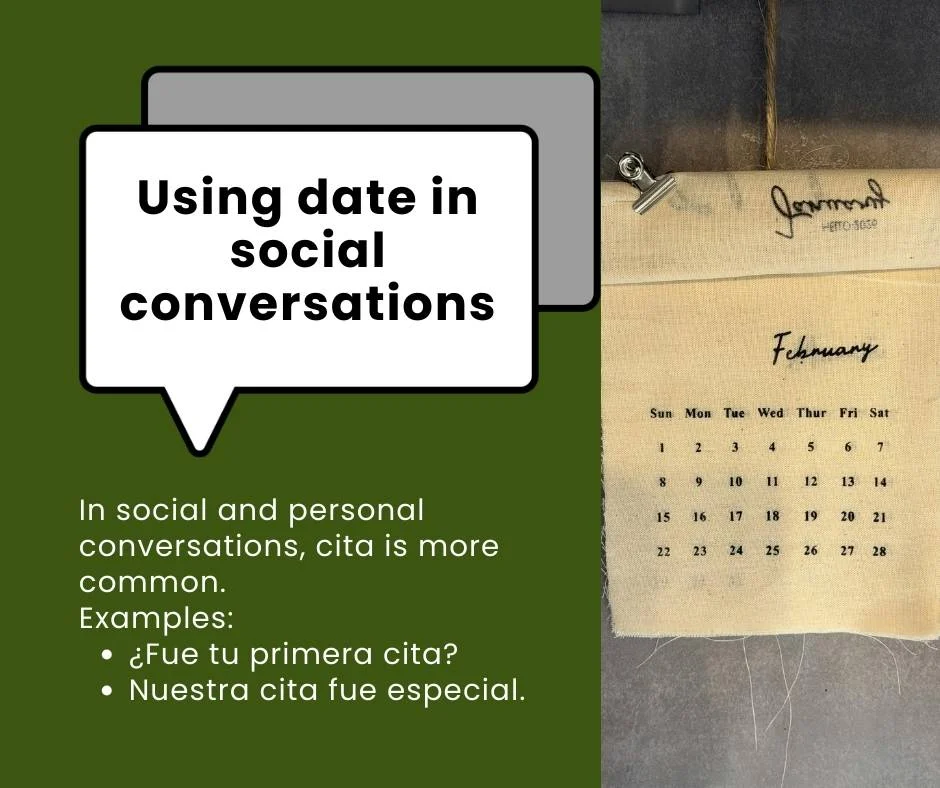
In social and personal conversations, cita is more common.
Examples:
- ¿Fue tu primera cita?
- Nuestra cita fue especial.
Understanding tone and setting matters.
Frequently Asked Questions
What is the most common way to say date in Spanish
The most common words are fecha for calendar dates and cita for meetings or romantic dates.
How to say date in Spanish for today
You say la fecha de hoy or hoy es followed by the day and month.
Is cita only for romantic dates
No, cita can also mean an appointment, such as with a doctor or at work.
Can fecha mean a romantic date
No, fecha is not used for romantic dates in Spanish.
How do beginners remember how to say date in Spanish
Beginners remember by linking fecha to calendars and cita to people or meetings.
Conclusion
Learning how to say date in Spanish becomes simple once you understand the context.
Fecha is used for calendar days, while cita refers to meetings and romantic dates.
Knowing the difference helps you speak clearly, avoid confusion, and sound more natural.
With practice, using the right word will feel easy and automatic.
Also Check These Posts:
How to Say Sentence in Spanish | Spoken & Written Use in 2026
How to Say Go in Spanish | Beginner Friendly Guide for 2026
How to Say Your in Spanish | Formal vs Informal Use in 2026

Darcy Lynn
Darcy Lynn has always been fascinated by the colors and stories of life. Her journey with writing began in childhood, and today she takes readers into new worlds through her stories. For her, every word is a way to explore new experiences and emotions. Darcy loves exploring stories across different cultures and languages, which also reflects in her unique writing style. She believes that a good story touches every heart and sparks deeper thinking. Alongside writing, she enjoys connecting directly with her readers and understanding their feelings.
Books:
-
Whispers Across Worlds
-
Echoes of Tomorrow