
Are you looking for the perfect way to say “Dad” in Spanish? ❤️
Whether you want to surprise your father, connect with a Spanish-speaking family, or simply learn a new word, this guide is made just for you.
By the end, you’ll know heartfelt, everyday, and even playful ways to call your dad in Spanish.
Keep reading, and make your words feel as warm as a hug. 🌟
Common Words for Dad in Spanish
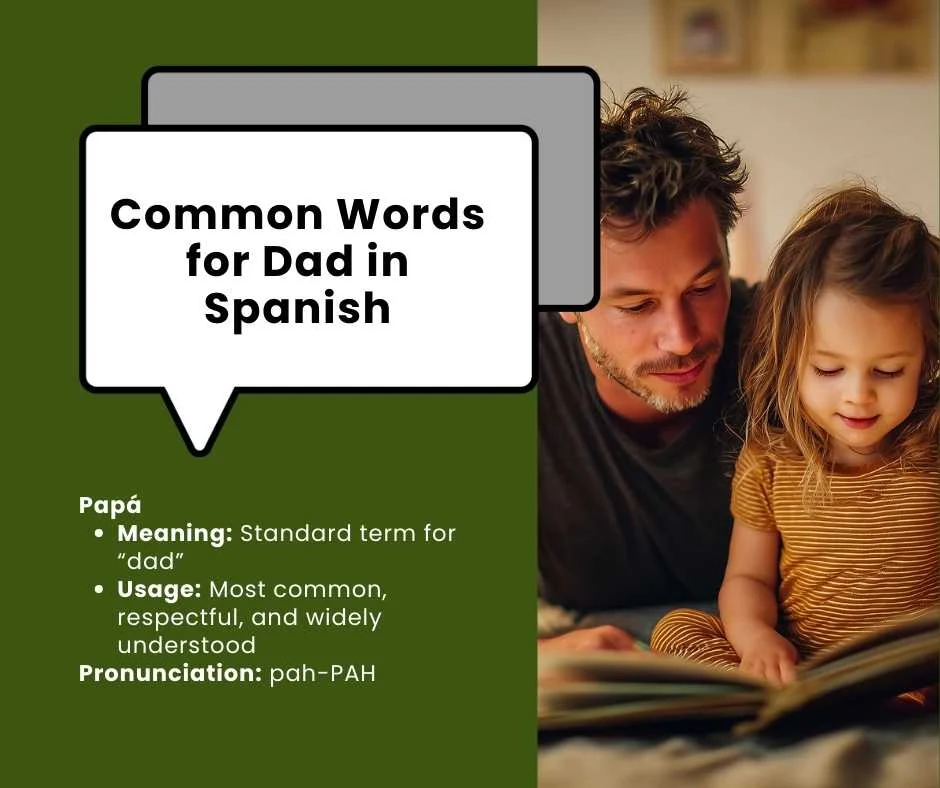
Spanish offers several ways to say “dad,” ranging from formal to casual and affectionate.
Papá
- Meaning: Standard term for “dad”
- Usage: Most common, respectful, and widely understood
- Pronunciation: pah-PAH
Example:
- “Mi papá es muy amable.” – “My dad is very kind.”
Padre
- Meaning: Literal translation of “father”
- Usage: Formal situations, official documents, or serious conversations
- Pronunciation: PAH-dreh
Example:
- “Mi padre me enseñó mucho sobre la vida.” – “My father taught me a lot about life.”
Papi
- Meaning: Affectionate term, similar to “daddy”
- Usage: Used in a loving, informal context, often by children
- Pronunciation: PAH-pee
Example:
- “Te quiero mucho, papi.” – “I love you very much, daddy.”
Papito
- Meaning: Very affectionate, diminutive of papá
- Usage: Shows closeness and endearment
- Pronunciation: pah-PEE-toh
Example:
- “Hola, papito, ¿cómo estás?” – “Hi daddy, how are you?”
Viejo
- Meaning: Literally “old man,” used informally in some countries
- Usage: Often used jokingly or casually between adults
- Pronunciation: BYEH-ho
Example:
- “Mi viejo siempre me ayuda.” – “My old man always helps me.”
Choosing the Right Term
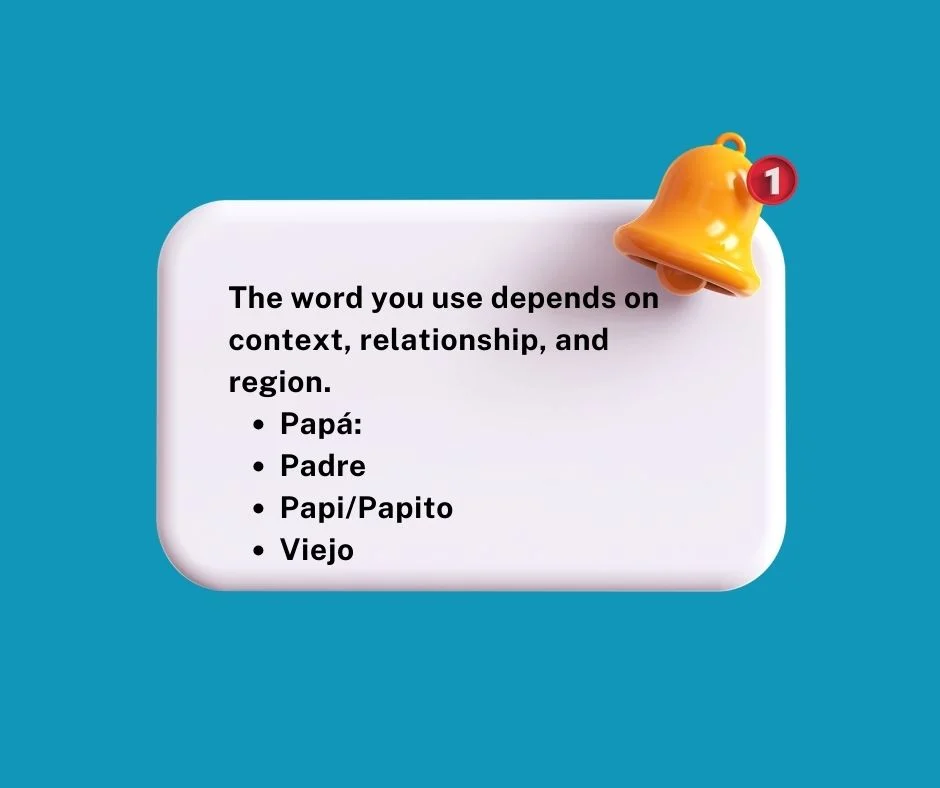
The word you use depends on context, relationship, and region.
- Papá: Safe, casual, and affectionate
- Padre: Formal or serious situations
- Papi/Papito: Very affectionate, informal
- Viejo: Casual, often humorous
Using the right word helps show respect, love, and familiarity.
Regional Variations
Spanish-speaking countries have their own preferences for words for dad:
- Mexico & Central America: Papá, Papi
- Spain: Papá, Padre
- Caribbean: Papá, Papi, sometimes Papito
- South America: Papá, Viejo, Papi
Knowing regional differences ensures your words sound natural in conversation.
Expressing Affection to Your Dad
Saying “dad” is more than a label; it conveys love and respect. Combine it with affectionate phrases:
- “Te quiero, papá.” – “I love you, dad.”
- “Eres el mejor padre del mundo.” – “You are the best father in the world.”
- “Gracias, papi, por todo.” – “Thank you, daddy, for everything.”
- “Hola, papito, ¿cómo te va?” – “Hi daddy, how’s it going?”
Adding small words of affection makes your communication warm and personal.
Formal vs. Informal Usage
Understanding the level of formality is crucial in Spanish:
- Formal: Padre, used in serious conversations or documents
- Informal: Papá, Papi, Papito, Viejo, used in family and casual situations
Example:
- Formal: “Mi padre trabaja en la universidad.” – “My father works at the university.”
- Informal: “Hola, papá, ¿cómo estuvo tu día?” – “Hi dad, how was your day?”
Pronunciation Tips
Correct pronunciation ensures you sound natural:
- Papá: pah-PAH
- Padre: PAH-dreh
- Papi: PAH-pee
- Papito: pah-PEE-toh
- Viejo: BYEH-ho
Focus on accent placement; it changes the meaning or tone.
Using Dad in Spanish Greetings
Greeting your dad or starting a conversation in Spanish can be simple and affectionate:
- “Buenos días, papá.” – “Good morning, dad.”
- “Hola, papi, ¿cómo dormiste?” – “Hi daddy, how did you sleep?”
- “Papito, ven aquí un momento.” – “Daddy, come here for a moment.”
Combining greetings with affectionate words strengthens family bonds.
Cultural Significance of the Word Dad
In Spanish-speaking cultures, family is central, and the way you address your dad carries respect and love.
- Children often use papá or papi freely
- Adults may switch to padre in formal or serious settings
- Terms like viejo are often humorous and affectionate, reflecting familiarity
Understanding cultural nuances ensures your words are meaningful and appreciated.
Writing Dad in Spanish
Writing the word for dad is straightforward but adding context makes it more personal:
- “Querido papá, gracias por todo.” – “Dear dad, thank you for everything.”
- “Feliz cumpleaños, papi.” – “Happy birthday, daddy.”
- “Papito, te extraño mucho.” – “Daddy, I miss you a lot.”
Small notes or messages using these terms convey warmth and thoughtfulness.
Advanced Expressions for Dad
For more expressive or poetic ways to refer to dad:
- “Mi querido padre” – “My dear father” (formal, affectionate)
- “Papá querido” – “Beloved dad”
- “Mi viejito” – “My little old man” (affectionate)
- “El mejor papá del mundo” – “The best dad in the world”
These expressions add emotion and personalization to your words.
Combining Dad with Family Terms
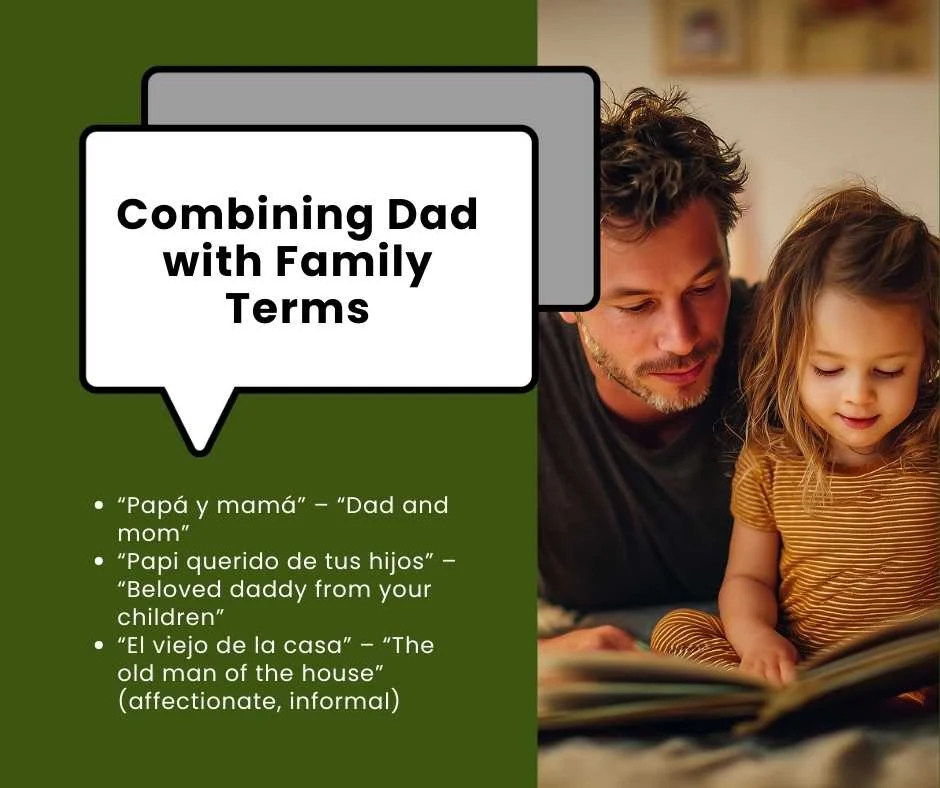
Spanish allows combining terms for dad with other family expressions:
- “Papá y mamá” – “Dad and mom”
- “Papi querido de tus hijos” – “Beloved daddy from your children”
- “El viejo de la casa” – “The old man of the house” (affectionate, informal)
This makes speech or writing feel more connected and culturally rich.
Real-Life Examples
- Talking to your dad: “Papá, ¿puedes ayudarme con esto?” – “Dad, can you help me with this?”
- Writing a card: “Feliz día del padre, papi.” – “Happy Father’s Day, daddy.”
- Informal conversation: “Mi viejo siempre me da buenos consejos.” – “My old man always gives me good advice.”
Using these examples helps learners feel confident in everyday interactions.
Frequently Asked Questions
What is the easiest way to say dad in Spanish?
The easiest and most common term is papá, used widely in casual and affectionate situations.
Can I use papi or papito with my dad?
Yes, these are affectionate, informal terms, especially used by children or close family members.
What is the formal word for dad in Spanish?
The formal term is padre, suitable for serious or official contexts.
Are there regional differences in saying dad in Spanish?
Yes, some countries prefer papá, papi, or viejo, depending on culture and formality.
Can I use viejo as a term for dad?
Yes, but it is usually humorous or affectionate, not formal. Context matters to avoid misunderstandings.
Conclusion
Learning how to say dad in Spanish helps you communicate love, respect, and familiarity in meaningful ways.
Whether you use papá, padre, papi, or viejo, choosing the right term adds warmth and cultural authenticity.
By practicing pronunciation, understanding context, and combining affectionate expressions, you can express your feelings naturally and connect deeply with Spanish-speaking family members.
Also Check These Posts:
How to Say Shit in Spanish | Funny, Useful and Real-Life Expressions for 2026
How to Say Cheers in Korean | Speak Like a Local at Parties and Gatherings
How to Say Hi in Jamaican | Everyday Greetings Anyone Can Use
How to Say I Love You in Hawaiian

Blake Kinslee
Hi! I’m Blake, a passionate writer who loves exploring the beauty of different languages and cultures through storytelling. Ever since I was young, I’ve been fascinated by how words can connect people across the world. Writing, for me, is not just a hobby—it’s a way to share ideas, emotions, and dreams with readers everywhere. When I’m not crafting stories, you’ll usually find me reading, traveling, or discovering new words in languages I’ve never spoken before. Every book I write is a journey, and I hope my readers feel that magic too.
Books:
-
Whispers Across Borders
-
The Language of Dreams