

Saying goodbye can feel emotional, especially when you’re speaking a new language for the first time.
How to say bye in Arabic isn’t just about words; it’s about respect, warmth, and the moment you’re sharing.
This article is written for you, whether you’re traveling, chatting with an Arabic friend, or simply curious to learn.
By the end, you’ll feel confident saying farewell the right way, without hesitation.
Understanding Goodbye in Arabic Culture
Arabic is not just a language; it carries deep cultural values.
When you learn how to say bye in Arabic, you also learn how people show respect, warmth, and good wishes when parting.
Goodbyes in Arabic often:
- Express care for the other person
- Include prayers or blessings
- Change based on formality, time, and relationship
This is why Arabic has many ways to say goodbye instead of just one word.
The Most Common Way to Say Bye in Arabic
Maʿa as-salāmah (مع السلامة)
This is the most widely used and safest goodbye in Arabic.
Meaning:
“Go with peace” or “Peace be with you”
When to use it:
- Formal situations
- With strangers
- At work or school
- Anytime you are unsure what to say
Example:
- You leave a shop → Maʿa as-salāmah
- Ending a polite conversation → Maʿa as-salāmah
This phrase works in almost every Arabic-speaking country.
How to Say Bye in Arabic Text
When people type messages or chat online, they often use simple Arabic goodbye phrases.
Some of the most common ways to say bye in Arabic text include:
- مع السلامة (Maʿa as-salāma) – Goodbye / Go in peace
- سلام (Salam) – Peace / Bye
- باي (Bye) – Borrowed English word used casually
- نشوفك لاحقاً (Nashufak lahiqan) – See you later
Examples in Text Messages
Here are practical examples used in chats:
- Maʿa as-salāma! Talk later.
- Salam, see you tomorrow.
- Bye! Take care.
These phrases are common in texting, WhatsApp, and social media.
How to Say Goodbye in Arabic in Islam
In Islamic culture, goodbye phrases often include blessings and prayers.
One of the most common Islamic ways to say goodbye is:
السلام عليكم ورحمة الله
Pronunciation:
As-salamu alaikum wa rahmatullah
Meaning:
Peace and mercy of God be upon you
This greeting is often used both when meeting and leaving someone.
Another Islamic Goodbye
في أمان الله
Pronunciation:
Fi amanillah
Meaning:
May you be in the protection of God
Muslims often say this when parting from friends or family.
How to Say Bye in Islam
Islam encourages polite and respectful speech. Several phrases reflect this value.
Common Islamic goodbye expressions include:
- في أمان الله (Fi amanillah) – In God’s protection
- السلام عليكم (As-salamu alaikum) – Peace be upon you
- مع السلامة (Maʿa as-salāma) – Go in peace
These phrases show kindness, prayer, and respect when ending a conversation.
Example
Friend leaving your house:
“Fi amanillah, see you tomorrow.“
This expresses both goodbye and a blessing.
Thank You and Goodbye in Arabic
Sometimes people combine gratitude and goodbye together.
Thank You in Arabic
شكراً
Pronunciation:
Shukran
Meaning:
Thank you
Example Sentences
Here are natural examples combining both phrases:
- Shukran, maʿa as-salāma!
(Thank you, goodbye!) - Shukran for your help. Maʿa as-salāma.
These phrases are commonly used after meetings, conversations, or receiving help.
How to Say Bye in Arabic to a Friend
When speaking to a friend, Arabic speakers often use relaxed and friendly expressions.
Casual Goodbye Phrases
Some friendly phrases include:
- يلا باي (Yalla bye) – Okay bye / Let’s go bye
- نشوفك (Nashufak) – See you
- سلام (Salam) – Bye / Peace
Example Conversations
Friend leaving:
You: Yalla bye!
Friend: Salam, see you tomorrow.
These phrases are casual and widely used among younger people.
Hello and Goodbye in Arabic
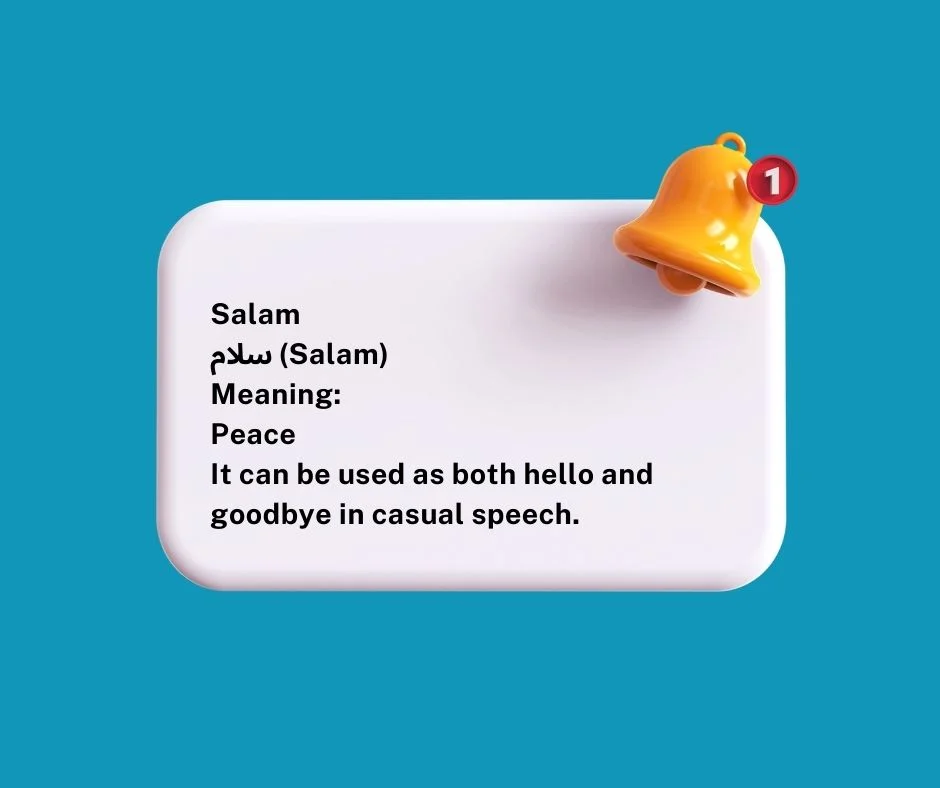
Interestingly, some Arabic phrases can be used both for greeting and leaving.
Salam
سلام (Salam)
Meaning:
Peace
It can be used as both hello and goodbye in casual speech.
Full Greeting
السلام عليكم
Pronunciation:
As-salamu alaikum
Meaning:
Peace be upon you
This greeting is very common in Muslim communities around the world.
Reply
The traditional response is:
وعليكم السلام
Pronunciation:
Wa alaikum as-salam
Meaning:
And peace be upon you.
This exchange reflects respect and kindness.
Ma Salama in Arabic
One of the most widely used Arabic goodbye phrases is:
مع السلامة
Pronunciation:
Maʿa as-salāma
Meaning:
Go with peace
This phrase is used in many Arabic-speaking countries and is appropriate in both formal and casual situations.
When to Use Ma Salama
You can use it in situations like:
- Leaving a conversation
- Saying goodbye after visiting someone
- Ending a phone call
- Leaving a workplace
Example
Person 1: I have to leave now.
Person 2: Maʿa as-salāma!
It is simple, polite, and universally understood.
Yalla Bye in Arabic
Yalla bye is a modern expression often used by young people.
Meaning
- Yalla = let’s go / come on
- Bye = borrowed English word
Together they mean:
Alright, bye or Okay, see you
Example
Friend ending a call:
“Okay I have to go now, yalla bye.”
This phrase is common in texting, phone calls, and casual conversations.
Where It Is Common
You will hear yalla bye often in:
- Lebanon
- Jordan
- UAE
- Saudi Arabia
- Online chats and social media
It mixes Arabic and English naturally.
Common Arabic Goodbye Phrases Table
| Arabic Phrase | Pronunciation | Meaning | Situation |
| مع السلامة | Maʿa as-salāma | Goodbye | Formal & casual |
| سلام | Salam | Bye / Peace | Casual |
| في أمان الله | Fi amanillah | In God’s protection | Islamic |
| يلا باي | Yalla bye | Okay bye | Friends |
| نشوفك لاحقاً | Nashufak lahiqan | See you later | Informal |
This table helps beginners quickly remember the most useful expressions.
Why Arabic Goodbye Phrases Are Meaningful
Arabic expressions often include kindness, respect, and blessings.
Many phrases focus on:
- peace
- safety
- protection
- goodwill
For example:
Maʿa as-salāma literally means go with peace, which reflects the cultural value of wishing others safety.
Because of this, Arabic goodbyes often feel warmer than simple translations.
Cultural Tips When Saying Goodbye in Arabic
Understanding cultural etiquette helps you use these phrases correctly.
Be Polite
Politeness is very important in Arabic culture.
Use Respectful Tone
When speaking to elders or in formal situations, choose phrases like:
- Maʿa as-salāma
- Fi amanillah
Casual Situations
With friends or younger people, casual expressions are acceptable:
- Yalla bye
- Salam
Smile and Warm Tone
Arabic communication often includes friendly tone and body language.
A warm goodbye leaves a good impression.
Casual and Friendly Arabic Goodbyes
Bye (باي)
Arabic speakers often use the English word “bye,” especially in modern or casual settings.
When to use it:
- With friends
- On the phone
- Text messages
- Informal conversations
Example:
- Talking to a friend → Bye, see you tomorrow
Yalla bye (يلا باي)
This is a fun, friendly mix of Arabic and English.
Meaning:
“Okay, bye” or “Let’s go, bye”
When to use it:
- With close friends
- Casual moments
- When leaving quickly
Example:
- Leaving a gathering → Yalla bye!
Saying Goodbye Based on Time
Tisbah ʿala khayr (تصبح على خير)
Meaning:
“Good night” (literally: wake up to goodness)
When to use it:
- At night
- Before sleeping
- Ending evening conversations
Reply:
- Wa anta min ahluh (وأنت من أهله)
Meaning: “And may you be among its goodness”
Nahārak saʿīd (نهارك سعيد)
Meaning:
“Have a happy day”
When to use it:
- During the day
- Polite daytime farewell
Religious and Respectful Goodbyes
As-salāmu ʿalaykum (السلام عليكم)
Although commonly used as “hello,” it also works as a goodbye.
Meaning:
“Peace be upon you”
Reply:
- Wa ʿalaykum as-salām
When to use it:
- Religious settings
- Respectful conversations
- Elders or formal situations
Allāh maʿak (الله معك)
Meaning:
“May God be with you”
When to use it:
- Showing care
- Emotional goodbyes
- Family and friends
Goodbye Phrases for Different Relationships
With Friends
- Bye
- Yalla bye
- Ashūfak baʿdain (أشوفك بعدين) – “See you later”
With Family
- Allāh maʿak
- Tisbah ʿala khayr
- Rabbina yahfazak (ربنا يحفظك) – “May God protect you”
With Colleagues
- Maʿa as-salāmah
- Nahārak saʿīd
- Ilā al-liqāʾ (إلى اللقاء) – “Until we meet again”
Formal Arabic Goodbye Expressions
Ilā al-liqāʾ (إلى اللقاء)
Meaning:
“Until we meet again”
When to use it:
- Business settings
- Formal conversations
- Professional emails or meetings
Wadaʿan (وداعًا)
Meaning:
“Farewell”
When to use it:
- Formal writing
- Serious or final goodbyes
- Less common in daily speech
Regional Variations You Should Know
Arabic changes slightly across regions, but most goodbyes remain understandable everywhere.
Gulf Arabic
- Maʿa as-salāmah
- Ashūfak ʿala khayr
Egyptian Arabic
- Salām
- Bye bye
- Khalāṣ, ashūfak – “Alright, see you”
Levantine Arabic
- Yalla salām
- Nshūfak baʿdain
Moroccan Arabic
- Bslāma
Equivalent of Maʿa as-salāmah
Common Mistakes Beginners Make
Learning how to say bye in Arabic is easy, but beginners often make small mistakes.
Using one phrase everywhere
Arabic is flexible. Try to match the phrase with the situation.
Pronouncing too fast
Arabic pronunciation matters. Speak slowly and clearly.
Forgetting politeness
Arabic culture values respect. A warm goodbye makes a good impression.
How to Practice Arabic Goodbyes Daily
- Say Arabic goodbyes when ending phone calls
- Practice with Arabic videos or shows
- Write farewell phrases in a notebook
- Use them in text messages with friends
Even small practice builds confidence quickly.
Frequently Asked Questions
What is the most common way to say bye in Arabic?
The most common and safe phrase is Maʿa as-salāmah, used in both formal and informal situations.
Can I use “bye” when speaking Arabic?
Yes, many Arabic speakers use “bye,” especially in casual conversations and with friends.
Is it polite to say as-salāmu ʿalaykum as a goodbye?
Yes, it is respectful and commonly used when leaving, especially in religious or formal settings.
How do you say goodbye at night in Arabic?
You can say Tisbah ʿala khayr, which means “Good night.”
Does Arabic have formal and informal goodbyes?
Yes, Arabic has different goodbye phrases depending on formality, relationship, and situation.
Conclusion
Learning how to say bye in Arabic goes beyond memorizing words.
It helps you connect with people, show respect, and communicate naturally.
From friendly “bye” to formal Maʿa as-salāmah, each phrase has its place.
Practice regularly, choose the right expression, and your Arabic conversations will feel warmer and more authentic every day.
Also Check These Posts:
Learn How to Say Hello in English Like a Native Speaker for 2026
How to Say What in Korean | Polite, Casual and Common Forms Explained
How to Say Beer in Spanish | Learn Once and Never Forget

Blake Kinslee
Hi! I’m Blake, a passionate writer who loves exploring the beauty of different languages and cultures through storytelling. Ever since I was young, I’ve been fascinated by how words can connect people across the world. Writing, for me, is not just a hobby—it’s a way to share ideas, emotions, and dreams with readers everywhere. When I’m not crafting stories, you’ll usually find me reading, traveling, or discovering new words in languages I’ve never spoken before. Every book I write is a journey, and I hope my readers feel that magic too.
Books:
-
Whispers Across Borders
-
The Language of Dreams