

You might be here because you’re curious, confused, or even a little nervous about how to say bitch in Chinese and that’s completely okay.
Learning words like this can feel awkward, especially when you don’t want to offend someone by mistake.
But don’t worry, you’re not alone, and you’re in the right place.
This guide is here to help you understand not just the word, but when (and when not) to use it in real life.
By the end, you’ll feel more confident navigating tricky language moments with ease.
Understanding the Meaning Before Translation
Before learning how to say this word in Chinese, it’s important to understand its meaning in English.
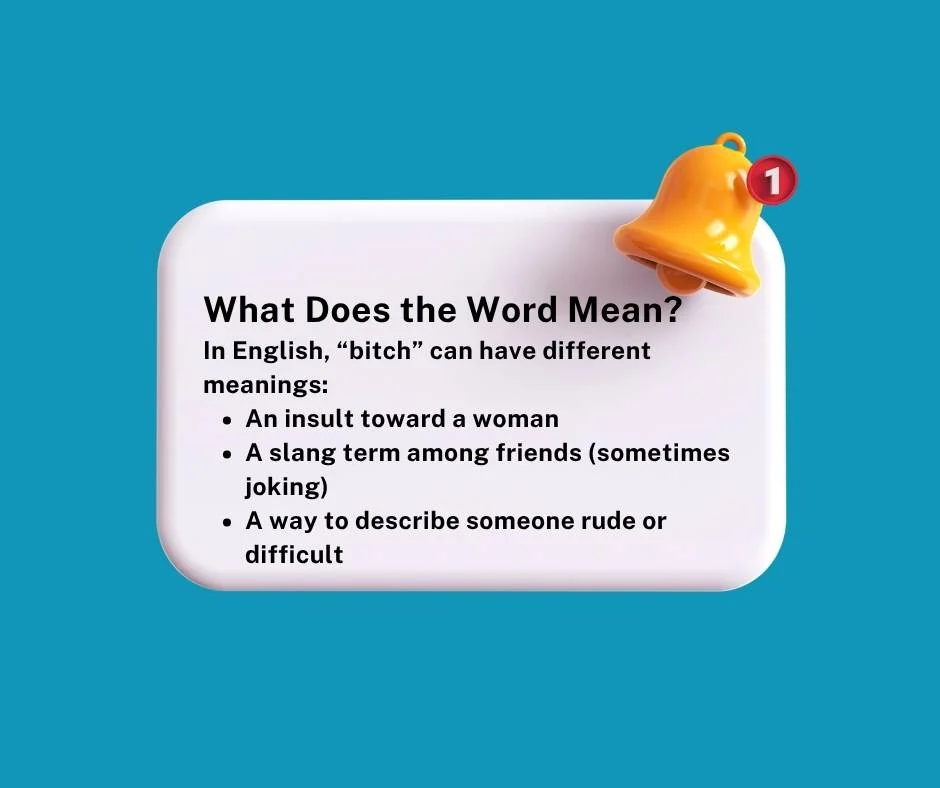
What Does the Word Mean?
In English, “bitch” can have different meanings:
- An insult toward a woman
- A slang term among friends (sometimes joking)
- A way to describe someone rude or difficult
👉 Because meanings vary, the Chinese translation also depends on tone and context.
The Direct Translation in Chinese
The most direct translation of “bitch” in Chinese is:
- 婊子 (biǎo zi)
What Does It Mean?
- It is a very strong insult
- Often refers to someone in a highly offensive way
- Considered rude and disrespectful
👉 Important: This word should be used with extreme caution or avoided completely.
Pronunciation Guide
Understanding pronunciation helps you recognize the word, even if you don’t plan to use it.
Breaking It Down
- 婊 (biǎo) → sounds like “byow” (falling-rising tone)
- 子 (zi) → sounds like “dzuh” (neutral tone)
👉 Full pronunciation: byow-dzuh
Tone Matters
Chinese is a tonal language, so tones change meaning:
- Wrong tone = wrong meaning
- Practice slowly to avoid confusion
Other Related Expressions in Chinese
Chinese has several expressions that may carry similar meanings depending on context.
Less Direct or Milder Terms
- 坏女人 (huài nǚrén)
👉 “Bad woman” (less offensive) - 讨厌的人 (tǎoyàn de rén)
👉 “Annoying person”
Slang and Informal Words
- 贱人 (jiàn rén)
👉 A strong insult meaning “shameless person”
👉 These are still offensive and should be used carefully.
When Not to Use These Words
Understanding when not to use such words is even more important than knowing them.
Situations to Avoid
- Formal conversations
- Speaking with strangers
- Professional environments
- Talking to elders
Why It Matters
- Chinese culture values respect
- Using offensive language can damage relationships
- It may create misunderstandings or conflict
Cultural Perspective on Offensive Language
Language reflects culture, and Chinese communication often emphasizes politeness.
Respect is Key
- People prefer indirect communication
- Harsh words are rarely used in public
Saving Face
In Chinese culture, “saving face” is important:
- Avoid embarrassing others
- Speak in a respectful tone
What This Means for You
Even if you know how to say bitch in Chinese, it’s better to:
- Use neutral language
- Stay polite in conversations
Safer Alternatives You Can Use
Instead of using offensive words, try safer expressions.
Polite Ways to Express Frustration
- 这个人不好 (Zhège rén bù hǎo)
👉 “This person is not nice” - 我不喜欢她 (Wǒ bù xǐhuān tā)
👉 “I don’t like her”
Casual but Non-Offensive
- 她很烦 (Tā hěn fán)
👉 “She is annoying”
Why Use Alternatives?
- Keeps conversations respectful
- Helps you sound more natural
- Avoids conflict
Real-Life Situations and Examples
Understanding context helps you decide what to say.
Situation: Talking About Someone You Don’t Like
Instead of saying something offensive:
- ❌ 婊子
- ✅ 她很烦
👉 “She is annoying”
Situation: Casual Conversation with Friends
Even with friends, be careful:
- Tone matters
- Not everyone finds offensive words funny
Situation: Learning Language
If you hear this word:
- Understand its meaning
- Avoid repeating it without context
Common Mistakes Beginners Make
When learning how to say bitch in Chinese, beginners often make these mistakes.
Using Direct Translation Without Context
- Not all English words translate safely
- Context changes meaning
Ignoring Cultural Differences
- What’s acceptable in one language may not be in another
Mispronouncing Tones
- Incorrect tones can change meaning
- Practice carefully
Tips for Learning Sensitive Vocabulary
Learning difficult or offensive words requires extra care.
Learn for Understanding, Not Usage
- Recognize words in conversations
- Avoid using them unnecessarily
Focus on Polite Language First
- Build strong communication skills
- Learn respectful expressions
Practice Listening
- Watch shows or listen to native speakers
- Notice how rarely such words are used publicly
Expanding Your Chinese Vocabulary Safely
Instead of focusing on offensive words, grow your vocabulary with useful phrases.
Positive Words to Learn
- 好 (hǎo) → good
- 友好 (yǒuhǎo) → friendly
- 礼貌 (lǐmào) → polite
Useful Sentences
- 她很友好
👉 “She is friendly” - 他很礼貌
👉 “He is polite”
Why Context is Everything in Language
One of the most important lessons in language learning is understanding context.
Same Word, Different Meaning
- Tone changes meaning
- Situation changes impact
Communication Is More Than Words
- Body language
- Voice tone
- Cultural understanding
Frequently Asked Questions (FAQs)
What is the direct way to say bitch in Chinese?
The direct translation is 婊子 (biǎo zi), but it is highly offensive and should be avoided.
Is it okay to use this word in Chinese?
No, it is considered rude and disrespectful in most situations.
Are there softer alternatives in Chinese?
Yes, you can say phrases like “annoying person” instead of using offensive language.
Why is learning how to say bitch in Chinese important?
It helps you understand conversations, but it’s better used for awareness than speaking.
Can beginners safely learn such words?
Yes, but they should focus on understanding and avoid using them casually.
Conclusion
Learning how to say bitch in Chinese gives you insight into language, culture and communication.
While the direct translation exists, it is very offensive and rarely appropriate to use.
Instead, focus on respectful alternatives and cultural understanding.
This approach will help you communicate more effectively and build better relationships while learning Chinese.
Also Check These Posts:
How to Say Hi in Swedish Correctly Every Time
How to Say Goodnight to Your Crush with Simple and Sweet Messages
How to Say Happy Birthday in Hawaiian | Fun and Easy Guide in 2026

Darcy Lynn
Darcy Lynn has always been fascinated by the colors and stories of life. Her journey with writing began in childhood, and today she takes readers into new worlds through her stories. For her, every word is a way to explore new experiences and emotions. Darcy loves exploring stories across different cultures and languages, which also reflects in her unique writing style. She believes that a good story touches every heart and sparks deeper thinking. Alongside writing, she enjoys connecting directly with her readers and understanding their feelings.
Books:
-
Whispers Across Worlds
-
Echoes of Tomorrow