
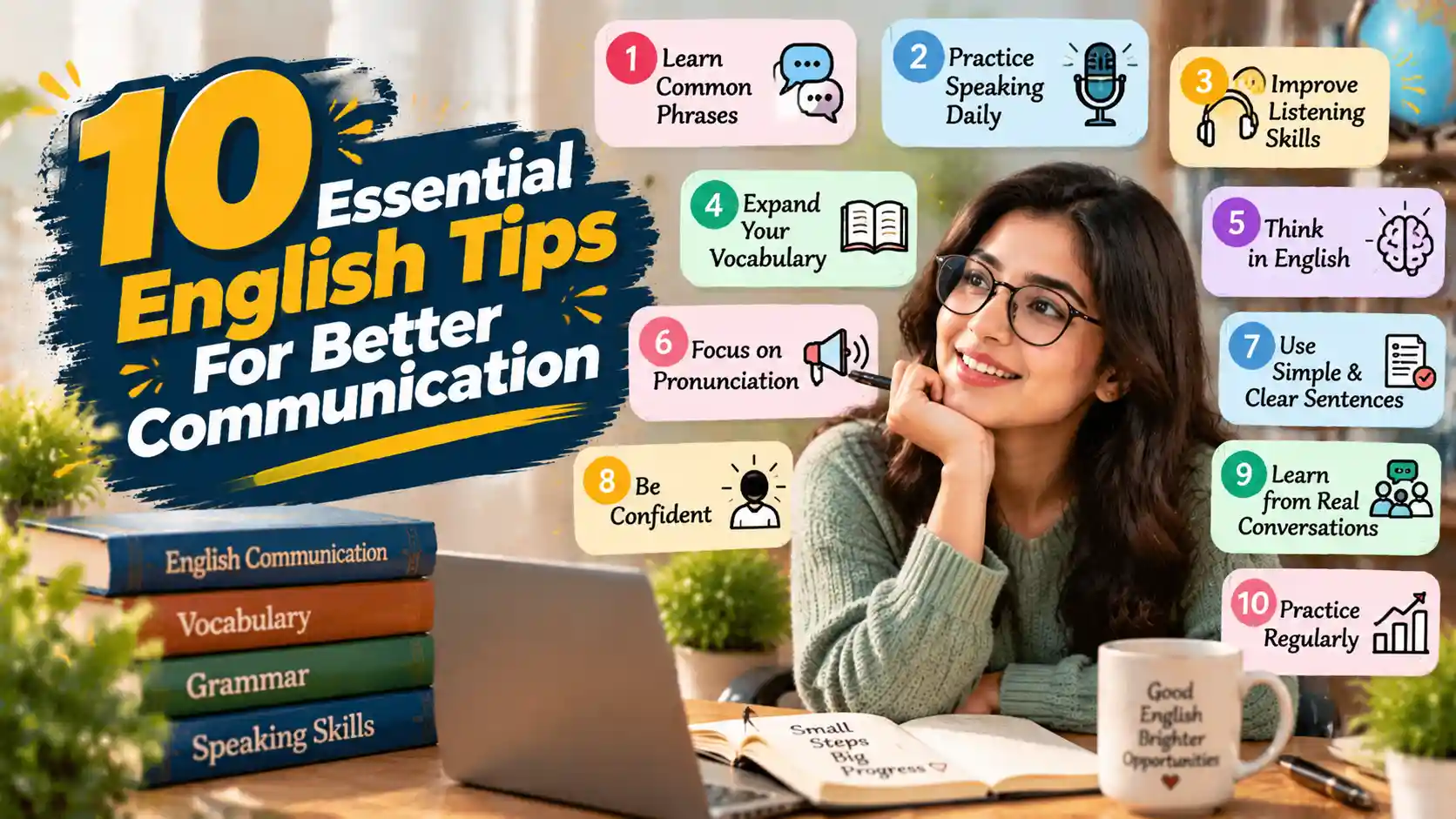
Effective communication is the cornerstone of professional and personal success, especially when navigating the English language. Whether you are learning English as a second language or looking to refine your native speaking skills, the goal remains the same: clarity, confidence, and connection. Many learners struggle with vocabulary or grammar, but true communication goes beyond just words. By focusing on intent, active listening, and structural consistency, you can transform how you interact with the world. This guide provides 10 essential English tips for better communication to help you speak with greater impact and ease.
10 Essential Tips for Mastering English Communication
From active listening to mastering idioms and tenses, these tips cover the holistic approach to better English interaction.
1. Practice Active Listening
Active listening is the foundation of communication. Don’t just wait for your turn to speak; focus on the speaker’s intent, tone, and vocabulary. This helps you respond more naturally and accurately.
2. Focus on Clarity Over Complexity
You do not need big words to sound intelligent. Use clear, simple language to convey your message. Simple sentences reduce the risk of misunderstanding and help you maintain a steady, confident rhythm.
3. Master Essential Tenses
Understanding the difference between past, present, and future tenses is vital. Consistent grammar usage builds trust with your listeners and ensures your timeline of events is clear.
4. Expand Your Vocabulary Contextually
Rather than memorizing word lists, learn vocabulary in sentences. Context helps you understand the nuance of words, ensuring you use them appropriately in professional and casual settings.
5. Record and Review Yourself
One of the best ways to spot communication flaws is to hear your own voice. Record your practice sessions and listen for fillers like ‘um’ or ‘ah,’ as well as pronunciation hurdles.
6. Engage in Daily Conversation
Consistency is key to fluency. Find a language partner or join online communities where you can engage in daily, low-pressure conversations to build ‘muscle memory’ for the language.
7. Pay Attention to Non-Verbal Cues
In English communication, body language, eye contact, and tone of voice account for more than 50% of the meaning. Keep your posture open and match your tone to the emotion of your message.
8. Learn Common Idioms and Phrasal Verbs
Native speakers use phrasal verbs constantly. While they can be tricky, learning the top 50 most common ones will make your speech sound significantly more natural and fluid.
9. Ask Clarifying Questions
Never be afraid to ask, ‘Could you clarify that?’ or ‘What do you mean by that?’ It shows you are engaged and prevents you from building a conversation on a misunderstanding.
10. Embrace Mistakes
Perfection is the enemy of progress. If you stumble, laugh it off, correct yourself, and keep going. The more you speak despite mistakes, the faster you will reach fluency.
Recommended Resources to Boost Your English Skills
Supplement your learning journey with these highly-rated guides designed to accelerate your speaking confidence and grammar accuracy.
Simple 10 Step Guide On The Essential Communication Skills

Best For: People who need a structured approach to charisma and public speaking.
This guide breaks down complex interpersonal dynamics into actionable, 10-step modules perfect for both workplace and social scenarios.
Practical Tips: Use this as your roadmap for navigating difficult professional conversations where clarity is paramount.
Recommended: Essential Communication Series
English Tenses Made Easy & 50 Daily Conversations

Best For: Intermediate learners struggling with tense consistency.
This book bridges the gap between theoretical grammar and real-world application by providing 50 common dialogue scripts.
Practical Tips: Practice reading these dialogues aloud to improve your internal grammar clock.
Recommended: Grammar and Fluency Guides
English Communication: Your Step-by-Step Guide

Best For: Professionals looking to refine their business communication.
A comprehensive manual that simplifies the complex nature of human interaction in English, focusing on building lasting rapport.
Practical Tips: Use the exercises in this book to improve your confidence before meetings or presentations.
Recommended: Communication Improvement Tools
10 Days to Better Communication

Best For: Busy individuals who need results in a short timeframe.
A fast-paced guide designed for those who need immediate improvements in their daily communication style.
Practical Tips: Follow the 10-day challenge format to see rapid changes in your conversational flow.
Recommended: Fast-Track Learning Guides
100 Days to Better English Speaking

Best For: Serious students committed to long-term language growth.
A long-term habit-building book that helps intermediate English speakers transition to advanced fluency.
Practical Tips: Make this part of your morning routine to maintain constant language exposure.
Recommended: Intermediate Fluency Series
Choosing the Right Resource for Your Goals
When selecting a book to improve your English communication, identify your current level and primary pain point. If you struggle with grammar and sentence structure, look for titles that focus on ‘English Tenses.’ If your goal is to gain confidence in professional settings, prioritize books that focus on ‘Communication Skills’ and ‘Charisma.’ Always opt for books that provide practical exercises rather than just theory, as active practice is the only way to build muscle memory in a new language.
Frequently Asked Questions
How can I improve my English speaking fast?
Focus on daily conversation, record yourself, and learn the most common 500 words used in daily life instead of trying to memorize the entire dictionary.
Does grammar really matter for good communication?
It matters for clarity. You don’t need to be perfect, but having a solid grasp of basic tenses ensures your listeners understand your meaning without confusion.
Final Thoughts
Improving your English communication is a journey that requires patience and consistent practice. By focusing on clarity, active listening, and the right learning materials, you can gain the confidence to express your ideas effectively in any environment. Start implementing these tips today, and remember that every mistake is simply a step closer to fluency.
