
Learning numbers in a new language can feel tricky, but starting with the basics makes everything easier.
If you’ve ever wondered how to say zero in Spanish, you’re in the right place.
This guide will not only teach you the correct word but also show you how to use it naturally in everyday conversations.
By the end, saying zero in Spanish will feel simple and confident!
Why Learning Zero in Spanish Is Important
Numbers are part of daily life.
You use them when shopping, studying, traveling, or even joking with friends.
Zero may seem small, but it appears in scores, prices, phone numbers, temperatures, and grades.
When you learn how to say zero in Spanish, you unlock clearer communication.
You also begin to understand how Spanish speakers use numbers in real conversations, not just textbooks.
Knowing zero correctly helps you:
- Count properly
- Understand scores and results
- Talk about prices and money
- Express “nothing” or “none” clearly
The Basic Way to Say Zero in Spanish
Cero
The correct and most common way to say zero in Spanish is:
Cero
This word is used across all Spanish-speaking countries and works in both formal and informal situations.
Examples:
- Tengo cero mensajes.
(I have zero messages.) - El marcador está en cero.
(The score is zero.)
Simple, clear, and widely understood.
Pronouncing Cero Correctly
Pronunciation is key to sounding natural.
Cero is pronounced like:
- SEH-roh
Helpful tips:
- The “c” sounds like an “s” in most Spanish accents
- Roll the “r” lightly, not strongly
- Keep the vowels clear and short
Practicing aloud makes a big difference.
Using Zero in Everyday Conversations
Understanding how to say zero in Spanish goes beyond memorizing the word.
You need to know how it’s used naturally.
Talking About Scores
Spanish speakers often use cero when discussing sports or games.
Examples:
- Ganamos dos a cero.
(We won two to zero.) - Perdieron cero a uno.
(They lost zero to one.)
Talking About Money
Cero is commonly used when money is involved.
Examples:
- Tengo cero dólares.
(I have zero dollars.) - El saldo es cero.
(The balance is zero.)
Talking About Grades and Results
In schools or exams, zero is also expressed as cero.
Examples:
- Sacó un cero en el examen.
(He got a zero on the exam.) - La calificación es cero.
(The grade is zero.)
Zero in Phone Numbers and Codes
Spanish speakers often say cero when reading phone numbers or codes.
Example:
- Mi número empieza con cero.
(My number starts with zero.)
In some regions, people may also say:
- cero instead of “oh”
This is especially common in formal or clear communication.
Zero Versus Nothing in Spanish
Beginners sometimes confuse zero with “nothing.”
- Cero = zero (a number)
- Nada = nothing (absence of something)
Examples:
- Tengo cero hermanos.
(I have zero siblings.) - No tengo nada.
(I have nothing.)
Understanding this difference helps you sound more natural.
Zero in Math and School Settings
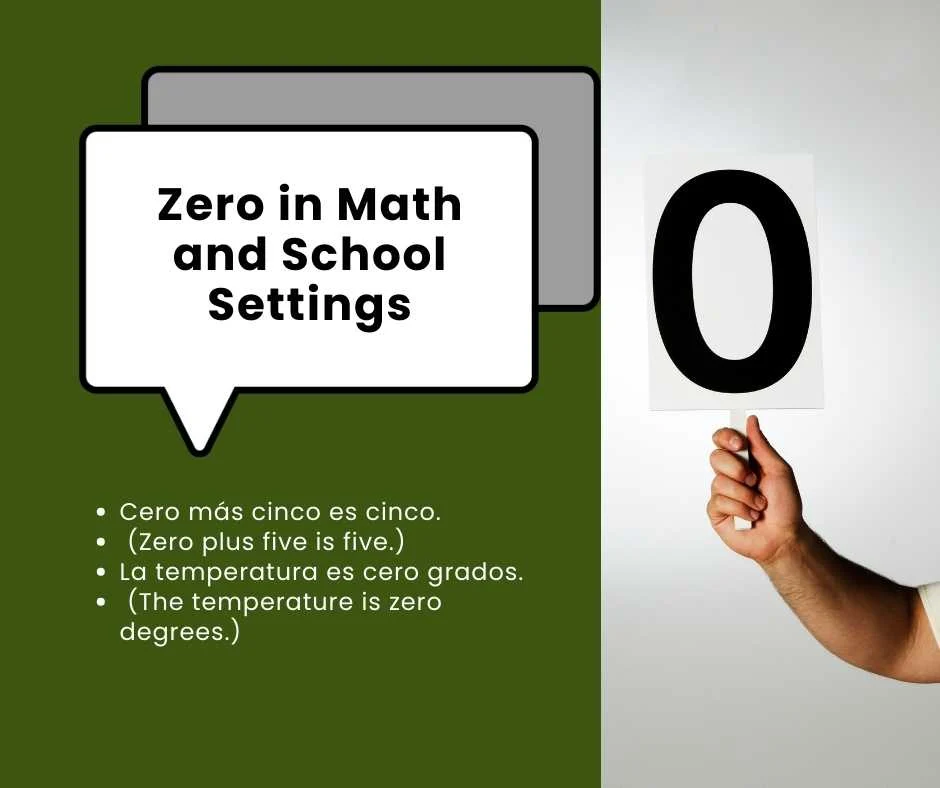
In math, science, and school discussions, cero is always used.
Examples:
- Cero más cinco es cinco.
(Zero plus five is five.) - La temperatura es cero grados.
(The temperature is zero degrees.)
Teachers and students use cero consistently.
Formal and Informal Usage Explained
One great thing about cero is that it does not change based on formality.
You can use it:
- With friends
- With teachers
- At work
- In public
It always stays the same.
Regional Usage Across Spanish-Speaking Countries
No matter where you go, cero is understood.
Countries where cero is standard:
- Spain
- Mexico
- Argentina
- Colombia
- Peru
- Chile
There are no slang alternatives commonly used for zero.
Common Beginner Mistakes to Avoid
When learning how to say zero in Spanish, beginners sometimes make small errors.
Avoid these:
- Pronouncing the “c” too hard
- Confusing cero with nada
- Skipping zero in numbers
- Using English “oh” instead of cero
Practicing full numbers helps fix these mistakes.
Zero in Counting and Number Sequences
In Spanish, counting usually starts with zero in math or technology.
Examples:
- Contamos desde cero.
(We count from zero.) - Página cero.
(Page zero.)
This is common in programming, lists, and instructions.
Using Zero in Real-Life Situations
At a Store
- Quedan cero unidades.
(There are zero units left.)
At Work
- Errores: cero.
(Errors: zero.)
With Friends
- Cero problemas.
(Zero problems.)
These phrases sound natural and fluent.
Zero in Expressions and Phrases
Spanish uses cero in fixed expressions.
Common examples:
- Cero interés (Zero interest)
- Cero tolerancia (Zero tolerance)
- Desde cero (From zero)
These phrases appear in daily conversations and media.
Teaching Zero to Kids or Beginners
Cero is one of the easiest Spanish words for learners.
Why it’s beginner-friendly:
- Short word
- Clear pronunciation
- Similar to English “zero”
- Used frequently
Teaching it early builds confidence.
Comparing English and Spanish Usage
English:
- Zero
- Oh (sometimes)
Spanish:
- Cero only
Spanish prefers clarity. That’s why cero is almost always spoken clearly.
Why Zero Is a Powerful Word
Even though zero means nothing, it carries a strong meaning.
- Zero mistakes
- Zero fear
- Zero limits
Spanish uses cero the same powerful way.
Building Confidence With Numbers
Learning how to say zero in Spanish helps you:
- Count smoothly
- Speak confidently
- Understand conversations
- Avoid misunderstandings
It’s a small word with a big role.
Frequently Asked Questions
How do you say zero in Spanish?
You say cero, which is the standard Spanish word for zero.
Is cero used in all Spanish-speaking countries?
Yes, cero is universally used and understood everywhere.
Is cero formal or informal?
It works in both formal and informal situations.
Can cero mean nothing?
No, cero means zero as a number. Nada means nothing.
Is cero easy for beginners to learn?
Yes, it’s short, clear, and similar to the English word zero.
Conclusion
Learning how to say zero in Spanish is a simple but powerful step in your language journey.
The word cero is easy to pronounce, widely used, and essential in daily conversations.
From numbers and scores to money and school, it appears everywhere.
Mastering it builds confidence and helps you speak Spanish naturally and clearly.
Also Check These Posts:
How to Say Shut Up in French Politely, Casually or Strongly in 2026
How to Say Cousin in Spanish | Master the Word for Every Family Conversation
How to Say Red in Spanish | Master This Common Word Today
How to Say I Like You in Japanese | Practical and Romantic Tips for 2026

Blake Kinslee
Hi! I’m Blake, a passionate writer who loves exploring the beauty of different languages and cultures through storytelling. Ever since I was young, I’ve been fascinated by how words can connect people across the world. Writing, for me, is not just a hobby—it’s a way to share ideas, emotions, and dreams with readers everywhere. When I’m not crafting stories, you’ll usually find me reading, traveling, or discovering new words in languages I’ve never spoken before. Every book I write is a journey, and I hope my readers feel that magic too.
Books:
-
Whispers Across Borders
-
The Language of Dreams