
Wondering how to say Wednesday in Spanish without hesitation?
Knowing the correct pronunciation can make your conversations smoother and help you sound more confident in Spanish.
In this guide, you’ll learn the proper way to say Wednesday and tips to remember it easily.
By the end, you’ll never get stuck when talking about the middle of the week in Spanish.
The Spanish Word for Wednesday
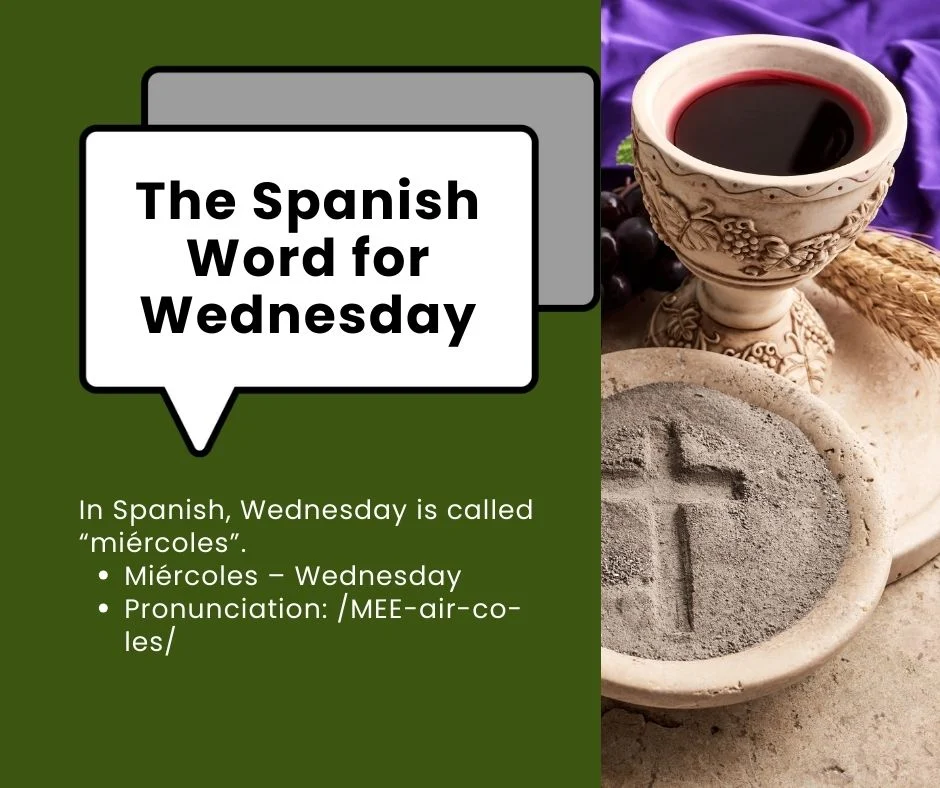
In Spanish, Wednesday is called “miércoles”.
- Miércoles – Wednesday
- Pronunciation: /MEE-air-co-les/
This word is used in all Spanish-speaking countries and is understood by anyone familiar with the language.
Learning the correct pronunciation helps you communicate effectively and sound more natural when speaking Spanish.
Why Knowing Wednesday Matters
Knowing the days of the week is crucial for planning your week, attending classes, or arranging appointments. For example:
- Tengo una reunión el miércoles. – I have a meeting on Wednesday.
- El miércoles vamos al cine. – On Wednesday, we are going to the movies.
By learning how to say Wednesday in Spanish, you can easily discuss your schedule and daily activities without confusion.
Days of the Week Overview
Here is a quick look at all the days of the week in Spanish:
- Monday – Lunes
- Tuesday – Martes
- Wednesday – Miércoles
- Thursday – Jueves
- Friday – Viernes
- Saturday – Sábado
- Sunday – Domingo
Understanding the sequence helps you talk about time, plan events, and understand schedules in Spanish-speaking environments.
Using Wednesday in Sentences
Learning a word is one thing, but using it in sentences makes it practical. Here are some examples of how to use miércoles naturally:
- Mi clase de español es los miércoles. – My Spanish class is on Wednesdays.
- El miércoles tengo cita con el médico. – I have a doctor’s appointment on Wednesday.
- Nos vemos el miércoles por la tarde. – We’ll see each other on Wednesday afternoon.
Notice how the article “el” is often used before the day of the week. This is a common rule in Spanish grammar.
Talking About Past and Future Wednesdays
To speak about past or future events, you can adjust your sentences like this:
- El miércoles pasado fui al parque. – Last Wednesday I went to the park.
- El próximo miércoles vamos a cenar fuera. – Next Wednesday we are going out for dinner.
Adding pasado (last) or próximo (next) makes your time references clear and helps avoid misunderstandings.
Abbreviations and Informal Usage
In calendars, schedules, or informal notes, Wednesday is often abbreviated as “Mié.”
- Mié 14 de abril – Wed, April 14
- Using abbreviations is common in digital messages, planners, and schedules.
Knowing these shortcuts can save time and help you read timetables, flyers, and social media posts in Spanish.
Pronunciation Tips
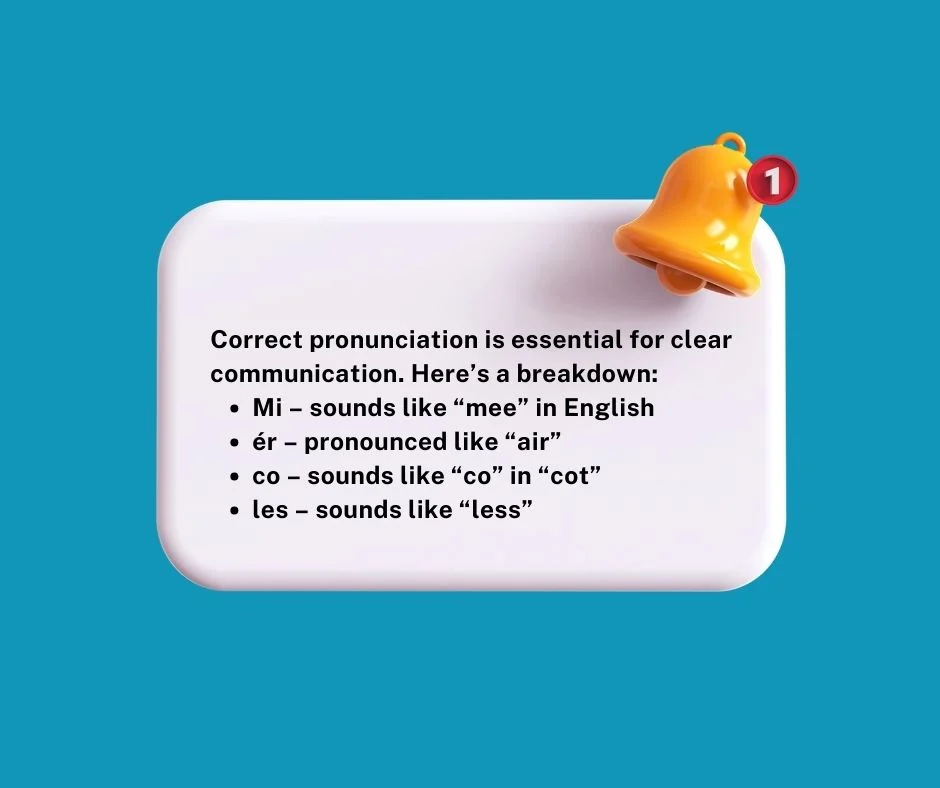
Correct pronunciation is essential for clear communication. Here’s a breakdown:
- Mi – sounds like “mee” in English
- ér – pronounced like “air”
- co – sounds like “co” in “cot”
- les – sounds like “less”
Stress is placed on the first syllable: MÍ-er-co-les. Practicing aloud will help you sound more confident in conversations.
Common Mistakes to Avoid
When learning how to say Wednesday in Spanish, beginners often make these mistakes:
- Mispronouncing the accented é as “ee” instead of “air.”
- Forgetting to use the article el before the day of the week.
- Confusing miércoles with other days that end in -es like martes (Tuesday).
By paying attention to pronunciation and grammar, you can avoid these errors and speak more naturally.
Talking About Activities on Wednesday
You can use Wednesday to plan daily routines, work, or leisure activities:
- Trabajo los miércoles de 9 a 5. – I work on Wednesdays from 9 to 5.
- Los miércoles juego al fútbol con mis amigos. – On Wednesdays, I play soccer with my friends.
- El miércoles vamos de compras. – We are going shopping on Wednesday.
These examples show practical ways to incorporate miércoles into your conversations.
Cultural Notes About Wednesday
In some Spanish-speaking countries, Wednesday is called “el ombligo de la semana”, which means “the belly button of the week”.
It reflects that Wednesday is the midpoint of the workweek, and people often use it to mark progress toward the weekend.
- Example: Hoy es miércoles, ¡ya casi es viernes! – Today is Wednesday, the weekend is almost here!
These expressions make learning days of the week more fun and culturally interesting.
Using Wednesday in Questions
Asking questions about days is common in daily life. Here are some examples with Wednesday:
- ¿Qué haces el miércoles? – What are you doing on Wednesday?
- ¿A qué hora empieza la reunión el miércoles? – What time does the meeting start on Wednesday?
- ¿Tienes clases el miércoles? – Do you have classes on Wednesday?
Practicing these questions helps you interact naturally and shows that you understand time-related vocabulary.
Talking About Frequency
You can also use miércoles to describe regular schedules or habits:
- Voy al gimnasio los miércoles. – I go to the gym on Wednesdays.
- Nos reunimos cada miércoles. – We meet every Wednesday.
- Cada miércoles cocino con mi familia. – Every Wednesday I cook with my family.
Using los before the day indicates repetition or habitual actions in Spanish.
Writing About Wednesday
When writing emails, texts, or notes, it’s important to use correct capitalization and spelling:
- El miércoles tenemos una reunión importante. – We have an important meeting on Wednesday.
- Recuerda que el miércoles es la fecha límite. – Remember that Wednesday is the deadline.
Unlike English, Spanish days of the week are not capitalized unless they start a sentence.
Using Wednesday in Travel Plans
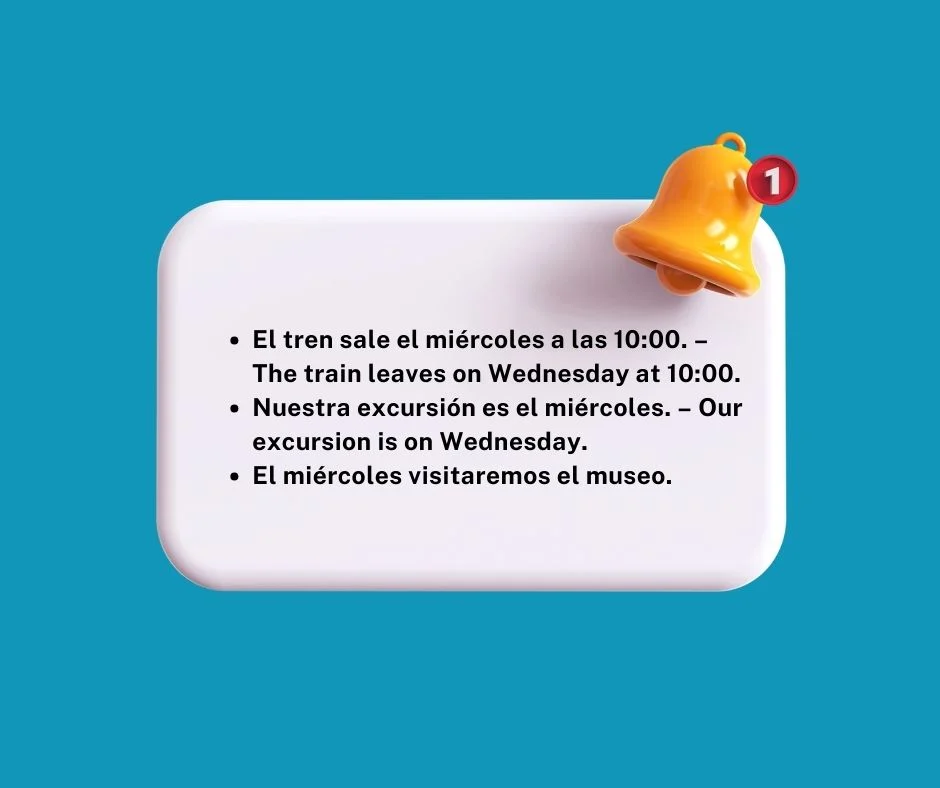
Knowing how to say Wednesday in Spanish is especially helpful while traveling:
- El tren sale el miércoles a las 10:00. – The train leaves on Wednesday at 10:00.
- Nuestra excursión es el miércoles. – Our excursion is on Wednesday.
- El miércoles visitaremos el museo. – On Wednesday, we will visit the museum.
This vocabulary ensures you can read schedules, plan trips, and communicate effectively while in Spanish-speaking countries.
Frequently Asked Questions (FAQs)
1. How do you say Wednesday in Spanish?
Wednesday in Spanish is miércoles, pronounced /MEE-air-co-les/.
2. Do I need to use an article before Wednesday?
Yes, in most sentences, you use el: el miércoles – on Wednesday.
3. How can I say last or next Wednesday?
Use el miércoles pasado (last Wednesday) or el próximo miércoles (next Wednesday).
4. Is there an abbreviation for Wednesday in Spanish?
Yes, Wednesday is commonly abbreviated as Mié. in calendars and schedules.
5. Can I use Wednesday in informal conversations?
Absolutely! You can simply say miércoles or el miércoles in casual talks to discuss plans or events.
Conclusion
Learning how to say Wednesday in Spanish is essential for speaking naturally, planning your week, and interacting in Spanish-speaking environments.
From using it in casual conversations to writing emails or reading schedules, miércoles is a word you will use frequently.
Practicing pronunciation, understanding grammar rules, and incorporating it into sentences will make you more confident and fluent.
Start using Wednesday in your daily Spanish conversations today and watch your skills improve!
Also Check These Posts:
How to Say Color in Spanish | Quick Guide
How to Say Hi in Mandarin | Tips for Learners in 2026
How to Say Thank You in Hindi | Your Complete Guide
How to Say Bacon in Spanish Like a Local

Daniel Carter
Hi, I’m Daniel Carter, a passionate storyteller and lifelong explorer of languages and cultures. Writing has always been my way of connecting with the world, sharing stories that inspire, educate, and entertain. I love diving into the nuances of communication and finding beauty in the words we use every day. Over the years, I’ve dedicated myself to crafting stories that resonate across borders and languages. When I’m not writing, you’ll usually find me exploring new places or learning something new about the world around me. My goal is to create stories that make readers think, smile, and sometimes even dream.
Books:
-
Whispers Across Borders
-
The Language of Hearts