
Are you curious about how to say red in Spanish and want to express yourself more vividly in this beautiful language?
Learning just one word can open doors to colors, emotions, and culture that make conversations more colorful and fun.
In this guide, you’ll discover not only the translation but also tips to use it naturally in everyday life.
By the end, saying “red” in Spanish will feel effortless and even a little exciting!
Basic Translation of Red in Spanish
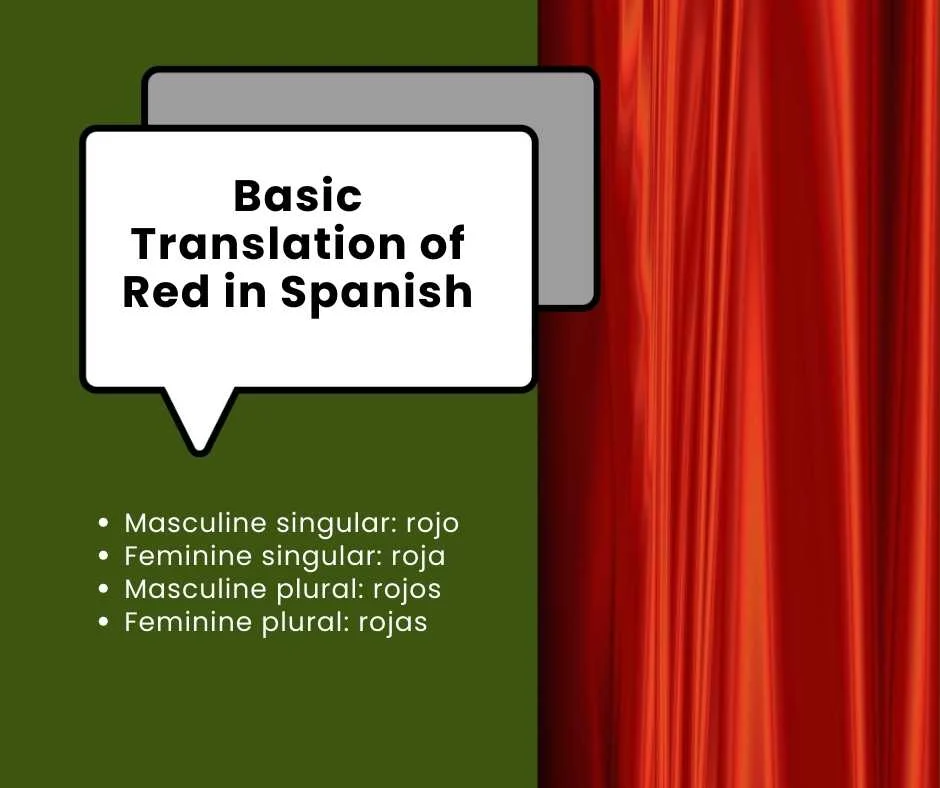
The most straightforward translation of red in Spanish is:
- Rojo
This is the masculine form. In Spanish, adjectives like colors must agree in gender and number with the noun they describe.
- Masculine singular: rojo
- Feminine singular: roja
- Masculine plural: rojos
- Feminine plural: rojas
Practical examples:
- “El coche es rojo.” → “The car is red.”
- “La flor es roja.” → “The flower is red.”
- “Los zapatos son rojos.” → “The shoes are red.”
- “Las manzanas son rojas.” → “The apples are red.”
Pronunciation Tips for Beginners
Correct pronunciation makes learning new words much easier.
- Rojo → “ROH-ho” (softly rolling the ‘r’ if possible)
- Rojos → “ROH-hos”
- Rojas → “ROH-has”
Tips:
- Emphasize the first syllable slightly.
- The “j” in Spanish sounds like an English “h,” not a “j.”
- Practice with everyday objects to remember better, like saying: “Mi lápiz es rojo” (My pencil is red).
Using Red in Different Contexts
Everyday Objects
You can use rojo to describe items in your daily life:
- Clothes: “Me gusta tu camiseta roja.” → “I like your red t-shirt.”
- Food: “Quiero la manzana roja.” → “I want the red apple.”
- Vehicles: “El coche rojo es rápido.” → “The red car is fast.”
Emotions and Symbolism
Red is not just a color; it often symbolizes emotions or concepts:
- Amor: “El corazón rojo representa el amor.” → “The red heart represents love.”
- Peligro: “Señal de peligro roja.” → “Red danger sign.”
- Pasión: “Ella siente pasión por la vida, como un rojo intenso.” → “She feels passion for life, like a deep red.”
Variations of Red in Spanish
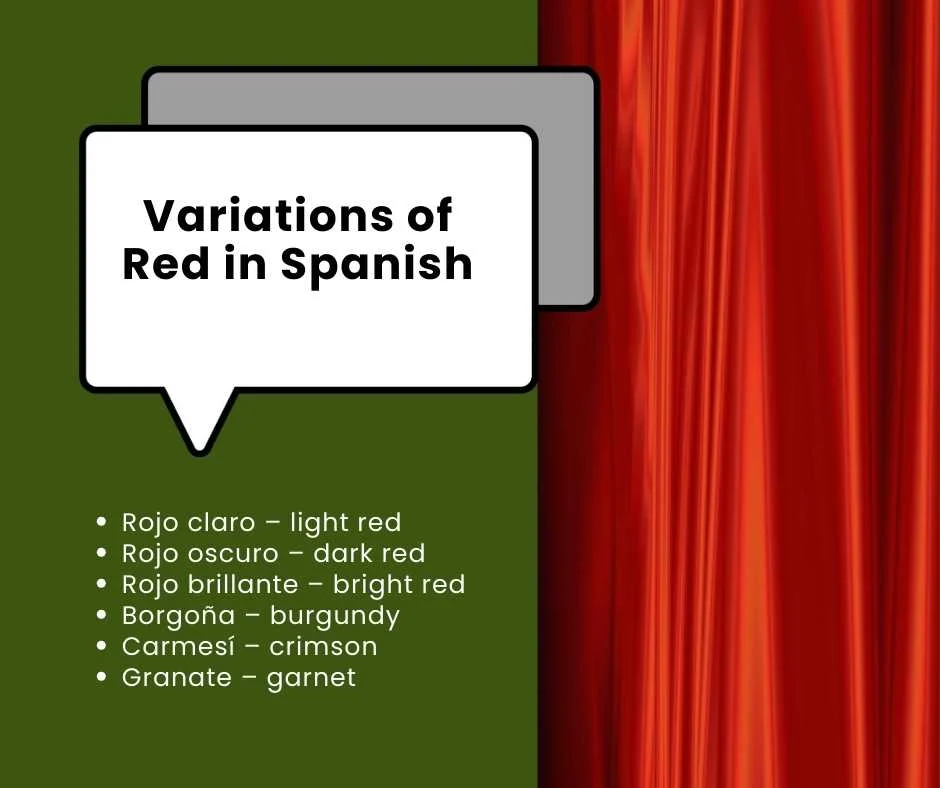
Spanish has multiple words and shades related to red, which can make your descriptions more vivid.
- Rojo claro – light red
- Rojo oscuro – dark red
- Rojo brillante – bright red
- Borgoña – burgundy
- Carmesí – crimson
- Granate – garnet
Examples in sentences:
- “Prefiero el rojo claro para la pared.” → “I prefer light red for the wall.”
- “El vestido rojo oscuro es elegante.” → “The dark red dress is elegant.”
- “Me gusta el granate para las cortinas.” → “I like garnet for the curtains.”
Using these variations makes your Spanish sound more natural and expressive, especially when discussing fashion, art, or decoration.
Combining Red with Nouns
Adjectives in Spanish generally come after the noun. This is important when describing things:
- La casa roja → “The red house”
- El coche rojo → “The red car”
- Las flores rojas → “The red flowers”
- Los zapatos rojos → “The red shoes”
Tip: If you want to emphasize the color, you can place it before the noun poetically:
- “Roja la flor, hermosa y brillante.” → “Red is the flower, beautiful and bright.”
Advanced Usage and Expressions
Using Red in Idioms
Spanish often uses rojo in idiomatic expressions:
- Ponerse rojo → “To blush”
- Verlo todo rojo → “To see everything as dangerous or alarming”
- Sangre roja → “Red blood” (used literally or symbolically)
Example sentences:
- “Me puse rojo cuando me felicitó.” → “I blushed when he congratulated me.”
- “Después del accidente, todo parecía rojo.” → “After the accident, everything seemed red.”
In Literature and Art
Red is frequently used in Spanish literature and descriptions:
- “El rojo del atardecer iluminaba el cielo.” → “The red of the sunset lit the sky.”
- “Sus labios rojos brillaban en la oscuridad.” → “Her red lips shone in the dark.”
Using red creatively in descriptions adds depth and emotion to your language.
Practical Examples for Beginners
Talking About Clothing
- “Me gusta tu chaqueta roja.” → “I like your red jacket.”
- “Ella compró un vestido rojo para la fiesta.” → “She bought a red dress for the party.”
Talking About Food
- “La manzana roja está madura.” → “The red apple is ripe.”
- “Prefiero el pimiento rojo al verde.” → “I prefer red pepper to green.”
Talking About Vehicles or Objects
- “El coche rojo es más rápido que el azul.” → “The red car is faster than the blue one.”
- “Los libros rojos están en la estantería superior.” → “The red books are on the top shelf.”
These examples show how to use rojo naturally in everyday conversations.
Tips for Remembering Red in Spanish
- Associate with objects: Remember red objects around you and say their Spanish names aloud.
- Visualize: Think of a red apple or a red car when saying rojo.
- Practice with sentences: Combine rojo with different nouns daily.
- Use in conversation: Try saying: “Mi lápiz es rojo” or “La camisa roja es bonita” with friends or teachers.
Frequently Asked Questions (FAQs)
1. Is rojo masculine or feminine?
- Rojo is masculine; roja is feminine. The ending changes depending on the noun.
2. Can I use rojo for everything that is red?
- Yes, but for more precision or shades, you can use terms like rojo oscuro (dark red) or carmesí (crimson).
3. How do I pronounce rojo correctly?
- Say it as “ROH-ho,” with the Spanish “j” sounding like an English “h.”
4. Can I use rojo in idioms?
- Absolutely! Common idioms include ponerse rojo (to blush) or verlo todo rojo (to see danger).
5. Are there regional differences in saying red?
- Rojo is universally understood across Spanish-speaking countries. Some variations exist in describing shades or poetic use, but the basic term remains the same.
Conclusion
Learning how to say red in Spanish is a simple but crucial step in building your Spanish vocabulary.
From basic objects to clothing, food, and vehicles, knowing rojo allows you to describe the world vividly.
By mastering masculine and feminine forms, learning shades, and using red in idioms or creative descriptions, you can speak Spanish naturally and confidently.
Incorporating red into daily conversations, sentences, and examples makes your learning practical, fun, and memorable.
Also Check These Posts:
How to Say I Love You in ASL | Learn the Gesture That Touches Hearts
How to Say Dad in Spanish | Master the Perfect Word for Your Father in 2026
How to Say Shit in Spanish | Funny, Useful and Real-Life Expressions for 2026
How to Say Cheers in Korean | Speak Like a Local at Parties and Gatherings

Daniel Carter
Hi, I’m Daniel Carter, a passionate storyteller and lifelong explorer of languages and cultures. Writing has always been my way of connecting with the world, sharing stories that inspire, educate, and entertain. I love diving into the nuances of communication and finding beauty in the words we use every day. Over the years, I’ve dedicated myself to crafting stories that resonate across borders and languages. When I’m not writing, you’ll usually find me exploring new places or learning something new about the world around me. My goal is to create stories that make readers think, smile, and sometimes even dream.
Books:
-
Whispers Across Borders
-
The Language of Hearts