
Every parent wants to hear that special word from their child, and knowing how to say Mommy in Spanish makes it even more meaningful.
If you’re teaching your little one, learning Spanish, or simply curious, this simple word carries love and warmth across languages.
In this article, you’ll discover the natural way to say Mommy in Spanish and tips to use it in everyday conversations.
Keep reading to make your Spanish learning both fun and heartfelt!
Why learning family words is important
Family words carry strong emotions. They are not just vocabulary.
They show love, respect, and connection.
When you learn how family terms are used in Spanish, you understand both the language and the culture better.
Learning how to say mommy in Spanish helps you:
- Talk about your family clearly
- Understand conversations and stories
- Speak with warmth and confidence
These small words make your Spanish feel real and personal.
The most common way children say mommy
Mamá as the standard word
The most common way to say mommy in Spanish is mamá.
- It is used by children and adults
- It sounds loving and respectful
- It is understood in all Spanish-speaking countries
Example:
- Mamá, te quiero
- Mi mamá está en casa
This word is natural, warm, and widely accepted.
Pronunciation and accent marks explained
Why the accent matters
The accent mark in mamá is very important. It changes pronunciation and meaning.
- Ma-má (stress on the second syllable)
- Without the accent, the word sounds incorrect
Correct pronunciation helps you sound natural and avoid confusion.
Informal and affectionate variations
Mami for closeness and affection
Mami is another popular way to say mommy in Spanish. It feels very loving and informal.
- Common with young children
- Used by adults in affectionate speech
- Popular in casual conversations
Example:
- Mami, ven aquí
- Gracias, mami
This word shows closeness and emotional warmth.
How mamá and mami feel different
Understanding emotional tone
Although both words mean mommy, they feel slightly different.
- Mamá feels neutral and respectful
- Mami feels playful and affectionate
Knowing the difference helps you choose the right word for the situation.
Regional and cultural usage
How different countries use these words
Spanish is spoken in many countries, and usage can vary slightly.
- Mamá is universal
- Mami is very common in Latin America
- Both are understood everywhere
No matter where you go, these words will be recognized.
Using mommy words in full sentences
Everyday sentence examples
Using the word in context helps you remember it better.
Examples:
- Mi mamá cocina muy bien
- Voy con mi mami al mercado
- Mamá trabaja mucho
These sentences show natural everyday use.
How adults refer to their mothers
Respectful and natural speech
Adults often use mi mamá when talking about their mother.
- It sounds polite and loving
- Common in conversations and writing
Example:
- Mi mamá vive cerca
- Llamé a mi mamá ayer
This is the safest and most natural option.
Talking to someone else’s mother
Showing respect in conversation
When speaking directly to someone’s mother, people usually avoid informal terms.
- Use her name
- Use señora when appropriate
Mamá and mami are usually personal and family-only words.
Teaching children how to say mommy in Spanish
Easy learning for kids
Children learn quickly through repetition and emotion.
Helpful tips:
- Say the word slowly
- Use it in daily routines
- Repeat it with actions
Words connected to love are often learned first.
Differences between mamá and madre
Formal versus emotional words
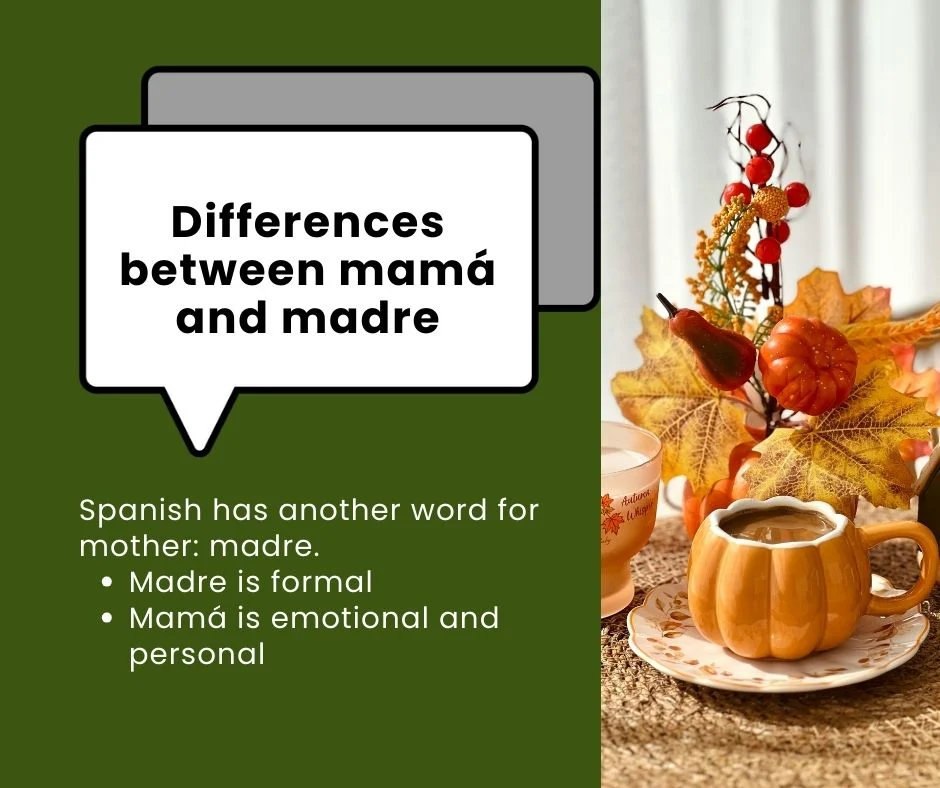
Spanish has another word for mother: madre.
- Madre is formal
- Mamá is emotional and personal
Example:
- Mi madre es doctora (formal)
- Mi mamá es muy cariñosa (emotional)
Understanding this difference improves fluency.
Using mommy words in writing
Cards, notes, and messages
When writing, accent marks are important.
- Always write mamá with the accent
- Mami does not need an accent
Correct spelling shows care and accuracy.
Common mistakes learners make
Errors to avoid
Beginners sometimes make small mistakes.
Common issues:
- Forgetting the accent in mamá
- Using mami in formal writing
- Mixing mamá and madre incorrectly
Practice helps avoid these errors.
How tone changes meaning
Voice and emotion matter
The same word can sound different based on tone.
- Soft tone shows love
- Loud tone can sound angry
Context and tone shape meaning in Spanish.
Using mommy words in questions
Natural question examples
Questions are common in daily speech.
Examples:
- ¿Dónde está mamá?
- ¿Mami viene hoy?
These feel natural and friendly.
Cultural importance of mothers in Spanish-speaking cultures
Why these words feel special
In many Spanish-speaking cultures, mothers are highly respected.
- Family bonds are strong
- Emotional language is common
- Words like mamá carry deep meaning
Understanding this adds cultural awareness.
Learning through songs and stories
Easy ways to remember the words
Songs and stories help memory.
- Children’s songs use mamá often
- Stories show emotional context
Listening improves pronunciation and understanding.
Using mommy words with possessives
Adding mi and tu
You can add possessive words easily.
Examples:
- Mi mamá
- Tu mami
This helps build longer sentences naturally.
Comparing Spanish and English usage
Similarities and differences
English:
- Mommy
- Mom
Spanish:
- Mamá
- Mami
Both languages use softer sounds for affection.
Why learning this word builds confidence
Small words, big impact
Learning how to say mommy in Spanish helps you:
- Speak with emotion
- Understand family conversations
- Feel closer to the language
It builds confidence early in learning.
Frequently Asked Questions
How do you say mommy in Spanish?
You say mommy in Spanish as mamá or mami, depending on the situation.
Is mamá formal or informal?
Mamá is neutral and natural, used by both children and adults.
What is the difference between mamá and mami?
Mamá is standard, while mami is more affectionate and informal.
Do all Spanish-speaking countries use mamá?
Yes, mamá is understood and used everywhere Spanish is spoken.
Why is the accent important in mamá?
The accent shows correct pronunciation and meaning in Spanish.
Conclusion
Learning how to say mommy in Spanish helps you express family relationships with warmth and respect.
Words like mamá and mami are simple but powerful. They appear in daily conversations, stories, and emotional moments.
By using them correctly, you sound more natural and connected.
Keep practicing, listen closely, and enjoy learning Spanish one meaningful word at a time.
Also Check These Posts:
How to Say 17 in Spanish Without Mistakes
Learn How to Say You’re Welcome in Italian and Impress Everyone
How to Say I Miss You Without Saying It | Real-Life Examples That Feel Genuine

Darcy Lynn
Darcy Lynn has always been fascinated by the colors and stories of life. Her journey with writing began in childhood, and today she takes readers into new worlds through her stories. For her, every word is a way to explore new experiences and emotions. Darcy loves exploring stories across different cultures and languages, which also reflects in her unique writing style. She believes that a good story touches every heart and sparks deeper thinking. Alongside writing, she enjoys connecting directly with her readers and understanding their feelings.
Books:
-
Whispers Across Worlds
-
Echoes of Tomorrow