
Knowing how to say lunch in Spanish can make your mealtime conversations more fun and meaningful.
If you’re ordering at a restaurant, chatting with friends, or learning the language, the right word helps you connect.
In this guide, you’ll discover simple tips to use it correctly in everyday situations.
By the end, you’ll feel confident talking about lunch in Spanish like a local.
Understanding the Basic Word
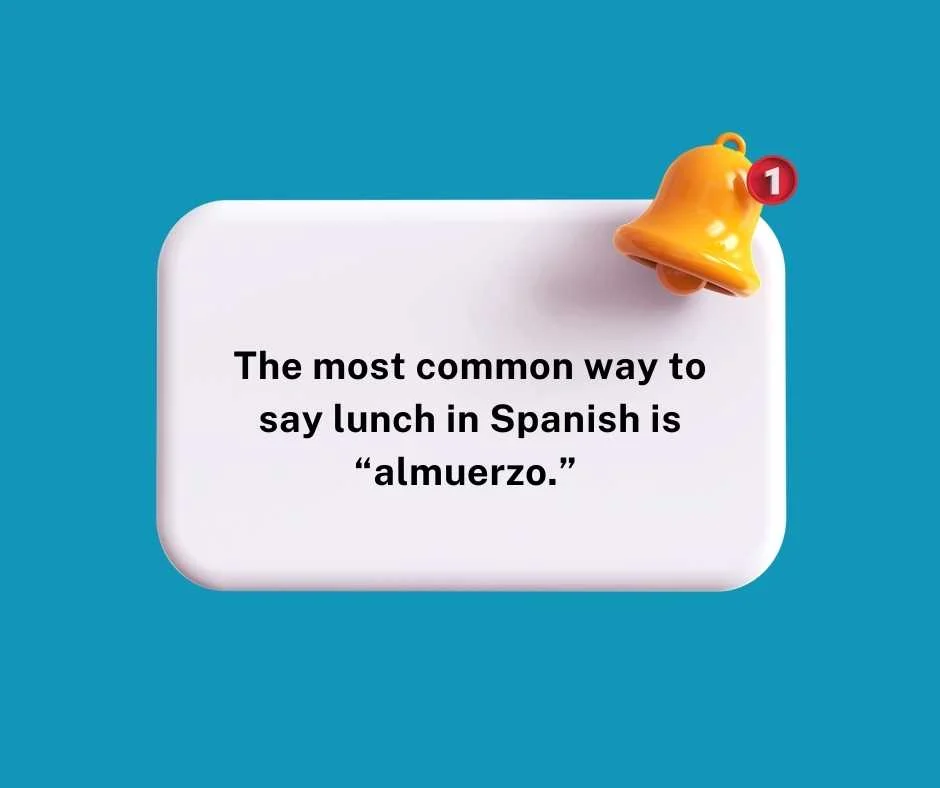
The most common way to say lunch in Spanish is “almuerzo.”
This word is widely used in many Spanish-speaking countries and refers specifically to the meal eaten around midday.
Pronunciation Tips
- Almuerzo is pronounced as ahl-mwer-soh.
- Stress the second syllable lightly: al-Muer-zo.
- Practice repeating it slowly at first, then in normal conversation.
Examples in Sentences
- “I am going to have lunch now.” → Voy a almorzar ahora.
- “Lunch is at 1 p.m.” → El almuerzo es a la 1 p.m.
- “Do you want to join us for lunch?” → ¿Quieres acompañarnos al almuerzo?
Using almuerzo correctly will help you communicate naturally with native speakers.
Other Ways to Talk About Lunch
In different Spanish-speaking countries, the word for lunch may vary or have informal alternatives.
Informal or Regional Terms
- Comida – Often used in Mexico and some parts of Latin America for the main meal of the day, typically lunch.
- Lonche – Informal, mostly in Mexico, influenced by English “lunch.”
- Merienda – In Spain, this usually refers to a light meal or snack in the afternoon, not the main lunch.
Practical Examples
- “What time is lunch?” → ¿A qué hora es la comida?
- “I packed my lunch today.” → Hoy llevé lonche.
- “We have a light lunch in the afternoon.” → Tomamos una merienda por la tarde.
Being aware of regional differences helps you avoid misunderstandings and sound more fluent.
Talking About Lunch Activities
Saying lunch is just the beginning. You can also talk about what you eat, where you eat, or when you eat.
Discussing What You Eat
- “I am eating a sandwich for lunch.” → Estoy comiendo un sándwich para el almuerzo.
- “Lunch includes soup and salad.” → El almuerzo incluye sopa y ensalada.
- “I want a vegetarian lunch.” → Quiero un almuerzo vegetariano.
Talking About Where You Eat
- “Let’s have lunch at the restaurant.” → Vamos a almorzar en el restaurante.
- “I eat lunch at home every day.” → Almuerzo en casa todos los días.
- “Lunch outside is refreshing.” → Almorzar afuera es refrescante.
Mentioning the Time
- “Lunch is usually at 12:30 p.m. in Spain.” → El almuerzo suele ser a las 12:30 p.m. en España.
- “We meet for lunch at 1 p.m.” → Nos encontramos para almorzar a la 1 p.m.
- “Lunch breaks are important at work.” → Los descansos para almorzar son importantes en el trabajo.
Adding context makes your conversation more natural and allows you to practice beyond single words.
Expressing Preferences and Habits
Talking about your lunch preferences or habits is common in daily conversation.
Examples of Preferences
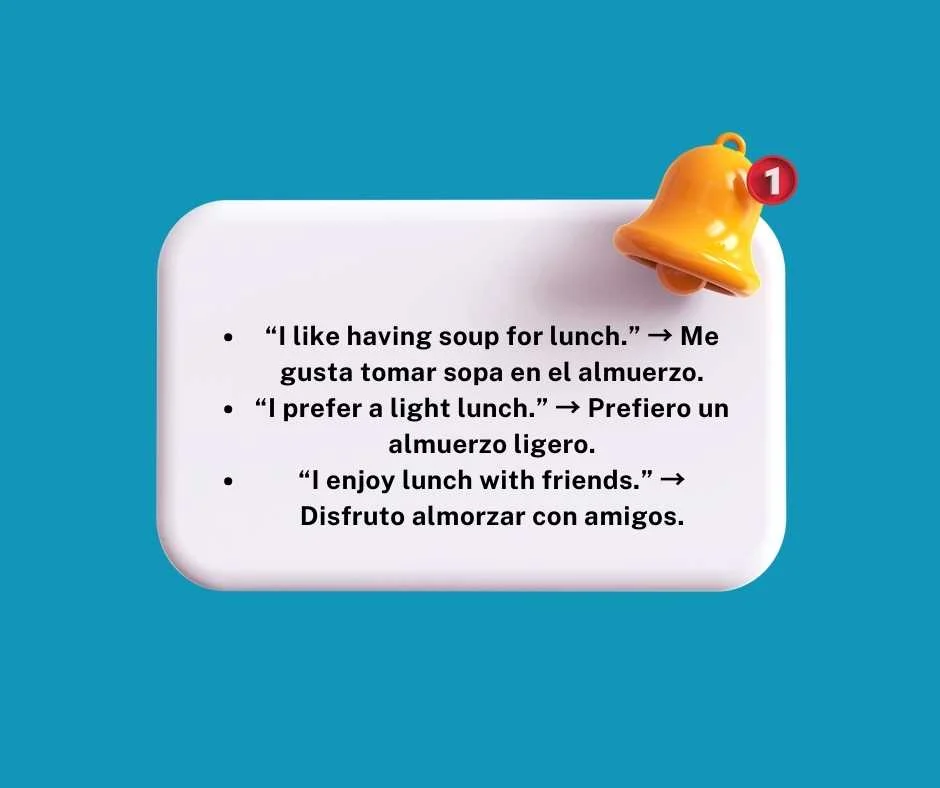
- “I like having soup for lunch.” → Me gusta tomar sopa en el almuerzo.
- “I prefer a light lunch.” → Prefiero un almuerzo ligero.
- “I enjoy lunch with friends.” → Disfruto almorzar con amigos.
Expressing Habits
- “I always have lunch at noon.” → Siempre almuerzo al mediodía.
- “We usually eat lunch together at work.” → Normalmente almorzamos juntos en el trabajo.
- “On weekends, lunch is longer.” → Los fines de semana, el almuerzo es más largo.
Understanding these phrases lets you discuss daily routines and food habits naturally.
Ordering Lunch in Restaurants
Knowing how to say lunch in Spanish is very useful when ordering food. Here’s how you can do it politely and efficiently.
Basic Phrases for Ordering
- “I would like lunch, please.” → Quisiera almorzar, por favor.
- “Do you have lunch specials?” → ¿Tienen menú de almuerzo?
- “I want the lunch menu.” → Quiero el menú de almuerzo.
- “Can I have a quick lunch?” → ¿Puedo almorzar rápido?
Asking About Food Options
- “What is included in lunch?” → ¿Qué incluye el almuerzo?
- “Are there vegetarian options for lunch?” → ¿Hay opciones vegetarianas para el almuerzo?
- “Can I have lunch without meat?” → ¿Puedo almorzar sin carne?
Practice Tips
- Listen to how locals pronounce words in menus.
- Repeat phrases out loud to build confidence.
- Combine gestures with words for better understanding.
Talking About Lunch Socially
Lunch is not only a meal but also a social activity. You can use the word in friendly and formal conversations.
Invitations
- “Do you want to have lunch together?” → ¿Quieres almorzar juntos?
- “Let’s meet for lunch tomorrow.” → Vamos a encontrarnos para almorzar mañana.
- “Lunch is more fun with friends.” → Almorzar es más divertido con amigos.
Compliments and Conversations
- “This lunch is delicious!” → ¡Este almuerzo está delicioso!
- “I love this restaurant for lunch.” → Me encanta este restaurante para almorzar.
- “Lunch with family is the best part of the day.” → Almorzar con la familia es lo mejor del día.
Using these phrases makes your conversations more engaging and natural.
Advanced Ways to Talk About Lunch
Once you know the basics, you can add more variety and nuance to your speech.
Describing Meals
- “A balanced lunch includes protein, vegetables, and carbs.” → Un almuerzo equilibrado incluye proteína, verduras y carbohidratos.
- “We had a traditional Spanish lunch with paella.” → Tuvimos un almuerzo tradicional español con paella.
- “Lunch is often a social event in Latin America.” → El almuerzo suele ser un evento social en Latinoamérica.
Talking About Cultural Differences
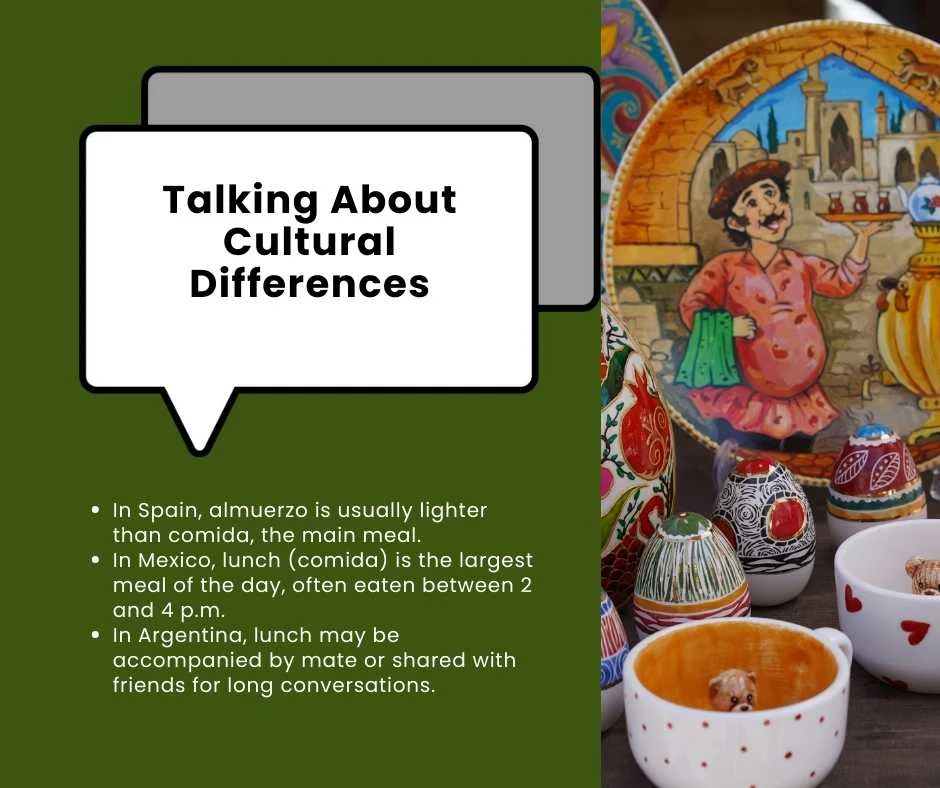
- In Spain, almuerzo is usually lighter than comida, the main meal.
- In Mexico, lunch (comida) is the largest meal of the day, often eaten between 2 and 4 p.m.
- In Argentina, lunch may be accompanied by mate or shared with friends for long conversations.
Learning these cultural aspects will help you communicate effectively and show cultural awareness.
Frequently Asked Questions
1. How do you say lunch in Spanish?
The most common word is almuerzo, but some regions also use comida or lonche.
2. Can lunch mean something different in Spain?
Yes. In Spain, almuerzo is a lighter midday meal, while comida is the main lunch.
3. How do I ask for lunch in a restaurant?
You can say: Quisiera almorzar, por favor or Quiero el menú de almuerzo.
4. Are there informal ways to say lunch?
Yes. Informal terms include lonche in Mexico and merienda in Spain for light meals or snacks.
5. Can I use “almuerzo” in casual conversation?
Absolutely. You can say things like Vamos a almorzar (Let’s have lunch) with friends or family.
Conclusion
Knowing how to say lunch in Spanish is a simple but valuable skill.
From ordering meals in a restaurant to chatting with friends about daily routines, this knowledge makes your communication smoother and more enjoyable.
Understanding regional differences and using polite, friendly expressions will help you connect with Spanish speakers naturally.
Lunch is more than a meal—it’s a cultural experience, and speaking about it correctly shows respect and curiosity for the language.
Also Check These Posts:
How to Say Happy New Year | Greetings Everyone Will Remember in 2026
How to Say Happy Father’s Day in Spanish | Make Your Dad Feel Special in 2026
How to Say Macaron | Impress Friends with Perfect French for 2026
How to Say Zero in Spanish | Speak Numbers Like a Pro in 2026

Ethan Moore
Ethan Moore is a passionate storyteller and language enthusiast who believes that words have the power to bridge cultures. Ever since he was young, Ethan has been fascinated by how languages shape our thoughts and connect people from different corners of the world. Through his writing, he explores the beauty of communication and the subtle nuances that make each language unique. When he’s not writing, Ethan enjoys traveling, learning new languages, and diving into different cultures. His goal is to inspire readers to embrace diversity and appreciate the richness of global expression.
Books:
-
Whispers Across Tongues
-
The Language of Dreams