

Are you curious about how to say Japanese in Japanese?
Learning the correct term can make your conversations more authentic and impress native speakers instantly.
Whether you’re traveling, studying the language, or just exploring Japanese culture, knowing this simple phrase is a must.
In this article, we’ll break it down clearly so you can use it confidently in any situation.
Saying “Japanese” for the Language
When referring to the Japanese language, the word you use changes depending on context and formality. Here are the basics:
The Basic Term
The most common word for the Japanese language is:
- にほんご (Nihongo)
- Pronunciation: nee-hon-go
- Meaning: Japanese language
- Pronunciation: nee-hon-go
This term is used in almost every situation, from textbooks and classrooms to casual conversation.
Example sentences:
- 私は日本語を勉強しています。
Watashi wa Nihongo o benkyou shiteimasu.
- I am studying Japanese.
- I am studying Japanese.
- 日本語が上手ですね。
Nihongo ga jouzu desu ne.
- Your Japanese is good.
- Your Japanese is good.
Formal vs. Informal Use
While にほんご (Nihongo) is standard, Japanese often relies on politeness levels:
- Formal situations: Add polite verbs like 勉強します (benkyou shimasu) or 話します (hanashimasu).
- Casual conversations: Friends might simply say 日本語できる? (Nihongo dekiru?) meaning “Can you speak Japanese?”
Advanced Tip: Talking About Dialects
Japanese has regional dialects. If you want to specify a dialect:
- 関西弁 (Kansaiben) – Kansai dialect
- 標準語 (Hyoujungo) – Standard Japanese
Example:
- 私は関西弁が話せます。
Watashi wa Kansaiben ga hanasemasu.
- I can speak the Kansai dialect.
- I can speak the Kansai dialect.
Saying “Japanese” for People
When referring to people from Japan, the term differs from the language word. Here’s what you need to know:
The Basic Term
- 日本人 (Nihonjin)
- Pronunciation: nee-hon-jin
- Meaning: Japanese person / people
- Pronunciation: nee-hon-jin
This term is polite and neutral, suitable for almost any situation.
Example sentences:
- 彼は日本人です。
Kare wa Nihonjin desu.
- He is Japanese.
- He is Japanese.
- 日本人は寿司が好きです。
Nihonjin wa sushi ga suki desu.
- Japanese people like sushi.
- Japanese people like sushi.
Gender and Plurality
- Japanese does not have gendered nouns for nationality. 日本人 works for both human beings.
- Plurality is implied through context. Adding たち (tachi) emphasizes a group:
- 日本人たち (Nihonjin-tachi) – Japanese people (plural emphasis)
- 日本人たち (Nihonjin-tachi) – Japanese people (plural emphasis)
Polite and Casual Variations
- Polite: Use 日本の方 (Nihon no kata), literally “person from Japan,” in formal or respectful contexts.
- Casual: Just 日本人 (Nihonjin) is common among friends or in informal speech.
Writing Japanese in Japanese
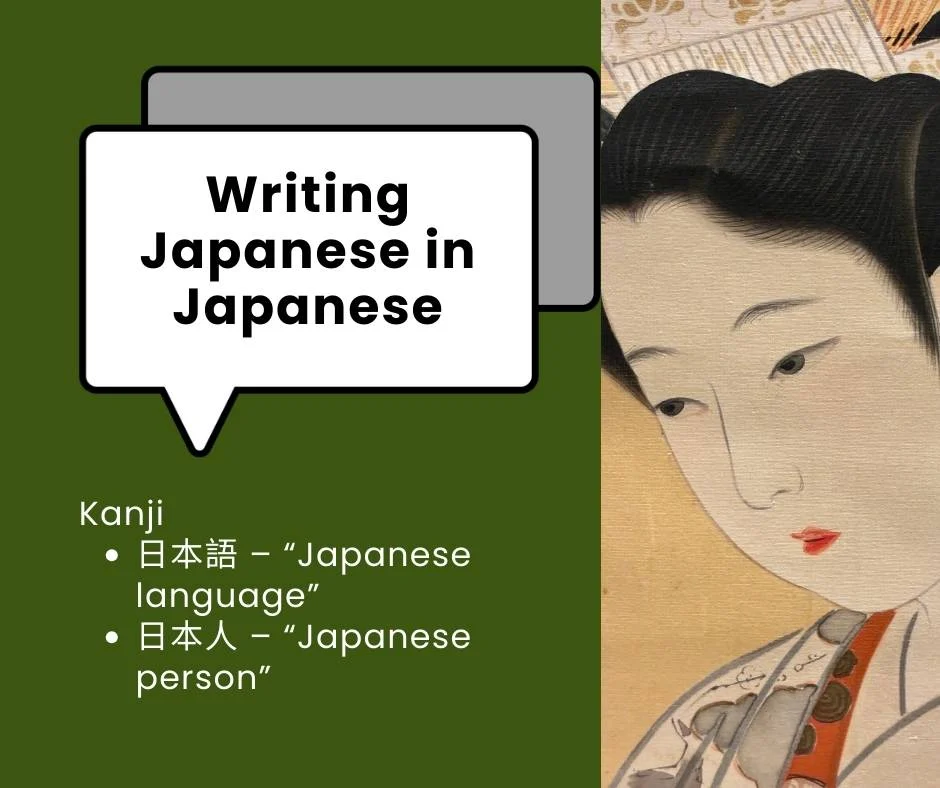
Writing systems in Japanese can be tricky because the language uses kanji, hiragana, and katakana. Understanding these helps you read and write Japanese properly.
Kanji
- 日本語 – “Japanese language”
- 日本人 – “Japanese person”
Kanji characters are logographic, meaning each character represents a meaning:
- 日 (ni / hi) – sun, day
- 本 (hon) – origin, book
- 語 (go) – language, word
- 人 (jin) – person
Hiragana
Hiragana is used for native Japanese words and grammar:
- にほんご = Nihongo
- にほんじん = Nihonjin
Hiragana is essential for beginners as it’s easier to read and write than kanji.
Katakana
Katakana is used for foreign words and loanwords:
- ニホンゴ = Nihongo
- ニホンジン = Nihonjin
Katakana is less common for daily language but useful for emphasis or stylistic purposes.
Practical Tip: When learning Japanese, practice all three scripts to understand signs, menus, and textbooks.
Pronunciation Tips
Japanese pronunciation can be straightforward but requires attention to vowels and syllables.
Vowel Sounds
- A – as in “car”
- I – as in “machine”
- U – as in “food” (short and clipped)
- E – as in “bed”
- O – as in “go”
Common Mistakes
- Avoid stressing syllables like in English; Japanese is rhythmical.
- Don’t add extra vowels at the end of words. For example: Nihongo is nee-hon-go, not nee-hon-goo.
Practice Sentences
- 日本語を話せますか?
Nihongo o hanasemasu ka?
- Can you speak Japanese?
- Can you speak Japanese?
- 私は日本人です。
Watashi wa Nihonjin desu.
- I am Japanese.
- I am Japanese.
Using Japanese in Real-Life Situations
Learning the word is only the start. Using it naturally is key.
Travel
- 空港で: “Where is the Japanese information desk?”
- 日本語の案内所はどこですか?
Nihongo no annaijo wa doko desu ka?
- 日本語の案内所はどこですか?
- ホテルで: “Can you speak Japanese?”
- 日本語を話せますか?
Nihongo o hanasemasu ka?
- 日本語を話せますか?
Study and Work
- Joining Japanese classes or language exchanges:
- 日本語クラスに参加したいです。
Nihongo kurasu ni sanka shitai desu.
- I want to join a Japanese class.
- I want to join a Japanese class.
- 日本語クラスに参加したいです。
- Business emails or introductions:
- 私は日本語を勉強しています。
Watashi wa Nihongo o benkyou shiteimasu.
- I am studying Japanese.
- I am studying Japanese.
- 私は日本語を勉強しています。
Social Media and Online
- Posting your language skills:
- 日本語勉強中!
Nihongo benkyou-chuu!
- Studying Japanese!
- Studying Japanese!
- 日本語勉強中!
- Commenting on Japanese content:
- 日本語が上手ですね!
Nihongo ga jouzu desu ne!
- Your Japanese is good!
- Your Japanese is good!
- 日本語が上手ですね!
Cultural Nuances
Understanding the language also involves cultural awareness:
- Politeness: Using です / ます forms shows respect.
- Indirect speech: Japanese people often speak indirectly.
- National pride: Referring to the language or people respectfully is appreciated.
- Context matters: Using 日本人 casually with strangers is fine, but in formal settings, 日本の方 is safer.
By knowing the subtle differences, your communication will feel natural and considerate.
Learning Strategies for Beginners
Here are practical ways to remember how to say Japanese in Japanese:
- Flashcards: Include kanji, hiragana, and pronunciation.
- Language apps: Repeat words aloud to train your accent.
- Practice with friends: Try simple sentences using 日本語 and 日本人.
- Watch Japanese media: Listen to pronunciation in context.
- Label your environment: Write labels in Japanese to reinforce memory.
Frequently Asked Questions (FAQs)
1. How do you say “Japanese” in Japanese?
- For the language, say にほんご (Nihongo). For a person, say 日本人 (Nihonjin).
2. Can I use “Nihongo” when talking to Japanese people?
- Yes, it’s the standard term for the language and widely understood.
3. Is “Nihonjin” polite?
- Yes, but in formal situations, you can say 日本の方 (Nihon no kata) to be extra respectful.
4. How do I write Japanese words?
- Use kanji, hiragana, or katakana. Beginners often start with hiragana.
5. Are there regional differences?
- Yes, dialects like 関西弁 (Kansaiben) exist, but 標準語 (Hyoujungo) is universally understood.
Conclusion
Knowing how to say Japanese in Japanese is a fundamental step for anyone learning the language or engaging with Japanese culture.
Whether you use にほんご (Nihongo) for the language or 日本人 (Nihonjin) for people, understanding context, pronunciation, and cultural nuances will help you communicate confidently.
With consistent practice and attention to detail, you’ll be ready to use these terms naturally in everyday conversation.
Also Check These Posts:
How to Say Again in Spanish | Correct Usage & Pronunciation
How to Say What in Sign Language | Tips, Tricks and Examples in 2026
How to Say Good Afternoon in Italian | Formal and Informal Ways Explained

Blake Kinslee
Hi! I’m Blake, a passionate writer who loves exploring the beauty of different languages and cultures through storytelling. Ever since I was young, I’ve been fascinated by how words can connect people across the world. Writing, for me, is not just a hobby—it’s a way to share ideas, emotions, and dreams with readers everywhere. When I’m not crafting stories, you’ll usually find me reading, traveling, or discovering new words in languages I’ve never spoken before. Every book I write is a journey, and I hope my readers feel that magic too.
Books:
-
Whispers Across Borders
-
The Language of Dreams