

Want to make a great first impression with Chinese speakers? Knowing how to say hi in Mandarin is the perfect place to start.
A simple greeting can break the ice and show respect in any conversation.
In this guide, you’ll learn the most common and natural ways to say hi in Mandarin, whether formal or casual.
The most common way people say hi in Mandarin
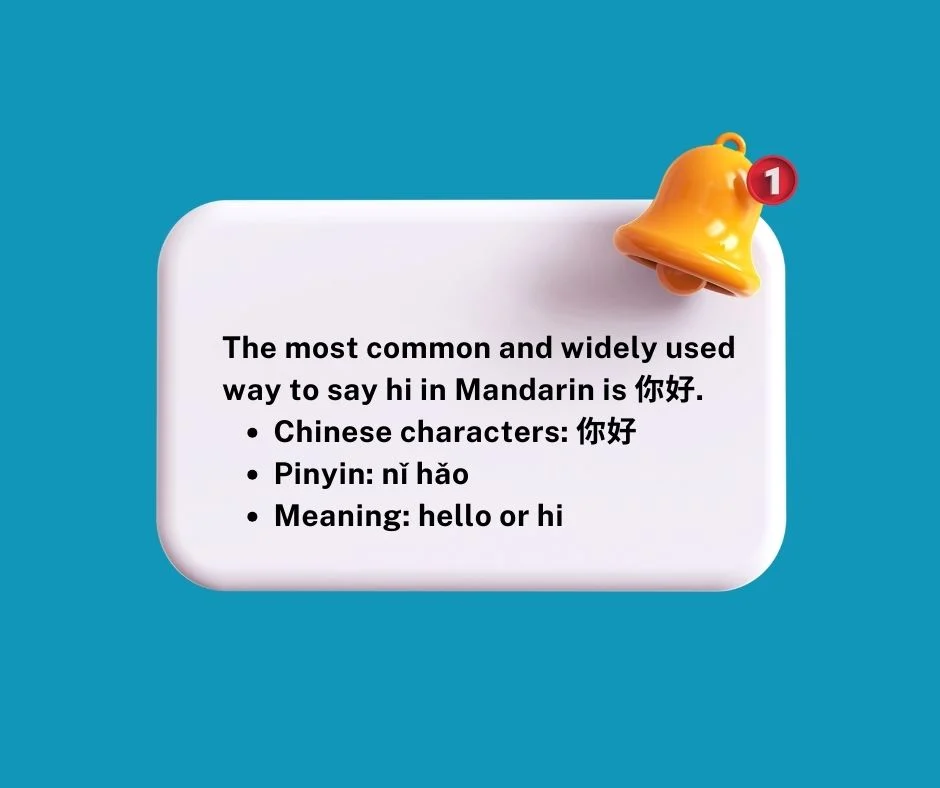
The most common and widely used way to say hi in Mandarin is 你好.
- Chinese characters: 你好
- Pinyin: nǐ hǎo
- Meaning: hello or hi
This greeting is simple, polite, and safe to use in almost any situation. Beginners can confidently use 你好 when meeting strangers, classmates, teachers, or coworkers.
Understanding how 你好 is formed
Mandarin words often have clear meanings when broken down.
- 你 means you
- 好 means good
Together, 你好 literally means “you good,” which works like saying “hello” in English.
Even though it sounds different from English, it feels very natural in Mandarin conversations.
Pronunciation tips for beginners
Mandarin is a tonal language, which means tone matters. Do not worry about being perfect at first, but try to practice carefully.
Helpful pronunciation tips:
- nǐ uses a falling-rising tone
- hǎo also uses a falling-rising tone
- Say the words smoothly together
With practice, your pronunciation will improve naturally.
A more polite way to say hi
When speaking to elders, teachers, or people you want to show extra respect to, you can say 您好.
- Chinese characters: 您好
- Pinyin: nín hǎo
The word 您 is a respectful form of “you.” This greeting sounds polite and professional and is often used in formal situations.
Casual ways people say hi in daily life
In everyday conversations, Mandarin speakers often use more relaxed greetings.
Common casual greetings include:
- 你好啊
- 哈喽
- 嗨
These greetings feel friendly and informal, especially among friends or people of the same age.
Saying hi based on the time of day
Mandarin also has greetings related to the time of day.
Morning greetings:
- 早
- 早上好
Afternoon greetings:
- 下午好
Evening greetings:
- 晚上好
These greetings show awareness and politeness in daily interactions.
Using hi in Mandarin in real conversations
Knowing how to say hi in Mandarin becomes more useful when you see it in real situations.
Example:
- A: 你好
- B: 你好
This simple exchange is very common and works in most settings.
Another example:
- A: 您好
- B: 您好
This shows mutual respect.
Saying hi when meeting friends
With friends or classmates, greetings sound more relaxed.
Examples:
- 你好啊
- 嗨
These greetings often come with a smile and casual tone.
Saying hi on the phone or online
When answering the phone or starting a chat, Mandarin speakers often say:
- 喂
This is similar to saying “hello” on the phone in English.
For online chats:
- 你好
- 嗨
Both are commonly used and widely understood.
Cultural importance of greetings in Mandarin
In Chinese culture, greetings are not just words. They show respect, awareness, and social connection.
Important cultural points:
- Politeness is highly valued
- Tone and body language matter
- Greetings help start conversations smoothly
Learning how to say hi in Mandarin helps you understand culture, not just language.
Greeting people you already know
When greeting someone you know well, Mandarin speakers often ask short questions instead of saying hello directly.
Common examples:
- 你好吗
- 吃了吗
These phrases are friendly and show interest, not literal questions.
Greeting elders and authority figures
Respect is very important when greeting elders.
Better choices include:
- 您好
- 早上好
Using respectful language creates a positive impression.
Greeting people in professional settings
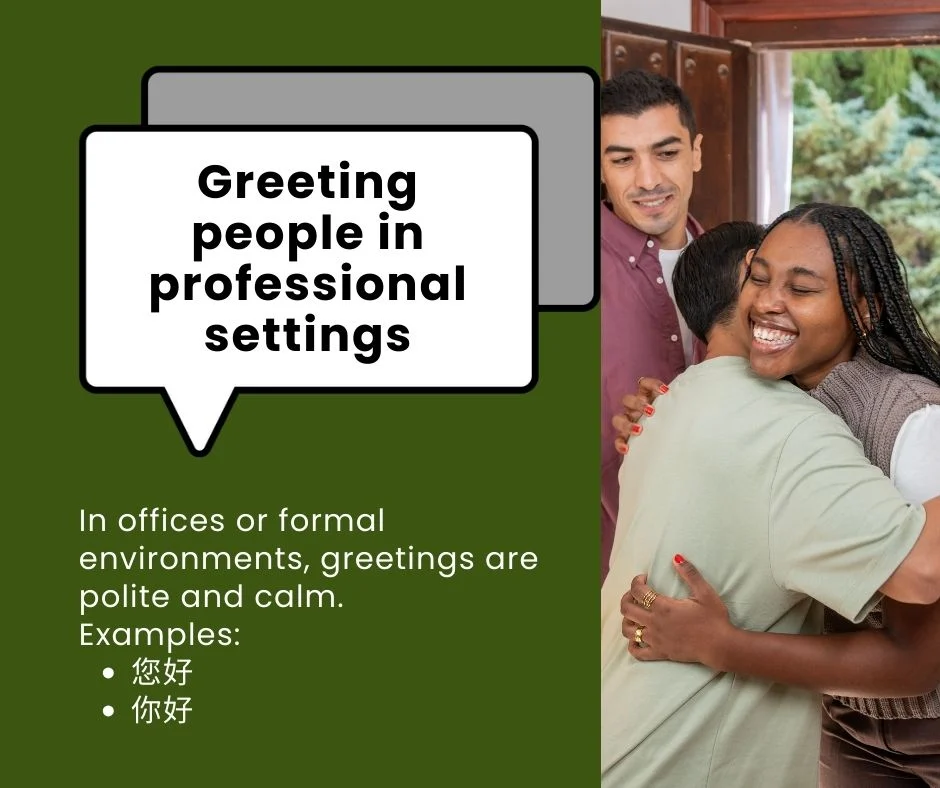
In offices or formal environments, greetings are polite and calm.
Examples:
- 您好
- 你好
Often followed by a title or name.
Common mistakes beginners make
When learning how to say hi in Mandarin, beginners often make small mistakes.
Mistakes to avoid:
- Ignoring tones completely
- Using casual greetings in formal settings
- Speaking too fast
Slow and clear speech is always better.
Comparing Mandarin greetings with English greetings
In English, “hi” works almost everywhere.
In Mandarin:
- Different greetings suit different situations
- Respect level matters
- Tone and context are important
This makes Mandarin greetings richer and more expressive.
Learning tips to remember Mandarin greetings
Simple ways to practice:
- Say 你好 daily
- Practice with native speakers
- Watch Chinese shows
- Use greetings in real conversations
Consistency builds confidence.
Greeting habits in China and other regions
Mandarin is spoken in many regions, and greeting habits may vary slightly.
General habits:
- Friendly nod or smile
- Polite tone
- Short greetings
Your effort will always be appreciated.
Greeting children and young people
With children or younger people, greetings are often playful.
Examples:
- 你好
- 嗨
Tone is more relaxed and friendly.
Greeting strangers politely
When speaking to strangers, politeness is key.
Best options:
- 你好
- 您好
These greetings are safe and respectful.
Using hi in Mandarin while traveling
If you travel to China or Mandarin-speaking areas, greetings help you connect quickly.
Benefits include:
- Friendly responses
- Better service
- Positive interactions
Even simple greetings can open conversations.
Greeting in Mandarin at school
Students often greet teachers politely.
Examples:
- 老师好
- 您好
This shows respect and good manners.
Greeting in Mandarin at work
In the workplace, greetings help build professional relationships.
Examples:
- 您好
- 早上好
These greetings sound polite and professional.
Body language while saying hi
Words are important, but body language matters too.
Helpful tips:
- Smile naturally
- Maintain gentle eye contact
- Keep a calm posture
These actions support your greeting.
Practicing simple greeting sentences
Practice saying these sentences aloud:
- 你好
- 您好
- 你好啊
- 早上好
Repeating daily improves fluency.
Greeting styles in modern Mandarin
Modern Mandarin includes loanwords and casual styles.
Examples:
- 哈喽
- 嗨
These are common among younger speakers.
Using greetings to start conversations

After saying hi, you can continue the conversation.
Example:
- 你好,你好吗
This feels friendly and natural.
Frequently Asked Questions
How do you say hi in Mandarin
The most common way is 你好, pronounced nǐ hǎo.
Is 你好 formal or casual
你好 works in both casual and polite situations.
What is the polite way to say hi in Mandarin
The polite form is 您好, pronounced nín hǎo.
Can I use hi in Mandarin with friends
Yes, you can say 你好啊, 嗨, or 哈喽 with friends.
Is learning how to say hi in Mandarin important
Yes, it helps you start conversations politely and confidently.
Conclusion
Learning how to say hi in Mandarin is a simple but powerful step in mastering the language.
Greetings like 你好 and 您好 help you sound polite, friendly, and culturally aware.
With regular practice and the right tone, you can confidently greet people in many situations.
Keep practicing, stay curious, and enjoy your Mandarin learning journey.
Also Check These Posts:
How to Say Thank You in Hindi: Your Complete Guide
How to Say Bacon in Spanish Like a Local
How to Say Happy New Year in Vietnamese Like a Native in 2026

Ethan Moore
Ethan Moore is a passionate storyteller and language enthusiast who believes that words have the power to bridge cultures. Ever since he was young, Ethan has been fascinated by how languages shape our thoughts and connect people from different corners of the world. Through his writing, he explores the beauty of communication and the subtle nuances that make each language unique. When he’s not writing, Ethan enjoys traveling, learning new languages, and diving into different cultures. His goal is to inspire readers to embrace diversity and appreciate the richness of global expression.
Books:
-
Whispers Across Tongues
-
The Language of Dreams