

Thanksgiving is a time to share gratitude and warm wishes, and knowing how to say Happy Thanksgiving in different ways can make your greetings extra special.
If you’re speaking to friends, family, or colleagues, using the right phrase adds a personal touch.
In this article, you’ll learn the simple and natural ways to say Happy Thanksgiving, so you can spread joy and appreciation with ease.
Keep reading to make your Thanksgiving greetings truly memorable!
Why Thanksgiving greetings matter
Thanksgiving is a special time focused on gratitude, togetherness, and appreciation.
The words you choose can make people feel valued and included.
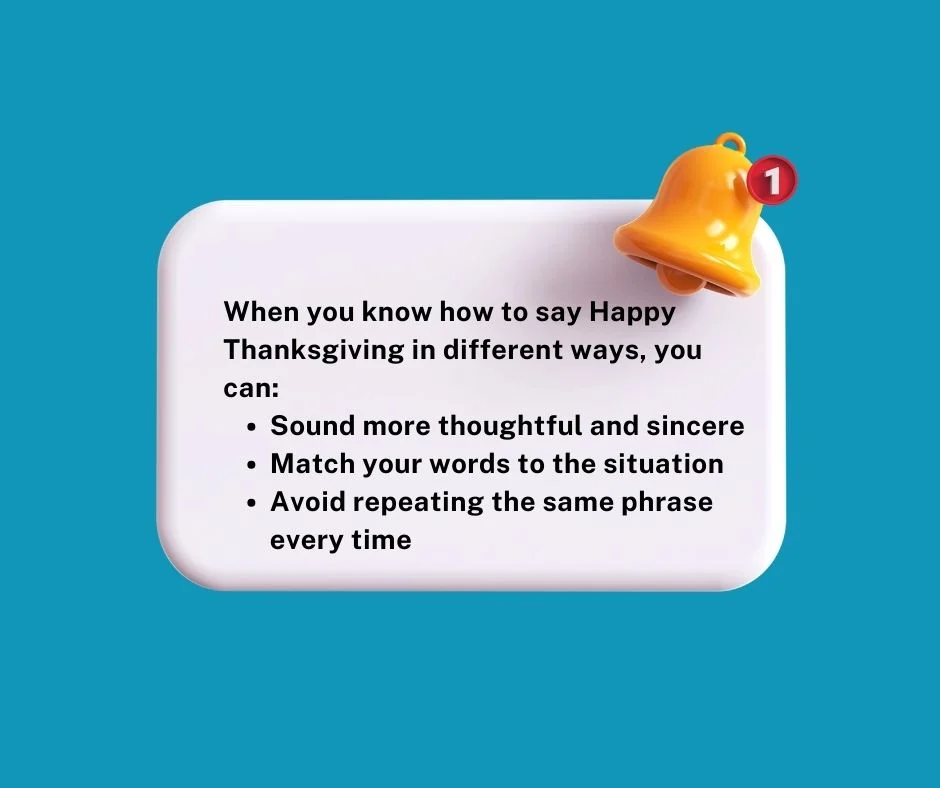
When you know how to say Happy Thanksgiving in different ways, you can:
- Sound more thoughtful and sincere
- Match your words to the situation
- Avoid repeating the same phrase every time
A small change in wording can make your message feel more personal and meaningful.
The classic and most common greeting
Happy Thanksgiving in everyday use
The most direct and widely used phrase is Happy Thanksgiving. It is simple, clear, and always appropriate.
You can use it:
- In person
- In text messages
- In emails
- On cards and social media
Example:
- “Happy Thanksgiving! I hope you have a wonderful day.”
This phrase works for almost everyone and is perfect for beginners.
Adding warmth and kindness to the greeting
Making the message more personal
You can make the greeting warmer by adding a short wish.
Examples:
- “Happy Thanksgiving! I hope you enjoy time with your family.”
- “Happy Thanksgiving! Wishing you a day full of joy and good food.”
These small additions show care and effort without being complicated.
Friendly and casual ways to say it
Relaxed greetings for friends and peers
With friends, classmates, or people you know well, a casual tone feels natural.
Examples:
- “Happy Thanksgiving to you and your family!”
- “Hope you’re having a happy Thanksgiving!”
These sound friendly and comfortable, perfect for everyday conversations.
Polite and respectful greetings
Suitable words for elders and formal settings
When speaking to teachers, elders, or colleagues, politeness matters.
Examples:
- “Wishing you a very Happy Thanksgiving.”
- “Warm wishes for a Happy Thanksgiving.”
These phrases sound respectful while still being friendly.
Expressing gratitude along with the greeting
Combining thanks and Thanksgiving wishes
Thanksgiving is about gratitude, so adding appreciation feels natural.
Examples:
- “Happy Thanksgiving, and thank you for everything you do.”
- “Wishing you a Happy Thanksgiving. I’m grateful for your support.”
This makes the greeting more meaningful and thoughtful.
Using Happy Thanksgiving in written messages
Cards, emails, and notes
Written greetings often feel more special because they last longer.
Examples:
- “Happy Thanksgiving! May your day be filled with warmth and happiness.”
- “Sending you Happy Thanksgiving wishes and gratitude.”
Short, kind sentences work best.
Saying Happy Thanksgiving at work
Professional and friendly balance
In workplaces, greetings should be polite but not too personal.
Examples:
- “Happy Thanksgiving. Wishing you a restful holiday.”
- “Best wishes for a Happy Thanksgiving.”
These keep a professional tone while still being warm.
Saying Happy Thanksgiving to students and teachers
Simple and encouraging language
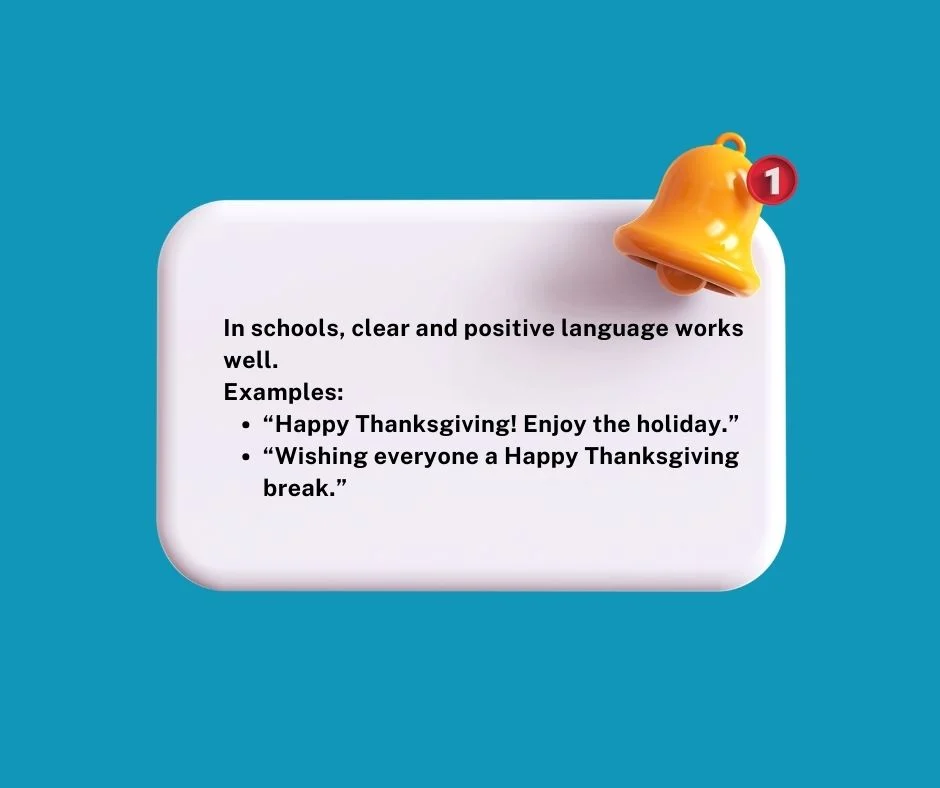
In schools, clear and positive language works well.
Examples:
- “Happy Thanksgiving! Enjoy the holiday.”
- “Wishing everyone a Happy Thanksgiving break.”
These messages feel inclusive and kind.
Using Happy Thanksgiving in social media posts
Short and cheerful expressions
Social media greetings are often brief and friendly.
Examples:
- “Happy Thanksgiving everyone!”
- “Wishing you all a Happy Thanksgiving filled with gratitude.”
These messages are easy to read and share.
Expressing Happy Thanksgiving to family
Warm and loving words
Family greetings can be more emotional and personal.
Examples:
- “Happy Thanksgiving! I’m so thankful for our family.”
- “Wishing you a Happy Thanksgiving with love.”
These words strengthen emotional bonds.
Saying Happy Thanksgiving to someone far away
Thoughtful messages across distance
Distance should not stop you from sharing warmth.
Examples:
- “Happy Thanksgiving! Thinking of you today.”
- “Wishing you a Happy Thanksgiving, even from afar.”
These messages show care and connection.
Cultural understanding of Thanksgiving greetings
Why wording matters
Thanksgiving is mainly celebrated in the United States and Canada. Some people may not celebrate it.
In such cases:
- Keep greetings polite
- Avoid assumptions
- Use inclusive language
Example:
- “Wishing you a peaceful Thanksgiving season.”
This respects different backgrounds.
Avoiding common greeting mistakes
What to keep in mind
Some mistakes can make greetings feel awkward.
Avoid:
- Being too long or dramatic
- Forcing humor in formal settings
- Using overly personal words at work
Simple, kind language is always safest.
Adding gratitude without sounding repetitive
Keeping messages fresh
Instead of repeating the same words, you can change the structure.
Examples:
- “May this Thanksgiving bring you peace and happiness.”
- “Sending warm Thanksgiving wishes your way.”
These variations keep messages interesting.
Teaching children how to say Happy Thanksgiving
Simple phrases for young learners
Children learn best with clear and short sentences.
Examples:
- “Happy Thanksgiving!”
- “Happy Thanksgiving to you!”
These are easy to remember and polite.
Using Happy Thanksgiving in conversations
Natural spoken examples
In spoken English, tone matters as much as words.
Examples:
- “Oh, Happy Thanksgiving! Enjoy your day.”
- “Happy Thanksgiving! Safe travels.”
A smile makes the greeting even better.
How tone changes meaning
Friendly versus formal tone
The same words can feel different depending on tone.
Friendly tone:
- Relaxed voice
- Smile
Formal tone:
- Calm voice
- Polite expression
Understanding this helps you communicate better.
Why learning different greetings is useful
Building communication skills
Knowing how to say Happy Thanksgiving in different ways helps you:
- Sound more fluent
- Adjust to situations
- Show emotional awareness
This is especially helpful for students and English learners.
Thanksgiving greetings in everyday English learning
Practical language skill
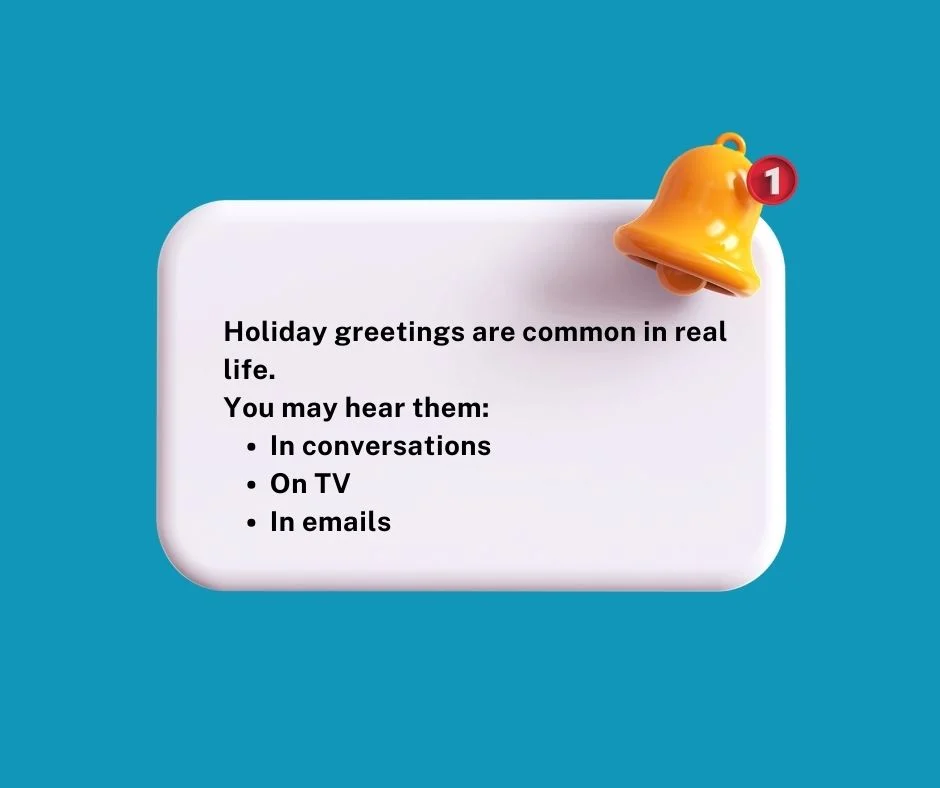
Holiday greetings are common in real life.
You may hear them:
- In conversations
- On TV
- In emails
Learning them improves listening and speaking skills.
Frequently Asked Questions
What is the most common way to say Happy Thanksgiving?
The most common and correct way is simply saying Happy Thanksgiving.
Can I say Happy Thanksgiving in a formal email?
Yes, you can say “Wishing you a Happy Thanksgiving” in formal emails.
Is it okay to say Happy Thanksgiving to everyone?
Yes, but be polite and respectful, especially with people from different cultures.
How do I say Happy Thanksgiving to friends?
You can say “Happy Thanksgiving!” or “Hope you’re having a Happy Thanksgiving!”
Why is learning how to say Happy Thanksgiving important?
Learning how to say Happy Thanksgiving helps you communicate politely and share gratitude during the holiday.
Conclusion
Knowing how to say Happy Thanksgiving allows you to share kindness, gratitude, and warmth in a natural way.
From simple greetings to thoughtful messages, each expression helps build connection.
Whether you speak to family, friends, or colleagues, choosing the right words makes your message meaningful.
Keep it simple, sincere, and friendly, and your Thanksgiving wishes will always feel right.
Also Check These Posts:
How to Say 17 in Spanish Without Mistakes
Learn How to Say You’re Welcome in Italian and Impress Everyone
How to Say I Miss You Without Saying It | Real-Life Examples That Feel Genuine

Ethan Moore
Ethan Moore is a passionate storyteller and language enthusiast who believes that words have the power to bridge cultures. Ever since he was young, Ethan has been fascinated by how languages shape our thoughts and connect people from different corners of the world. Through his writing, he explores the beauty of communication and the subtle nuances that make each language unique. When he’s not writing, Ethan enjoys traveling, learning new languages, and diving into different cultures. His goal is to inspire readers to embrace diversity and appreciate the richness of global expression.
Books:
-
Whispers Across Tongues
-
The Language of Dreams