
Want to know how to say color in Spanish and sound confident when talking about shades and hues?
Learning the right pronunciation makes your conversations smoother and more authentic.
In this guide, you’ll discover the correct way to say color and useful tips to remember it easily.
By the end, discussing colors in Spanish will feel completely natural.
Understanding the Word for Color
In Spanish, the word for color is “color”.
Surprisingly, it’s almost the same as in English, which makes it easier to remember.
However, pronunciation differs slightly: it is pronounced as “koh-lor”, with emphasis on the second syllable.
Learning this word is not just about memorizing it; it opens the door to describing objects, sharing preferences, and understanding signs or instructions in Spanish.
Once you master color, you can expand your vocabulary by learning the names of specific colors.
How Gender Affects Color Words
Spanish nouns have genders, and adjectives describing colors must agree with the noun. For example:
- El coche rojo – The red car (masculine)
- La casa roja – The red house (feminine)
Notice how rojo changes to roja depending on the gender of the noun. This is important because colors are often adjectives in sentences, not just nouns.
Singular and Plural Forms
Colors in Spanish also adjust for singular and plural forms:
- Singular: El libro azul – The blue book
- Plural: Los libros azules – The blue books
Adding -es to adjectives ending with a consonant is common when forming plurals, while adjectives ending in -o or -a follow the gender rule.
Common Colors and Their Spanish Names
To speak naturally, you need a solid list of everyday colors. Here are some basic colors and their Spanish equivalents:
- Red – Rojo
- Blue – Azul
- Green – Verde
- Yellow – Amarillo
- Black – Negro
- White – Blanco
- Pink – Rosa
- Orange – Naranja
- Purple – Morado / Púrpura
- Brown – Marrón / Café
You’ll notice that some colors, like morado and púrpura, or marrón and café, can be used interchangeably. Choosing one often depends on personal preference or regional usage.
Colors in Everyday Life
Here are some practical examples to help you remember:
- La camisa roja es bonita. – The red shirt is beautiful.
- Tengo un coche azul. – I have a blue car.
- Mi jardín tiene flores amarillas y rosas. – My garden has yellow and pink flowers.
Using colors in sentences helps you internalize the vocabulary naturally rather than just memorizing lists.
Advanced Color Vocabulary
Once you are comfortable with basic colors, you can expand your knowledge to more nuanced shades:
- Turquesa – Turquoise
- Celeste – Sky blue
- Gris claro / oscuro – Light gray / Dark gray
- Beige – Beige
- Violeta – Violet
These words are often used in fashion, design, and art contexts. Knowing them helps you describe things with precision and impress native speakers with your detailed vocabulary.
Using Color in Expressions
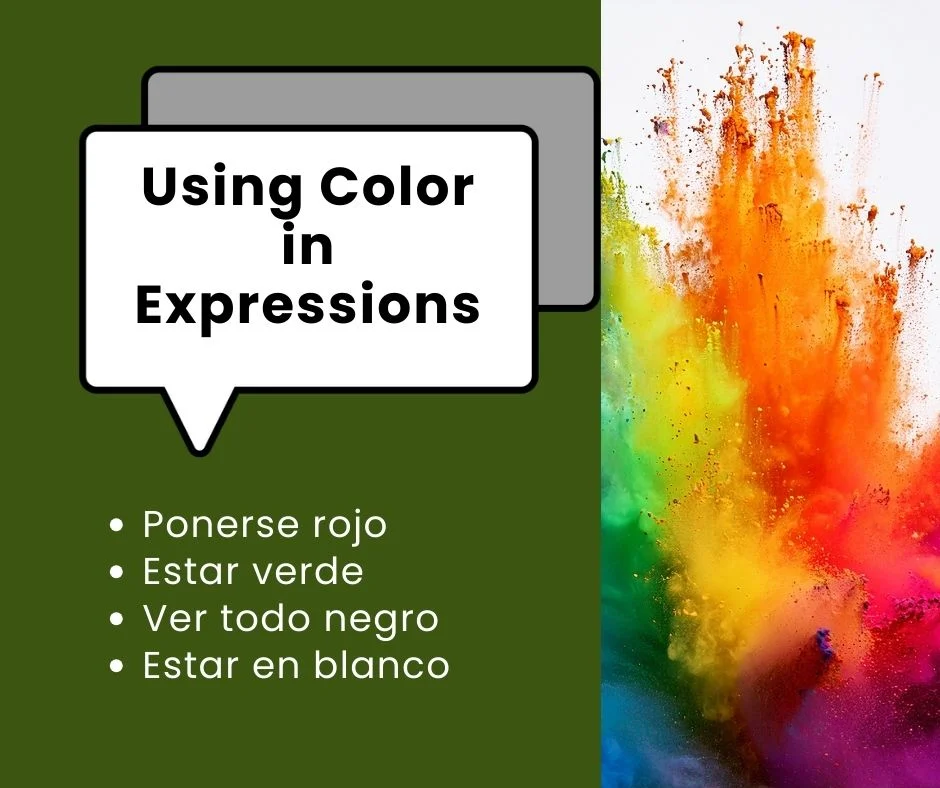
Colors are often part of common expressions in Spanish. Learning them adds depth to your conversations. Some examples include:
- Ponerse rojo – To turn red (embarrassment or anger)
- Estar verde – To be inexperienced or unripe
- Ver todo negro – To feel pessimistic
- Estar en blanco – To have a blank mind
These idioms show that colors are not just about objects—they’re also cultural expressions that give you insight into everyday Spanish.
Asking About Colors
To ask someone about colors in Spanish, you can use simple phrases:
- ¿De qué color es tu camiseta? – What color is your t-shirt?
- ¿Cuál es tu color favorito? – What is your favorite color?
- ¿Te gusta el color rojo o azul? – Do you like red or blue?
Asking and answering these questions helps you practice both vocabulary and sentence structure.
Describing Objects Using Colors
You can describe objects more vividly using adjectives:
- La pelota amarilla es grande. – The yellow ball is big.
- Los zapatos negros son elegantes. – The black shoes are elegant.
- La pintura azul claro cubre toda la pared. – The light blue paint covers the whole wall.
Notice the position of the color adjective after the noun, which is typical in Spanish. This is different from English but easy to remember with practice.
Colors in Art and Fashion
Colors are essential in art, fashion, and interior design. Knowing them allows you to discuss styles, preferences, and trends:
- El diseñador eligió colores pastel para la colección. – The designer chose pastel colors for the collection.
- Me gustan los cuadros con colores vivos. – I like paintings with bright colors.
- El vestido tiene tonos neutros. – The dress has neutral tones.
When learning how to say color in Spanish, thinking about real-life applications makes your learning more engaging.
Colors in Nature
Spanish vocabulary for colors is also very useful in nature and travel contexts:
- El cielo es azul. – The sky is blue.
- Las hojas son verdes en primavera. – The leaves are green in spring.
- El atardecer tiene colores naranjas y rosas. – The sunset has orange and pink colors.
Using colors to describe your environment enhances your observation skills and your ability to communicate clearly in Spanish.
Colors and Emotions
Colors are strongly associated with feelings and moods in Spanish:
- Rojo – passion, love, anger
- Azul – calm, sadness
- Amarillo – happiness, energy
- Negro – mystery, seriousness
- Verde – nature, freshness
Understanding these connections helps you express not only objects but also your emotions, which is crucial in conversations and writing.
Practicing Color Sentences
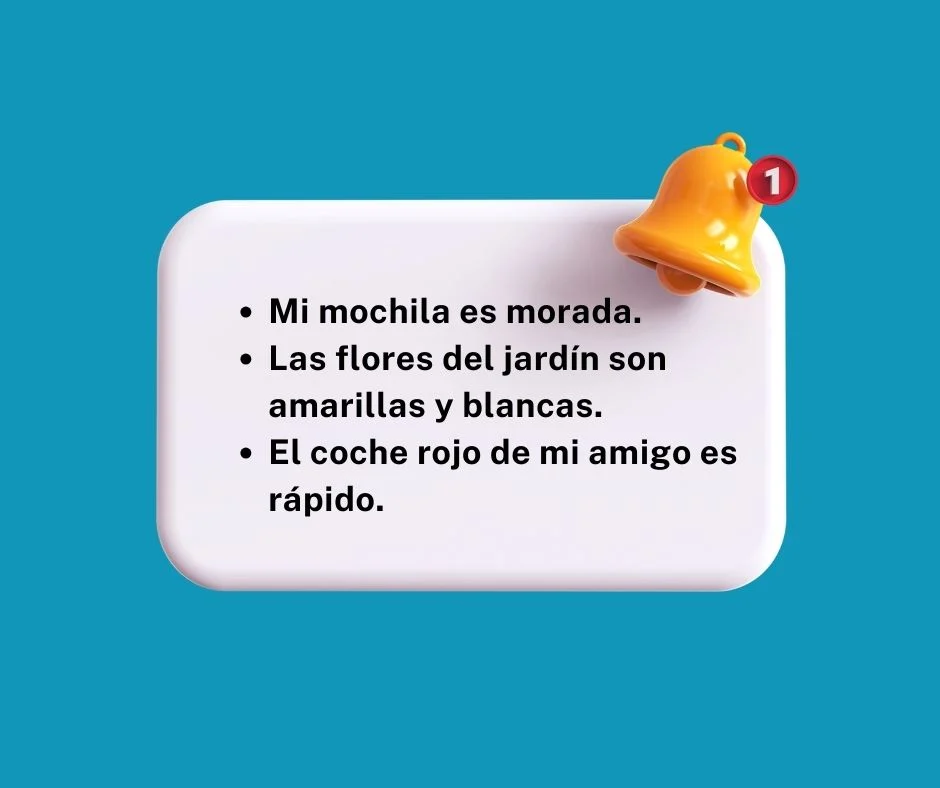
You can practice colors by making simple sentences:
- Mi mochila es morada. – My backpack is purple.
- Las flores del jardín son amarillas y blancas. – The flowers in the garden are yellow and white.
- El coche rojo de mi amigo es rápido. – My friend’s red car is fast.
Try describing everything around you in Spanish to reinforce your vocabulary.
Frequently Asked Questions (FAQs)
1. How do you say color in Spanish?
The word for color in Spanish is color, pronounced koh-lor.
2. Do colors change depending on gender?
Yes, adjectives describing colors change according to the gender of the noun. For example, rojo becomes roja for feminine nouns.
3. Are there many ways to say purple in Spanish?
Yes, you can say morado or púrpura. Both are correct, but usage may vary by region.
4. How do I ask someone their favorite color in Spanish?
You can ask, ¿Cuál es tu color favorito? – What is your favorite color?
5. Can I use colors in idiomatic expressions?
Absolutely! Colors are often used in Spanish idioms like ponerse rojo (to blush) or ver todo negro (to feel pessimistic).
Conclusion
Learning how to say color in Spanish is a small step with big benefits.
It helps you describe your world, express preferences, and connect with others in everyday conversations.
From basic colors to advanced shades and expressions, mastering this vocabulary boosts your confidence and makes your Spanish more vivid.
Start practicing today, and soon you’ll be describing everything in bright, colorful Spanish!
Also Check These Posts:
How to Say Thank You in Hindi: Your Complete Guide
How to Say Bacon in Spanish Like a Local
How to Say Happy New Year in Vietnamese Like a Native in 2026

Darcy Lynn
Darcy Lynn has always been fascinated by the colors and stories of life. Her journey with writing began in childhood, and today she takes readers into new worlds through her stories. For her, every word is a way to explore new experiences and emotions. Darcy loves exploring stories across different cultures and languages, which also reflects in her unique writing style. She believes that a good story touches every heart and sparks deeper thinking. Alongside writing, she enjoys connecting directly with her readers and understanding their feelings.
Books:
-
Whispers Across Worlds
-
Echoes of Tomorrow