
Raising a glass and wondering how to say cheers in Irish the right way?
Whether you’re celebrating, traveling to Ireland, or just curious about Irish culture, the correct phrase adds meaning to the moment.
Many people want to sound natural but aren’t sure what to say.
This guide makes it easy to say cheers in Irish with confidence and cultural respect.
Why Learning Irish Cheers Matters
Irish toasts are more than just words raised over a drink.
They carry warmth, history, and a sense of togetherness that is deeply rooted in Irish life.
Cultural connection
When you learn how to say cheers in Irish, you take part in a tradition that goes back centuries. Irish people value conversation, storytelling, and shared moments.
A simple toast can make you feel included.
Social confidence
Using an Irish toast helps you feel more confident in social settings.
It breaks the ice and often leads to friendly conversations, especially in pubs, celebrations, and family gatherings.
Respect for the language
The Irish language, also called Gaeilge, is an important part of Ireland’s identity.
Using even one phrase shows appreciation for that heritage.
The Most Common Way to Say Cheers in Irish
The most widely used Irish word for cheers is simple and easy to remember.
Sláinte explained
Sláinte is pronounced like slawn-cha or slawn-te. It literally means “health.”
People use it when raising a glass to wish good health to everyone present.
This is the most natural and correct answer when someone asks how to say cheers in Irish.
Examples in real life:
- Friends clink glasses and say “Sláinte!”
- A bartender raises a glass and smiles while saying “Sláinte.”
- A family uses it during a holiday dinner toast.
Variations You May Hear in Ireland
Irish has regional flavors, and you may hear slightly different versions depending on the place or situation.
Sláinte mhaith
This phrase means “good health.” It is pronounced slawn-cha wah.
It is a warmer and slightly more expressive way to toast, often used among friends or at special events.
Sláinte chugat
This means “health to you.” It sounds like slawn-cha khoo-gut.
People use it when speaking directly to one person rather than a group.
Sláinte chuig na fir
This phrase means “health to the men.” It is sometimes used in traditional or humorous settings.
You may hear a playful reply:
- “Sláinte chuig na mná” meaning “health to the women.”
How to Use Irish Cheers in Real Life
Knowing how to say cheers in Irish is useful only when you know how to use it naturally.
In pubs and bars
Irish pubs are famous for their friendly atmosphere. When someone raises a glass:
- Make eye contact
- Smile
- Say “Sláinte” clearly
You do not need a perfect accent. Effort matters more than accuracy.
At celebrations
Weddings, birthdays, and holidays often include toasts.
- Wait for the right moment
- Raise your glass
- Say the phrase confidently
With Irish friends or hosts
If you are visiting Ireland or meeting Irish people abroad, using an Irish toast is a great sign of respect and interest in their culture.
Understanding Pronunciation for Beginners
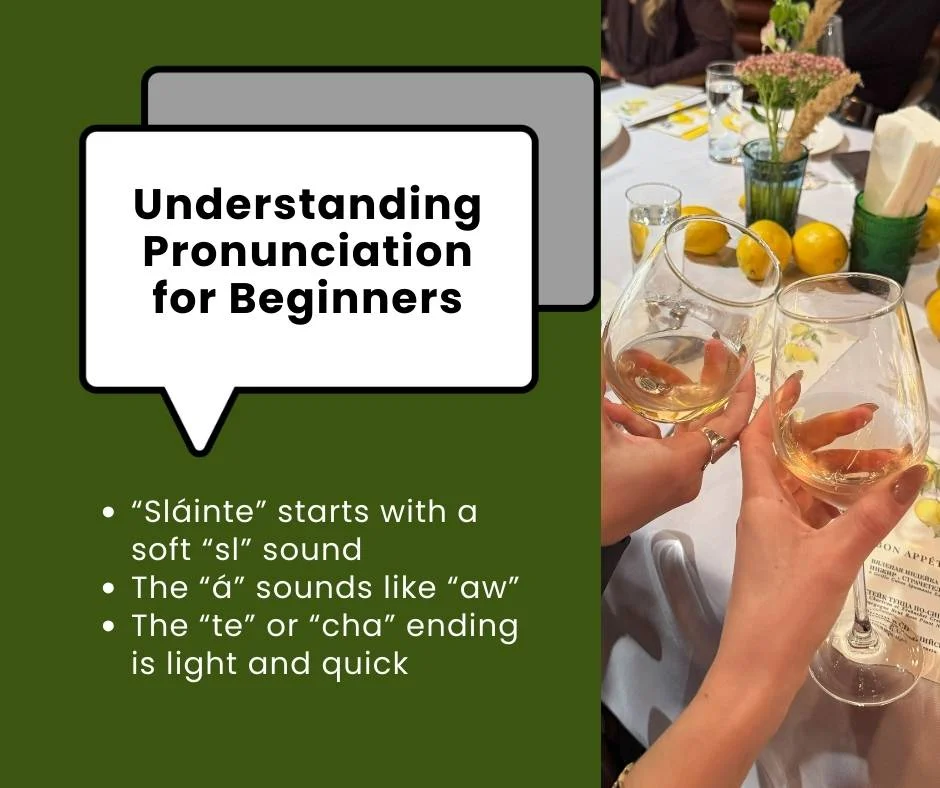
Pronunciation can feel challenging, but Irish words follow patterns once you hear them.
Simple pronunciation tips
- “Sláinte” starts with a soft “sl” sound
- The “á” sounds like “aw”
- The “te” or “cha” ending is light and quick
You can practice by breaking it into parts:
- Slawn
- Cha
Say it slowly at first, then more naturally.
Common mistakes to avoid
- Do not pronounce every letter as in English
- Avoid stressing the last part too much
- Do not feel embarrassed if it sounds imperfect
Irish speakers appreciate the effort.
Formal and Informal Toasting Situations
Different situations may call for different styles of toasts.
Informal settings
With friends or family:
- “Sláinte” is perfect
- Smile and keep it relaxed
Formal events
At formal dinners or ceremonies:
- “Sláinte mhaith” sounds polite and respectful
- Say it clearly and calmly
Irish Cheers Beyond Alcohol
You do not need alcohol to use Irish cheers.
Non-alcoholic drinks
You can say cheers in Irish with:
- Tea
- Coffee
- Juice
- Water
The meaning stays the same: wishing good health.
Family-friendly moments
Irish families often use toasts during meals, even without alcohol. Children may learn the word early as part of cultural tradition.
Comparing Irish Cheers to English Cheers
Understanding the difference helps avoid confusion.
English meaning of cheers
In English, “cheers” can mean:
- Thanks
- Goodbye
- A toast
Irish meaning of Sláinte
In Irish, the word is more focused:
- It always relates to health
- It is used mainly as a toast
This clear meaning makes it special and meaningful.
How Irish Cheers Reflect Irish Values
Language reflects values, and Irish toasts show what matters most.
Health and well-being
Wishing health shows care and goodwill toward others.
Community and warmth
Irish culture values togetherness. Toasts bring people closer and create shared moments.
Tradition and pride
Using Gaeilge keeps the language alive and respected across generations.
Learning More Irish Phrases Alongside Cheers
Once you know how to say cheers in Irish, you may want to learn more.
Helpful related phrases:
- Hello in Irish: Dia duit
- Thank you in Irish: Go raibh maith agat
- Goodbye in Irish: Slán
Learning these alongside cheers helps you sound more natural and confident.
Frequently Asked Questions
What is the simplest way to say cheers in Irish?
The simplest and most common way to say cheers in Irish is “Sláinte.” It means health and is used in almost all toasting situations.
Is Sláinte used only in Ireland?
Sláinte is mainly used in Ireland and among Irish communities worldwide. You may also hear it in Scottish Gaelic with a similar meaning.
Can beginners use Irish cheers without sounding rude?
Yes, beginners can use Irish cheers freely. Irish people appreciate the effort and do not expect perfect pronunciation.
Do I need to drink alcohol to say cheers in Irish?
No, you can say cheers in Irish with any drink. The phrase is about wishing health, not about alcohol.
Is Sláinte formal or informal?
Sláinte works in both formal and informal situations. It is flexible, polite, and widely accepted.
Conclusion
Learning how to say cheers in Irish is a simple but powerful way to connect with Irish culture.
A single word like Sláinte carries warmth, respect, and tradition.
Whether you are traveling, celebrating, or learning for fun, using this phrase adds meaning to shared moments.
Practice it, use it confidently, and enjoy the smiles it brings.

Blake Kinslee
Hi! I’m Blake, a passionate writer who loves exploring the beauty of different languages and cultures through storytelling. Ever since I was young, I’ve been fascinated by how words can connect people across the world. Writing, for me, is not just a hobby—it’s a way to share ideas, emotions, and dreams with readers everywhere. When I’m not crafting stories, you’ll usually find me reading, traveling, or discovering new words in languages I’ve never spoken before. Every book I write is a journey, and I hope my readers feel that magic too.
Books:
-
Whispers Across Borders
-
The Language of Dreams