
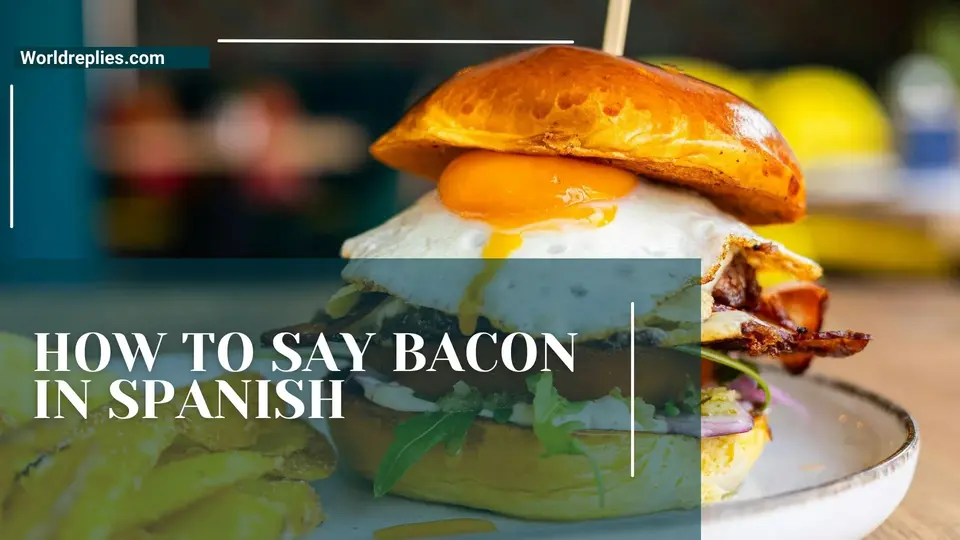
Are you curious about how to say bacon in Spanish and impress your friends at breakfast?
Whether you’re traveling to Spain or just learning the language, knowing food words makes conversations tastier.
In this guide, we’ll show you the exact Spanish word for bacon and how to use it naturally.
By the end, you’ll be ready to order your favorite crispy treat like a local!
The Most Common Word for Bacon in Spanish
The most common and widely accepted word for bacon in Spanish is tocino.
- English: Bacon
- Spanish: Tocino
- Pronunciation: toh-SEE-no
This word is understood in most Spanish-speaking countries and is often used in everyday conversation, cooking, and markets.
Another Popular Way to Say Bacon
In many places, especially influenced by English, bacon is also called bacon in Spanish.
- Spanish spelling: bacon
- Pronunciation: BAY-kon
This version is very common on restaurant menus and food packaging, especially in urban areas.
Differences Between Tocino and Bacon
Understanding the difference between these two words is important when learning how to say bacon in Spanish.
Tocino usually refers to:
- Traditional pork fat
- Unsmoked or cured pork
- Thicker cuts of pork
Bacon often refers to:
- Smoked or crispy bacon
- American-style bacon
- Breakfast bacon
Both words are correct, but usage depends on region and context.
How Spanish-Speaking Countries Use the Word
Spanish vocabulary changes slightly depending on location.
Common usage by region:
- Mexico: Tocino and bacon
- Spain: Bacon is very common
- Latin America: Tocino is traditional
- Restaurants: Bacon is widely used
Knowing both words helps you understand menus anywhere.
Correct Pronunciation Tips
Clear pronunciation makes communication easier.
Helpful tips:
- Tocino has stress on the second syllable
- Bacon sounds similar to English but softer
- Speak slowly and clearly
Practice saying both words out loud to build confidence.
Using Bacon in Daily Spanish Conversations
Knowing how to say bacon in Spanish helps in many real-life situations.
Examples:
- Me gusta el tocino en el desayuno
I like bacon for breakfast - La pizza tiene bacon
The pizza has bacon - ¿Este plato lleva tocino?
Does this dish contain bacon?
These sentences are simple and useful for beginners.
Ordering Food at a Restaurant
When ordering food, using the correct word avoids misunderstandings.
Helpful phrases:
- Quiero huevos con tocino
I want eggs with bacon - ¿Tiene hamburguesa con bacon?
Do you have a burger with bacon?
Most waiters will understand either word.
Bacon in Spanish Recipes
If you read Spanish recipes, you may see different terms.
Common recipe words:
- Tocino picado (chopped bacon)
- Bacon crujiente (crispy bacon)
- Tocino ahumado (smoked bacon)
Learning these phrases helps you cook with confidence.
Bacon and Cultural Food Differences
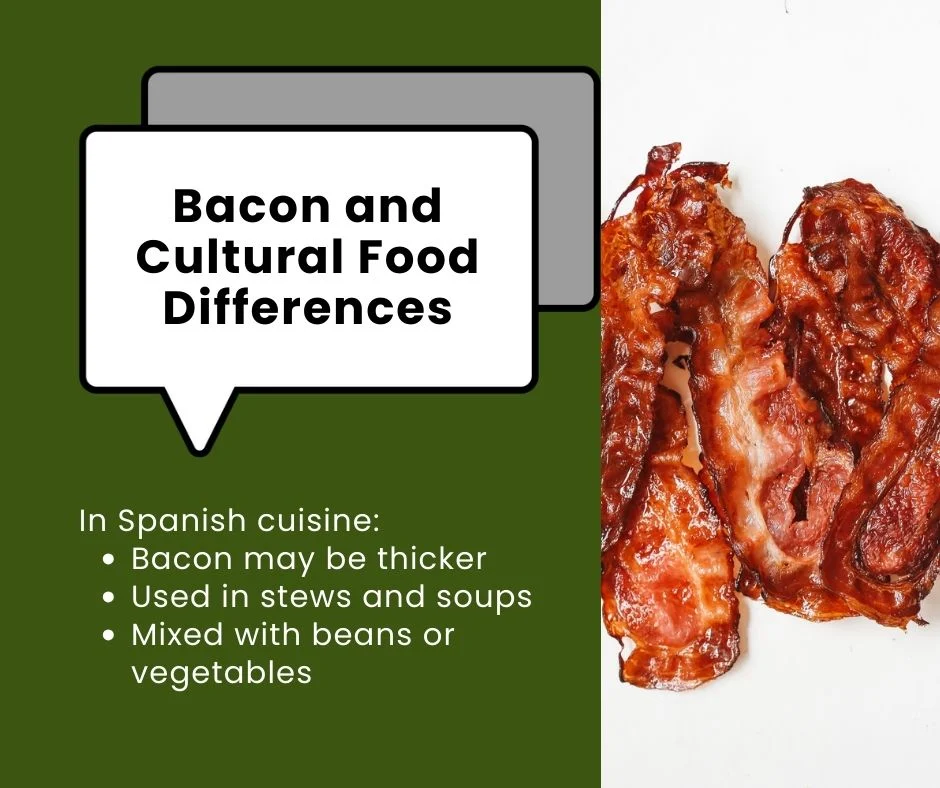
Bacon is popular worldwide, but how it is prepared differs.
In Spanish cuisine:
- Bacon may be thicker
- Used in stews and soups
- Mixed with beans or vegetables
Knowing how to say bacon in Spanish helps you understand traditional dishes.
Singular and Plural Forms
Spanish nouns change form.
Examples:
- Tocino (singular)
- Tocinós (plural, less common)
- Bacon (same in singular and plural)
Usually, bacon is treated as uncountable food.
Writing Bacon in Spanish Correctly
Spelling matters in Spanish writing.
Correct spellings:
- Tocino
- Bacon
Avoid:
- Beken
- Toseeno
Correct spelling helps avoid confusion.
Common Beginner Mistakes
Many learners make small errors when learning how to say bacon in Spanish.
Mistakes to avoid:
- Using pork instead of bacon
- Mispronouncing tocino
- Assuming bacon is the same everywhere
Practice helps fix these mistakes quickly.
Bacon in Breakfast Conversations
Breakfast is one of the most common times bacon appears.
Examples:
- Desayuno con huevos y tocino
- Me encanta el bacon crujiente
These phrases are easy and practical.
Bacon in Supermarkets and Shopping
When shopping, knowing the word helps you find items faster.
Useful phrases:
- Busco tocino
- ¿Dónde está el bacon?
Store staff usually understand both words.
Bacon in Informal and Formal Speech
Both words are acceptable in casual and formal settings.
Casual:
- Me gusta el bacon
Formal:
- El plato contiene tocino
Context matters more than the word choice.
Learning Tips for Remembering Bacon in Spanish
Simple memory tips:
- Associate tocino with traditional dishes
- Associate bacon with restaurants
- Practice with food pictures
- Say the word before meals
Daily use makes learning faster.
Comparing Bacon With Similar Foods
Avoid mixing bacon with similar foods.
Differences:
- Jamón means ham
- Cerdo means pork
- Tocino means bacon
Using the right word improves clarity.
Real-Life Practice Sentences
Practice reading these sentences:
- El tocino está delicioso
- Prefiero bacon crujiente
- Este plato no tiene tocino
Reading aloud improves fluency.
Frequently Asked Questions
How do you say bacon in Spanish
The most common ways are tocino and bacon, depending on region and context.
Is tocino the same as bacon
Tocino often refers to pork fat, while bacon usually means smoked bacon.
Can I use bacon on Spanish menus
Yes, bacon is commonly used on menus and is widely understood.
Which word is better for beginners
Learning both tocino and bacon is helpful for full understanding.
Is bacon used in Spanish cooking
Yes, bacon or tocino is used in many traditional and modern dishes.
Conclusion
Understanding how to say bacon in Spanish makes everyday communication easier and more natural.
The words tocino and bacon are both correct and widely used.
By learning pronunciation, usage, and context, you can confidently talk about food, order meals, and enjoy Spanish conversations.
Keep practicing, and your food vocabulary will continue to grow.
Also Check These Posts:
How to Say 12 in Spanish | Meaning, Spelling, and Usage in 2026
How to Say Sorry Without Saying Sorry Like a Pro in 2026
How to Say Mommy in Spanish Naturally and Affectionately for 2026

Daniel Carter
Hi, I’m Daniel Carter, a passionate storyteller and lifelong explorer of languages and cultures. Writing has always been my way of connecting with the world, sharing stories that inspire, educate, and entertain. I love diving into the nuances of communication and finding beauty in the words we use every day. Over the years, I’ve dedicated myself to crafting stories that resonate across borders and languages. When I’m not writing, you’ll usually find me exploring new places or learning something new about the world around me. My goal is to create stories that make readers think, smile, and sometimes even dream.
Books:
-
Whispers Across Borders
-
The Language of Hearts